

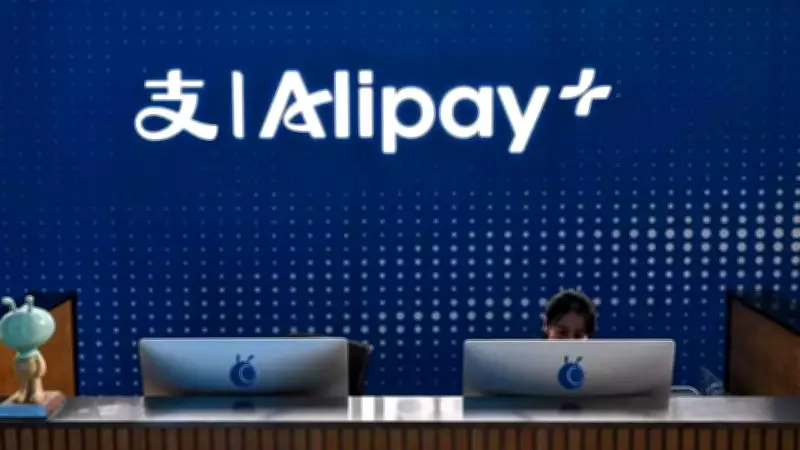
In a significant development for India's digital payments landscape, Alipay+ may reportedly become available in the country through integration with the Unified Payments Interface (UPI). According to an exclusive Reuters report citing two anonymous government sources, the Indian government and the Reserve Bank of India (RBI) are currently engaged in discussions with Ant International, the overseas arm of Chinese fintech giant Ant Group.
Potential Integration with India's UPI System
The talks focus on linking Alipay+ to India's instant payments system specifically for cross-border transactions. This strategic move would revolutionize payment experiences for Indian tourists traveling abroad by enabling them to utilize UPI at international merchants that have partnered with Alipay+.
The proposed integration could significantly simplify overseas payments, eliminating the need for currency exchange complications or reliance on international credit cards. Indian travelers would potentially enjoy seamless transactions using their familiar UPI applications while shopping, dining, or availing services in foreign countries where Alipay+ operates.

Official Responses and Confidentiality
The Reuters report emphasized that the sources declined to be identified since these discussions have not been made public yet. When approached for comments, the Finance Ministry, RBI, and the National Payments Corporation of India (NPCI) have not responded to requests for clarification.
Similarly, Singapore-based Ant International has not immediately provided any statement regarding these negotiations. This silence from all involved parties adds to the speculative nature of the report while highlighting the sensitive diplomatic and economic considerations surrounding such fintech collaborations.
Historical Context: India's Ban on Chinese Apps
This potential development comes against the backdrop of India's previous actions against Chinese applications. In November 2020, the Ministry of Electronics and Information Technology (MeitY) invoked Section 69A of the Information Technology Act to block access to 43 additional smartphone apps of Chinese origin, including Alipay Cashier, AliExpress, and WeWorkChina.
This followed earlier bans in June 2020 targeting 59 apps like TikTok, UC Browser, and WeChat, and another prohibition in August 2020 covering 118 more applications including PUBG Mobile and Baidu. The government justified these measures citing concerns about activities prejudicial to sovereignty and integrity of India, defence of India, security of state and public order.
MeitY's official statement referenced comprehensive reports from the Indian Cyber Crime Coordination Center under the Ministry of Home Affairs as the basis for these blocking orders.
Global Digital Payments Landscape
China currently processes the highest volume of digital payments worldwide, with hundreds of billions of transactions recorded in 2024 alone according to Pekingnology.com. The majority of these transactions flow through two dominant platforms: Alipay and WeChat Pay.
Meanwhile, India has established itself as the global leader in real-time payments through UPI, which facilitates instant bank-to-bank transfers. Both nations have notably bypassed traditional credit and debit card systems in favor of QR code-based payment solutions, though their development paths have diverged significantly.
Contrasting Development Approaches
The evolution of digital payment systems in China and India reveals fundamentally different approaches. In China, private sector players integrated payment functionalities into existing e-commerce and messaging platforms, creating an ecosystem dominated by corporate innovation.
Conversely, India adopted a government-led strategy, building the United Payments Interface (UPI) as public infrastructure to democratize digital transactions. This approach deliberately lowered entry barriers for private participants, aiming to foster inclusion for small merchants and companies.
Market Dominance Patterns
Despite these contrasting origins, both countries exhibit similar market concentration patterns. In India, Google Pay and PhonePe collectively command nearly 80% of the UPI market, while the government-developed BHIM application accounts for only about 1% of transactions.

China's digital payments arena is similarly dominated by two giants: Alipay and WeChat Pay. This parallel raises important questions about market dynamics, competition, and the role of public versus private initiatives in shaping financial technology ecosystems.
The potential integration of Alipay+ with UPI represents more than just a technical collaboration—it could signal a new chapter in India-China economic relations and global digital payment interoperability. As discussions continue behind closed doors, stakeholders across government, banking, and technology sectors await further developments that could reshape how Indians transact internationally.





