

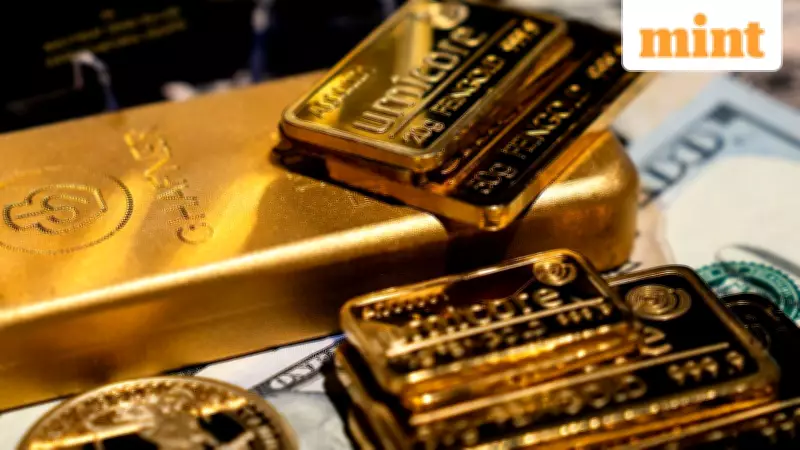
Gold's Meteoric Rise: J.P. Morgan Forecasts $8,500 Per Ounce in Coming Years
Gold prices have shattered records, recently crossing the $5,000 per ounce mark in early 2026, and now financial giant J.P. Morgan is predicting an even more spectacular surge. According to the bank's market strategist, Nikolaos Panigirtzoglou, the precious metal could rally to between $8,000 and $8,500 per ounce over the coming years, driven by a significant shift in investor behavior.
Retail Investors Abandon Bonds for Gold as a Safe Haven
One of the primary catalysts behind this bullish forecast is the growing reliance of retail investors on gold instead of fixed-income assets as a hedge against declines in the U.S. stock market. Panigirtzoglou points out that retail investors have become disillusioned with long-term bonds since 2022, when traditional portfolios like 60/40 funds (comprising 60% stocks and 40% bonds) underperformed dramatically.
That year, the Federal Reserve's aggressive interest rate hikes caused both stock and bond prices to plummet simultaneously. This frustration was further cemented in 2025 during the market's "Liberation Day" selloff, when threats of tariffs from the Trump administration triggered another wave of selling in both asset classes.

Gold's Steady Rally Attracts Massive Investor Inflows
In contrast, gold has enjoyed a steady three-year rally, prompting disgruntled U.S. retail investors to flock to the metal through investment vehicles like the SPDR Gold Shares exchange-traded fund (ETF). According to data from FactSet, this ETF has attracted more than $27 billion in net investor dollars over the past year alone.
Panigirtzoglou highlights that gold's share in private investors' overall portfolios has already jumped from about 1% a decade ago to 3% today. He projects this figure will rise to 4.6% in the future, and this additional demand could theoretically push gold prices to the $8,000-$8,500 range.
Analyzing the Feasibility of the $8,500 Price Target
How realistic is this ambitious price target? It's worth noting that gold's price has nearly doubled in the past year, suggesting there's potential for further gains. However, banking on retail investors to sustain this rally might be precarious.
While it's true that investors have poured money into SPDR Gold Shares recently, this could simply be a case of chasing hot returns rather than a deliberate, long-term strategy to use gold as a stock market hedge. These inflows could reverse quickly if gold experiences a pullback, which seems likely given the rapid price gains seen in 2026 so far.
Moreover, bonds—and even the much-criticized 60/40 funds—are expected to perform significantly better in 2026 compared to 2022. This is largely due to the Federal Reserve's gradual but steady rate cuts, which contrast sharply with the rate hikes of previous years.
For instance, the Vanguard Total Bond Market ETF has returned 6.6% over the past 12 months. While this gain pales in comparison to gold's explosive performance, it aligns with what retail investors typically expect from bond funds. This makes it unlikely that they will completely abandon these assets in favor of something as volatile as gold.
In summary, while J.P. Morgan's forecast paints a rosy picture for gold, driven by shifting investor preferences and sustained demand, the path to $8,500 per ounce may hinge on whether retail investors' interest in gold is a fleeting trend or a lasting strategic shift.






