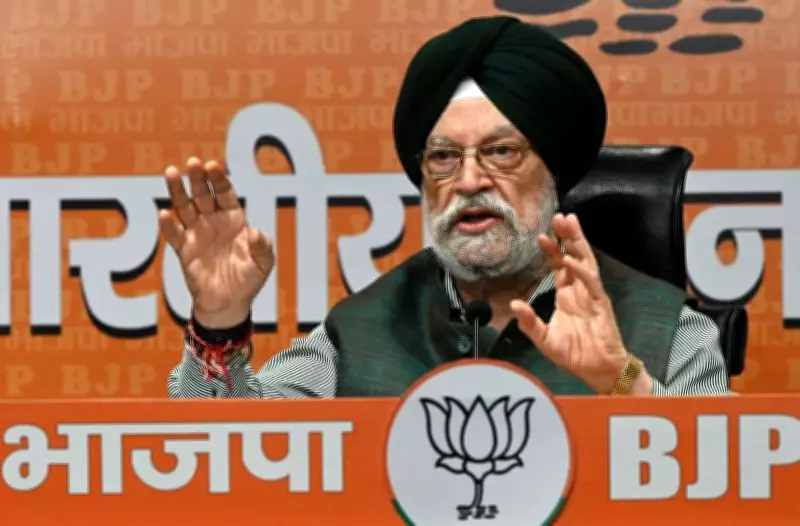
Union Minister Hardeep Singh Puri has indicated that retail petrol and diesel prices in India are unlikely to be reduced anytime soon, even though international crude oil prices have fallen to a four-month low. Speaking on the matter, Puri explained that state-run refiners are still processing crude oil purchased at higher prices during the peak of the West Asia crisis, which began on February 28.
Delayed and Partial Pass-Through of Higher Costs
Petrol and diesel prices were raised by about Rs 7.50 per litre each in the second half of May, more than two months after the conflict erupted. This increase was less than the rise in global fuel costs, meaning state-owned fuel retailers absorbed a significant portion of the higher crude prices. The delayed and partial pass-through resulted in substantial losses for Indian Oil Corp (IOC), Bharat Petroleum Corp Ltd (BPCL), and Hindustan Petroleum Corp Ltd (HPCL).
Puri disclosed that state-owned fuel retailers incurred cumulative losses of Rs 74,781 crore on the sale of petrol, diesel, and subsidised cooking gas (LPG). This figure includes losses from selling petrol and diesel below cost for four months following the outbreak of the conflict, as well as unrecovered LPG subsidies for the same period and earlier months.

Crude Oil Price Trends and Refinery Processing
International oil prices have retreated over the past two to three weeks after the United States and Iran signed an interim peace deal, easing concerns over the Strait of Hormuz—a critical energy shipping route. Crude oil prices fell from USD 119 per barrel at the peak of the conflict to around USD 70 currently. However, Puri noted that refiners are currently processing crude bought two or two and a half months ago, when prices were high.
“That crude would have been obtained two months back (when) prices were high, cost of insurance was high, cost of freight was high,” he said. “Crude priced at current lower rates will arrive (at refineries) later.”
Conditions for Future Price Cuts
A fuel price cut can be considered if oil prices remain at low levels for a sustained period, Puri stated. “If it (oil prices) remains like this (at current rates), it (cutting retail prices) is a legitimate thing,” he said. This suggests that consumers may have to wait for several weeks before seeing any reduction at the pump.
Nayara Energy’s Price Cuts and Market Dynamics
On Nayara Energy, India’s largest private fuel retailer, cutting petrol prices by Rs 5 per litre and diesel by Rs 3 per litre while state-owned firms have not followed suit, Puri explained that the company was effectively rolling back increases it had implemented in March. He added that Nayara subsequently matched every price increase undertaken by state-run retailers in May. The latest cuts have brought Nayara’s retail fuel prices back in line with those of state-owned competitors.
India’s Energy Security During the Crisis
Discussing how India managed the four-month period when the Iran war largely blocked access to Gulf producers, Puri said refiners diversified crude oil sourcing across continents and increased LPG imports from the United States. As a result, no retail outlet in the country ran dry, even when neighbouring countries rationed fuel.
“Every one of our refineries is stocked, every port, terminal, pipeline and depot is stocked. In all, we have stocks to cover the country’s requirement for 76-80 days,” he said. “This is not to say that we don’t need additional (strategic) storage. We will be augmenting that.”
Future Outlook and Preparations
On the price outlook, Puri expressed confidence but emphasised the need for preparation. “I am not worried but we have to prepare for its stocking. That means increasing storage space and intensifying outreach to bilateral partners (for sourcing energy),” he said. The minister’s remarks underscore the government’s focus on ensuring energy security amid global volatility.