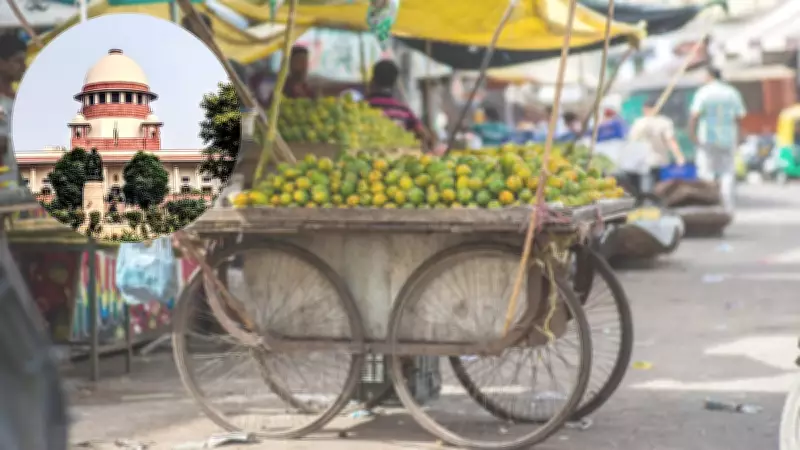
The Supreme Court of India has ruled that anti-encroachment drives in urban areas must be balanced with the rehabilitation of street vendors. The decision came on a civil appeal filed by Malkit Singh and another, underscoring the need for a fair and humane approach while regulating street vending in urban spaces.
Case Background and Ruling
The appeal challenged the eviction of street vendors without provision for alternative livelihoods. The Supreme Court bench emphasized that while encroachments cannot be allowed, the rights of street vendors under the Street Vendors (Protection of Livelihood and Regulation of Street Vending) Act, 2014 must be respected. The court directed local authorities to create rehabilitation plans before conducting evictions.
Impact on Urban Planning
This ruling is expected to affect municipal corporations across India, requiring them to integrate vendor rehabilitation into their urban planning. The court noted that street vendors constitute a significant portion of the urban informal economy and their sudden displacement can lead to loss of livelihood and social instability.

According to the Supreme Court, "The balance between public space management and the rights of street vendors must be maintained through a structured rehabilitation process." The court also highlighted that many vendors have been operating for decades and have established customer bases.
Rehabilitation Measures
The court suggested measures such as designated vending zones, alternative market spaces, and financial compensation for relocation. It also called for a survey of street vendors in each city to ensure that only genuine vendors are covered under rehabilitation schemes.
Statistics from the Ministry of Housing and Urban Affairs indicate that over 10 million street vendors operate in India, contributing significantly to the economy. The ruling aims to protect their livelihoods while addressing urban congestion and encroachment issues.
Reactions and Next Steps
The decision has been welcomed by vendor associations, who have long demanded humane treatment. The court has given local bodies six months to submit compliance reports on rehabilitation plans. Failure to comply may result in contempt proceedings.