RBI's Delicate Balancing Act: Fostering Innovation While Protecting Financial Stability
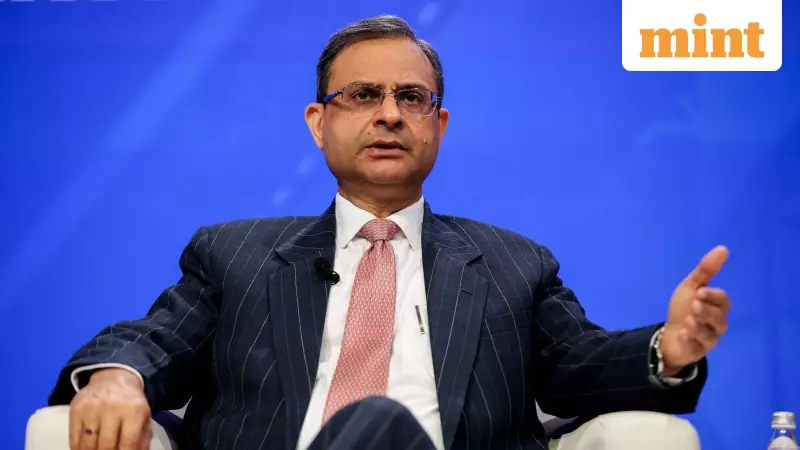
The Reserve Bank of India (RBI) is actively working to stimulate efficiency and innovation within the country's financial sector without compromising its foundational stability, Governor Sanjay Malhotra stated on Friday. Speaking at the SBI Banking and Economics Conclave 2025 in Mumbai, he emphasized that the central bank is acutely aware of the costs associated with every regulatory change and is committed to minimizing them.
"We recognize that just like there are no free lunches, regulation to enhance stability too is not devoid of costs. There are trade-offs between stability and efficiency," Malhotra explained. He affirmed that the RBI's core attempt is to "strike the right balance, keeping in view the benefits and costs of each and every regulation."
The High Cost of Short-Term Growth
Governor Malhotra issued a stern warning against pursuing short-term growth at the expense of financial stability, noting it can lead to "bigger consequences for long-term growth." He cited research indicating that financial instability can not only negate the gains from rapid short-term expansion but also result in a more painful and prolonged economic recovery.

This philosophy underpins the slew of over 20 regulatory proposals announced on 1 October, which were released alongside the monetary policy statement. These measures, designed to improve banking competitiveness, credit flow, and ease of doing business, aim to "maintain the balance between the drive to innovate and grow and the RBI’s duty to protect."
A Calibrated and Evolutionary Regulatory Approach
Malhotra was quick to clarify that while these proposals reflect fresh thinking, they are incremental and do not represent a radical overhaul. "These measures do reflect fresh thinking but are incremental, and do not introduce any sea changes in regulation as a whole," he said. He urged that each measure be viewed as part of a "continuum of regulatory evolution" that collectively builds a multi-layered defence against systemic risk.
To illustrate the RBI's role, the Governor used a vivid analogy: "The role of a regulator is like that of a gardener whose job does not stop with providing the ‘enabling environment’ for the growth of the plants. The gardener keeps on monitoring the growth of the plant and prunes unwanted growth to shape a collective orderly beautiful garden." He added that wherever restrictions are being eased, "sufficient guardrails" have been put in place to ensure prudence.
However, Malhotra also stressed that no regulator can replace sound judgement within financial institutions. In a diverse nation like India, he argued against a one-size-fits-all rule, stating, "We need to allow the regulated entities to take decisions based on the merit of each case."
Key Focus Areas of the New Regulatory Proposals
Most of the recently announced measures are currently in draft form, as the RBI intends to finalize them after gathering comprehensive feedback from stakeholders. This consultative approach is crucial given the "structural transformation of financial intermediation," where nimble fintechs and NBFCs play a significantly larger role.
Detailing the new directions, Malhotra highlighted that the project finance norms are designed to mitigate risks from regulatory approvals and land availability. Meanwhile, the proposed shift to Expected Credit Loss (ECL) provisioning will enable earlier recognition of deteriorating asset quality.
He expressed confidence in the maturity of Indian banks, stating, "Indian banks today are far more mature than they were a decade ago." This evolution, he noted, justifies a calibrated update to prudential rulebooks, especially as risk-transfer mechanisms like securitization have become more effective.

Deepening Capital Market Exposure with Guardrails
A significant part of the reforms focuses on deepening the capital markets. The RBI has proposed enhancing lending limits to individuals against securities and rationalizing norms for loans to capital market intermediaries. These revisions are accompanied by a more structured Loan-to-Value (LTV) framework that is sensitive to the risks of the underlying securities.
In a key differentiator, the central bank has proposed removing limits on loans against debt instruments while retaining them for equity, recognizing the fundamental risk differences. "An additional comforting factor is that only listed and investment grade debt securities are proposed to be permitted as collateral," Malhotra said, adding that this move is expected to foster a virtuous cycle for bond market development.
Broader measures, such as permitting banks to undertake acquisition finance, are anticipated to benefit the real economy. These are protected by proposed guardrails, including limiting bank funding to 70% of the deal value and setting aggregate exposure limits, which will help contain concentration and credit risks.
Governor Malhotra's comprehensive address underscores the RBI's nuanced and forward-looking strategy to guide India's financial sector through a period of rapid change, ensuring it remains both dynamic and secure.