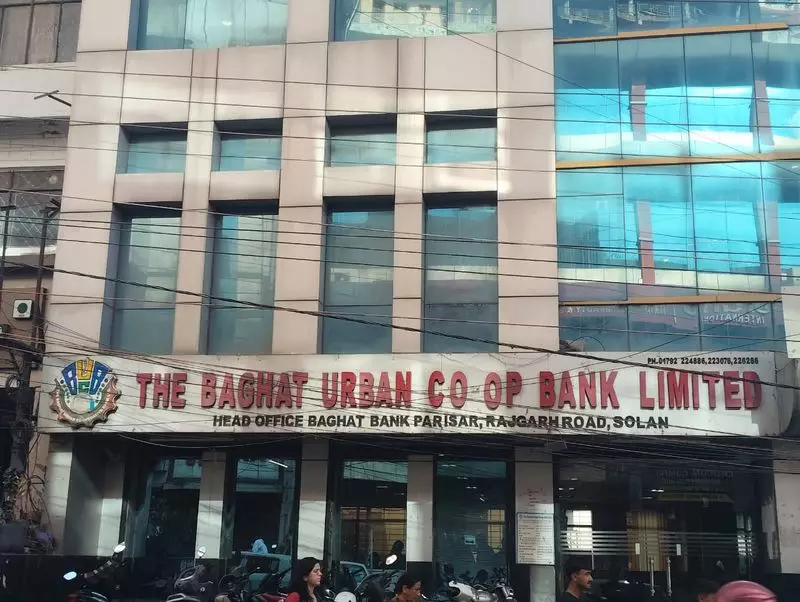
The Reserve Bank of India has plunged Baghat Urban Cooperative Bank into turmoil after imposing severe business restrictions that have triggered a wage crisis for employees and uncertainty for customers across Himachal Pradesh.
RBI's Drastic Measures
The Reserve Bank of India issued sweeping restrictions on Baghat Urban Cooperative Bank on April 29, 2024, effectively freezing the bank's operations and creating immediate financial distress. The central bank's directive specifically prohibits the institution from accepting fresh deposits, making any loans or advances, and conducting investment activities without prior approval.
These restrictions extend to all branch operations, fundamentally halting the bank's core banking functions. The RBI order represents one of the most significant regulatory interventions in Himachal Pradesh's cooperative banking sector in recent years, affecting numerous account holders across the region.

Employee Wage Crisis Emerges
The regulatory crackdown has triggered an immediate wage crisis for the bank's workforce. Employees have not received their salaries for April 2024, creating severe financial hardship for bank staff and their families. This payment failure occurred despite the RBI directive explicitly allowing the bank to disburse salary payments to its employees.
Bank management has cited the overall financial constraints and operational paralysis caused by the RBI restrictions as the primary reason for the salary delays. The situation has left employees in a precarious position, uncertain about their financial future and job security amid the escalating crisis.
Customer Impact and Banking Services
Ordinary customers and account holders are facing significant disruptions to their banking activities. While the RBI has permitted the bank to allow withdrawal of funds up to the balance available in customer accounts or the insured amount of ₹5 lakhs under DICGC cover, whichever is lower, the practical implementation remains challenging.
The restrictions have created confusion and anxiety among depositors, particularly those with savings exceeding the insurance coverage limit. Many customers report difficulties in accessing their funds and obtaining clear information about the bank's future operations.
Historical Context and Regulatory Concerns
Baghat Urban Cooperative Bank has been operating in the region for decades, serving local communities with traditional banking services. The RBI's action follows concerns about the bank's financial health, governance standards, and compliance with regulatory requirements that emerged over recent months.
Financial regulators had been monitoring the bank's performance indicators, including capital adequacy, asset quality, and management effectiveness. The deteriorating financial position ultimately compelled the central bank to intervene to protect depositor interests and maintain financial stability in the region.
The cooperative bank sector in India has faced increased regulatory scrutiny in recent years, with several institutions encountering financial difficulties. The Baghat Urban Cooperative Bank case represents another instance where regulatory intervention became necessary to address systemic concerns.
Future Outlook and Resolution Efforts
Bank management, regulatory authorities, and state government officials are engaged in discussions to find a resolution to the crisis. The immediate priority remains addressing the wage crisis affecting employees while ensuring minimal disruption to customer banking services within the constraints of the RBI directive.
Financial experts suggest that the bank may need to explore restructuring options, potential merger opportunities with stronger institutions, or infusion of fresh capital to meet regulatory requirements and resume normal operations. The resolution process is expected to be complex and may take several months to complete.
Meanwhile, affected customers are advised to monitor official communications from the bank and regulatory authorities regarding the evolving situation and any changes to the current restrictions.