

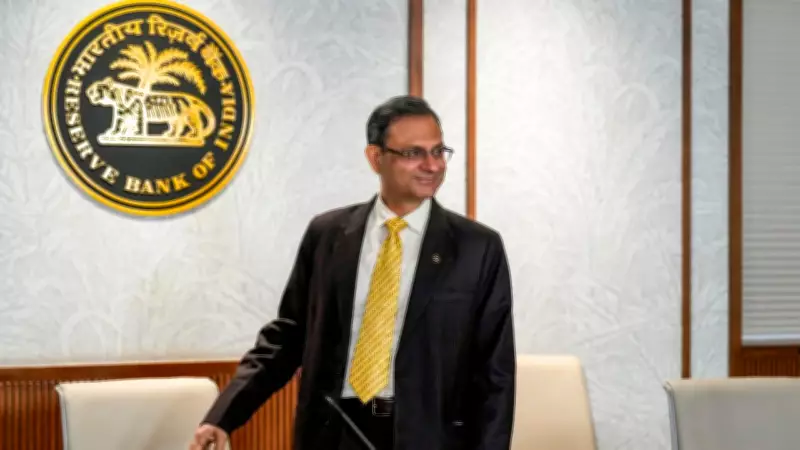
RBI Governor Advocates Prudence in Capital Account Liberalisation
In a significant address at Princeton University on April 18, RBI Governor Sanjay Malhotra underscored that the liberalisation of India's capital account must be carefully sequenced to safeguard macroeconomic sovereignty. He argued that this approach, often viewed as conservative, is in fact a prudent strategy essential for a developing economy like India.
Historical Prudent Measures by RBI
Malhotra highlighted several key measures implemented by the Reserve Bank of India in the past to ensure financial stability. These included:
- Controls on capital accounts for residents to manage outflows and inflows effectively.
- Limits on short-term foreign debt to reduce vulnerability to external shocks.
- Intervention in forex markets during periods of volatility to maintain currency stability.
He specifically noted that during the boom years before the global financial crisis, RBI took countercyclical actions by building up an investment fluctuation reserve. This proactive step helped Indian banks emerge from the crisis with relatively stronger balance sheets, despite the measures being unpopular at the time.

Sequencing as a Sovereignty Issue
Malhotra emphasized that for India, the sequencing of capital account liberalisation is not merely a technical detail but a critical matter of macroeconomic sovereignty. He stated, "The lesson embedded is that for a country at India's stage of development, the sequencing of capital account liberalisation is not a technicality—it is a first-order question of macroeconomic sovereignty." This perspective reinforces RBI's commitment to a gradual and measured approach to financial openness.
Current Crisis Management Strategies
Addressing the ongoing impacts of crises, particularly those stemming from West Asia, Malhotra outlined RBI's current strategy. The central bank aims to "look through" first-round supply shocks, such as oil price spikes causing forex volatility, to prevent second-round inflation from becoming entrenched. Instead of focusing on demand curbs, RBI prioritizes managing inflation expectations.
He explained, "In such circumstances, our broad approach has been to be even more data-dependent and to continuously reassess the balance of risks." This adaptive strategy allows RBI to respond flexibly to evolving economic conditions while maintaining stability.
Digital Infrastructure Achievements
Malhotra also expressed confidence in India's digital infrastructure, highlighting its global leadership. He revealed that India currently accounts for nearly 50% of the world's real-time digital payment volume. In March 2026 alone, the Unified Payments Interface (UPI) processed an impressive 22 billion transactions, showcasing the rapid adoption and scalability of digital payment systems in the country.
This robust digital framework supports financial inclusion and efficiency, aligning with RBI's broader goals of economic resilience and innovation.






