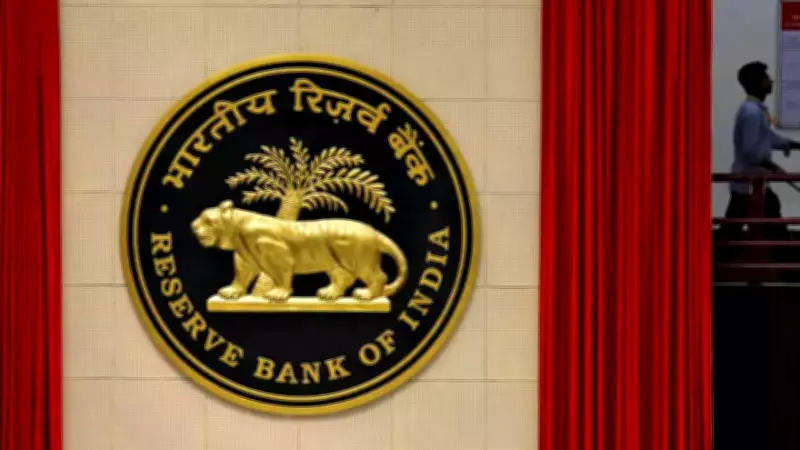
The Reserve Bank of India's rate-setting panel commenced its two-day deliberations on Wednesday, with financial markets keenly observing whether borrowing costs could see further reductions. This comes amid supportive macroeconomic conditions and improving investor sentiment following recent developments.
Monetary Policy Committee Meeting Underway
The six-member Monetary Policy Committee, chaired by RBI Governor Sanjay Malhotra, began discussions on the next set of bi-monthly interest rates. These deliberations occur against the backdrop of a growth-focused Union Budget and the announcement of an India-US trade deal, both of which have significantly lifted market sentiment. The official policy outcome will be announced on Friday morning, providing clarity on the central bank's stance.
Divergent Views Among Experts
According to reports, financial experts remain divided on the interest rate outlook. While some analysts believe the central bank may opt for one more rate cut to further lower borrowing costs, others anticipate a pause after cumulative easing measures implemented in recent months.

A research note from BofA Global Research suggested that the RBI's rate-cutting cycle appears to be over for the present moment. The note emphasized that the recently announced trade deal could strengthen growth certainty and help sustain the momentum observed in high-frequency economic indicators.
"We also believe the RBI is now done cutting rates but will continue to manage its liquidity provisions carefully to ensure rate transmission remains active," the research note stated.
Supportive Domestic Macro Backdrop
Deepak Agrawal, Chief Investment Officer for Debt at Kotak Mahindra AMC, highlighted that the upcoming policy decision comes amid a supportive domestic macroeconomic environment. "With inflation well below the target, growth momentum intact, surplus system liquidity, and fiscal consolidation reaffirmed, conditions favour policy stability," Agrawal explained.
He further noted that while global uncertainties persist, India's relatively strong growth dynamics, improving external position, and record foreign exchange reserves provide the Monetary Policy Committee with ample comfort to maintain a pause on rate adjustments. Agrawal added that easing tariff pressures and positive trade developments could support the Indian rupee and allow the RBI to manage durable liquidity conditions effectively.
"Accordingly, the committee is expected to maintain the repo rate unchanged at 5.25 per cent; however, forward guidance is likely to remain mildly dovish, underscoring a data-dependent stance and preserving flexibility for recalibration should the growth-inflation trade-off evolve," Agrawal elaborated.
Structural Reforms and Infrastructure Focus
Lokanath Panda, Chief Operating Officer at BLS E-Services, linked policy expectations to Budget 2026's structural reform focus and infrastructure push. "Against this backdrop, the RBI's MPC is likely to pause its rate cuts. Having already lowered the repo rate by 125 basis points since early 2025 with the last cut in December which helped banks reduce interest rates and increased market liquidity, we expect the central bank is now poised to concentrate on liquidity conditions, bond market stability, and currency risk management," Panda stated.
Inflation Management Mandate
The government has mandated the RBI with maintaining Consumer Price Index-based retail inflation at 4 percent, with a tolerance band of 2 percent on either side. Notably, inflation has remained below 4 percent since February 2024 and stood at 1.33 percent in December. January inflation data is scheduled for release later this month, providing additional context for the committee's decision.
Impact on Growth and Housing Demand
Ashok Kapur, Chairman of Krishna Group and Krisumi Corporation, emphasized that a stable interest rate environment could significantly support economic growth and housing demand. "At this juncture, a stable interest rate environment will play a key role in reinforcing buyer confidence, sustaining housing momentum, and supporting developers in driving new launches and job creation, thereby contributing meaningfully to overall economic growth," Kapur remarked.

The Monetary Policy Committee members include Nagesh Kumar, Saugata Bhattacharya, Ram Singh, Poonam Gupta, and Indranil Bhattacharyya, alongside Governor Sanjay Malhotra. Their collective decision will shape India's monetary policy direction in the coming months, balancing growth objectives with inflation management priorities.