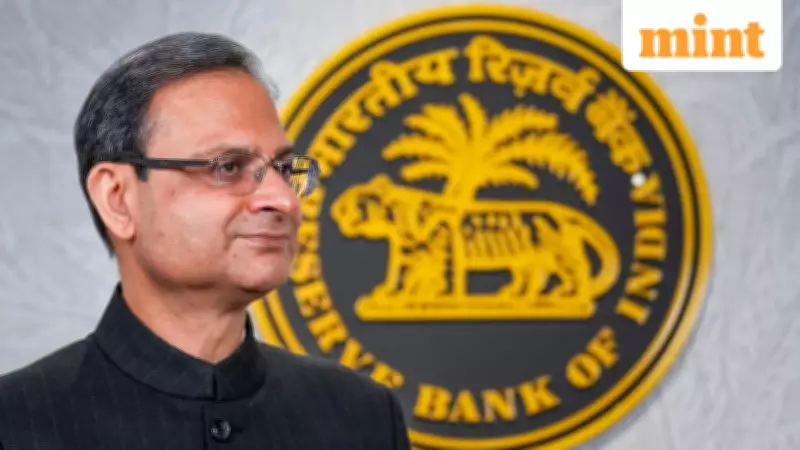
In anticipation of the upcoming Reserve Bank of India Monetary Policy Committee meeting scheduled for February, the State Bank of India has released a comprehensive report forecasting that the central bank will maintain the current repo rate without any changes. The RBI MPC announcement, set for Friday, is expected to see no reduction in the repo rate, as highlighted by the SBI analysis.
Key Factors Influencing RBI's Decision
The SBI report emphasizes that the Monetary Policy Committee is likely to hold rates steady due to several persistent challenges. These include continued global economic uncertainty, mounting pressure on government bond yields, and significant volatility in the domestic currency. Despite previous rate cuts implemented by the MPC, the central bank is anticipated to adopt a cautious stance in its February policy announcement.
Government Bond Yields and Policy Transmission
According to the report, government bond yields have consistently hardened in recent times, even as the RBI has eased its policy rates. This paradoxical trend could potentially limit the effectiveness of the central bank's monetary policy actions, making transmission more challenging. Consequently, SBI concludes that the RBI is likely to maintain the status quo in the upcoming policy review to navigate these complexities.

Recent Economic Developments and Trade Agreements
Since the last RBI MPC meeting in December, India has witnessed significant economic developments, including the finalization of the India-EU Free Trade Agreement and the announcement of a US-India trade deal. These agreements have led to a sharp reduction in tariffs on Indian goods, with the United States lowering its tariff rates to 18%.
The report highlights that India now boasts one of the lowest tariff rates among Asian countries, which is expected to enhance export competitiveness and improve trade prospects. However, the global economic landscape remains fraught with uncertainty, posing risks to these positive developments.
Global Economic Stress and Volatility
The SBI report points to the Geo-Economics Stress Index, which indicates that heightened uncertainty leads to economic stress with a lag of three to four months. This suggests that risks may emerge in the near term, further complicating the RBI's policy decisions. Additionally, the report notes expectations of rate cuts by the US Federal Reserve due to factors such as a slack labor market, stagnant real disposable incomes, and reduced inflationary pressures.
These potential Fed actions could influence global capital flows and currency movements, adding another layer of complexity to the RBI's deliberations. Against this backdrop, the Indian rupee has remained volatile, fluctuating between 89 and 92 per dollar over the past two months, reflecting the turbulent global environment.
RBI MPC Meeting Details and Announcement
The RBI MPC meeting is currently underway, spanning three days from February 4 to February 6. On Friday, February 6, Governor Sanjay Malhotra will announce the MPC decisions at 11 am. This marks Malhotra's first MPC announcement of 2026, following closely after the presentation of the Union Budget 2026.
Stakeholders and the public can watch the RBI MPC announcements live on the central bank's official YouTube channel and other social media accounts, ensuring broad accessibility to this critical economic update.

Key Takeaways from the SBI Report
- The RBI is expected to hold repo rates steady due to ongoing global economic uncertainties and domestic challenges.
- The Indian rupee has exhibited significant volatility, impacting capital flows and currency movements in the region.
- Recent trade agreements with the EU and US may bolster India's export competitiveness, despite prevailing global economic risks.
- Government bond yields have hardened despite previous rate cuts, potentially limiting policy transmission effectiveness.
- Global economic stress indicators suggest near-term risks, influencing the RBI's cautious approach.