

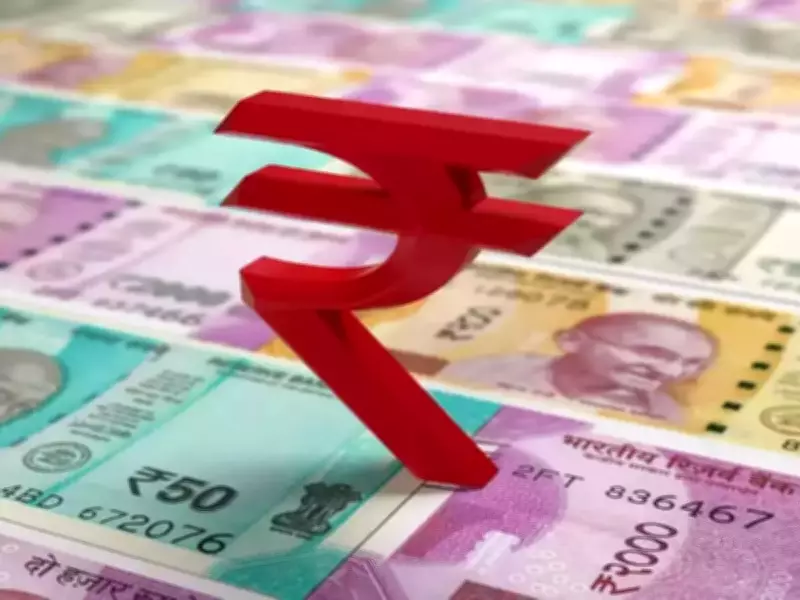
Rupee Stages Strong Rebound After RBI Intervention
The Indian rupee experienced a significant recovery in early trading on Thursday, climbing sharply from its recent record lows. The currency gained 151 paise to reach 93.19 against the US dollar, marking a notable turnaround after a period of sustained pressure.
Regulatory Action Spurs Recovery
This rebound followed a decisive regulatory step by the Reserve Bank of India aimed at stabilizing the forex market. Through a circular issued on March 27, 2026, the central bank placed a cap of $100 million on banks' net open positions in rupee for onshore forward delivery markets. Banks are required to comply with this new limit by April 10, 2026.
The rupee began the trading day in positive territory at 94.62 against the greenback in the interbank foreign exchange market before accelerating its gains. This movement represented a substantial 1.6% increase compared to its previous closing level, providing much-needed relief after recent volatility.

Recent Turbulence and Underlying Pressures
The recovery comes after a turbulent period for the Indian currency, which had slipped past the 95 mark earlier in the week and closed Monday at 94.70. In the previous week, it had reached an all-time low of 94.84 against the dollar, prompting intervention from the central bank.
Despite Thursday's rebound, underlying pressures on the rupee remain significant. Forex analysts have identified multiple factors contributing to continued strain:
- Foreign fund outflows with foreign institutional investors remaining net sellers
- A firming US dollar with the dollar index up 0.32% at 99.77
- Elevated crude oil prices with Brent crude futures rising 4.84% to $106.06 per barrel
- Volatile geopolitical environment affecting global currency markets
Market Reactions and Expert Analysis
Equity markets reflected the cautious sentiment prevailing in financial circles. In early trade, the Sensex fell 1,312.91 points (1.80%) to 71,821.41, while the Nifty declined 410.45 points (1.81%) to 22,383.40.
Data from exchanges revealed that foreign institutional investors continued their selling spree, offloading equities worth Rs 8,331.15 crore on Wednesday alone.
"The high crude price, the widening trade deficit, the fear of declining remittances and sustained FPI selling are acting cumulatively to put high pressure on the rupee," explained VK Vijayakumar, Chief Investment Strategist at Geojit Investments Limited.
Broader Context and Economic Indicators
The rupee's recent trend reflects broader macroeconomic pressures. Since the onset of the Middle East war on February 28, 2026, the currency has weakened by more than 4%. Over the fiscal year ending March 2026, it recorded a decline of nearly 10%, highlighting the sustained challenges faced by the Indian currency.
In a separate economic development, official data released on Wednesday showed goods and services tax collections rose approximately 9% in March, crossing the Rs 2 lakh crore mark. This figure represents the third-highest monthly collection in the 2025-26 fiscal year, supported by revenues from both imports and domestic transactions.
The RBI's intervention through position limits represents a targeted approach to managing forex volatility while allowing market forces to operate within defined parameters. As global economic uncertainties persist, the central bank's actions will continue to play a crucial role in maintaining currency stability and supporting India's economic resilience.






