

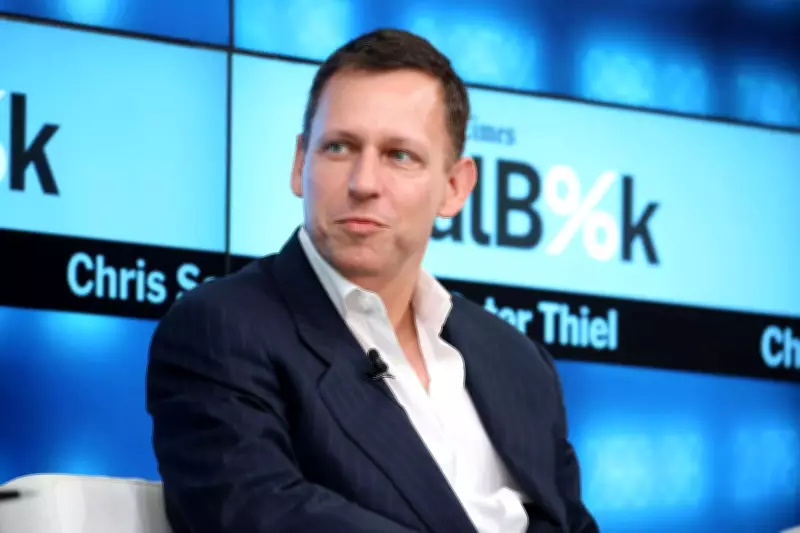
Peter Thiel's Major Portfolio Shift: Exiting Nvidia for Apple and Microsoft
In a significant financial maneuver, billionaire investor Peter Thiel has completely divested his stake in Nvidia, the world's most valuable company, and redirected substantial capital toward tech giants Apple and Microsoft. Regulatory filings reveal that Thiel's hedge fund, Thiel Macro LLC, sold all 537,742 Nvidia shares during the third quarter of 2025, a position valued at well over $100 million.
Strategic Reallocation: From Chips to Consumer Platforms
The Nvidia holding previously constituted approximately 40% of Thiel Macro's portfolio, making this divestment one of the most consequential investment decisions of the year for the prominent venture capitalist. This strategic shift dramatically reduced the fund's US equity exposure by more than half, plummeting from $212 million to just $72 million.
While Nvidia has been the primary beneficiary of the artificial intelligence boom, supplying the crucial chips that power nearly all major AI models today, Thiel appears to be placing his bets on consumer-facing platforms that are integrating AI technology. According to Fortune magazine, Thiel has established new positions in Apple and Microsoft, with a combined value of around $45 million, signaling strong confidence in companies embedding AI directly into everyday products and services.

Microsoft has aggressively incorporated AI across its Office suite, Azure cloud platform, and Copilot assistant, while Apple leverages its ecosystem of over 2 billion active devices and a record-breaking services business to deploy AI innovations to a massive global user base.
Growing Concerns Over an AI Investment Bubble
Thiel's exit from Nvidia coincides with mounting apprehensions about a potential AI bubble in the technology sector. Nvidia recently achieved a historic market capitalization of $5 trillion, cementing its status as the world's most valuable publicly traded company. However, skepticism has intensified following revelations about circular business arrangements where Nvidia invested in AI startups that subsequently committed to purchasing Nvidia's advanced chips.
Industry critics argue that such deals may artificially inflate demand, creating unsustainable market conditions. Thiel himself has publicly characterized the AI sector as "extremely bubbly" and has drawn parallels to the dot-com crash of the early 2000s, while simultaneously acknowledging the transformative potential of artificial intelligence technology.
In an interview with The New York Times last year, Thiel offered a nuanced perspective: "It's more than a nothing burger, and it's less than the total transformation of our society," comparing AI's rapid ascent to the internet boom of the late 1990s.
Implications for the Technology Investment Landscape
This portfolio rebalancing by one of Silicon Valley's most influential investors highlights several emerging trends:
- Shift from Infrastructure to Application: Moving capital from chip manufacturers like Nvidia to platform companies like Apple and Microsoft suggests a strategic pivot toward businesses that directly integrate AI into consumer and enterprise products.
- Risk Management in Volatile Markets: The substantial reduction in equity exposure indicates a cautious approach amid concerns about market valuations and potential corrections in the AI sector.
- Long-term Durability Focus: Thiel's investment choices reflect a belief that companies with established user bases and diversified revenue streams may prove more resilient than those primarily dependent on AI hardware sales.
As artificial intelligence continues to reshape global technology markets, high-profile investment decisions like Thiel's will be closely monitored for signals about the sector's future trajectory and potential vulnerabilities in what remains one of the most dynamic and rapidly evolving areas of the global economy.






