

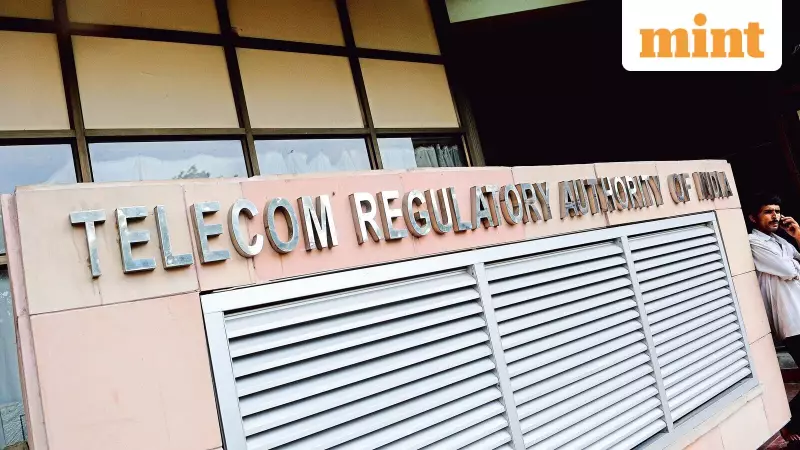
The Telecom Regulatory Authority of India (Trai) has embarked on its first comprehensive review of domestic leased circuit (DLC) tariffs in more than ten years, a move that could significantly alter pricing for the private high-speed broadband lines utilized by banks, IT companies, and data centers. These dedicated lines are essential for secure data transmission and critical operational functions across enterprise networks.
Understanding Domestic Leased Circuits
A domestic leased circuit represents a dedicated broadband connection provided by telecom operators to corporate clients, facilitating secure and high-speed communication between offices, data centers, and operational hubs. Operating across bandwidths from 2 Mbps to 10 Gbps and beyond, these circuits serve as the foundational backbone for enterprise connectivity in India.
Rationale Behind the Tariff Review
Trai announced on Friday that the decision to review ceiling tariffs for DLCs stems from multiple evolving factors, including market dynamics and technological advancements. The regulator noted that service providers currently offer tariffs substantially below the prescribed ceilings on dense routes, suggesting that existing limits may not accurately reflect prevailing market rates. Conversely, remote and hilly regions continue to experience elevated tariffs due to limited competitive pressure.

The authority has issued a consultation paper, inviting stakeholder comments by 22 February to gather insights on the proposed tariff revisions for domestic leased circuits.
Historical Context and Previous Adjustments
Trai currently mandates tariff ceilings for four specific bandwidth capacities: 2 Mbps, 45 Mbps, 155 Mbps, and 622 Mbps. During the most recent review in August 2014, the regulator implemented reductions of up to 60% in DLC tariffs. Following this adjustment, the maximum annual rate for a 2 Mbps leased line spanning 5 to 500 kilometers decreased to ₹3.41 lakh from ₹8.5 lakh.
Similarly, for 45 Mbps leased connections on long-distance bands, the ceiling tariff was lowered by 57% to ₹26.54 lakh annually from ₹61.59 lakh. The revised rate for 155 Mbps capacity was established at ₹58 lakh per year.
Technological Advancements and Cost Reductions
Trai emphasized that bandwidth costs have declined significantly due to progress in transmission technologies. Innovations such as fiber optics, dense wavelength division multiplexing (DWDM), and software-defined wide area networks (SD-WAN) have reduced the unit cost of long-haul bandwidth. However, ceiling tariffs have not been updated to mirror these technological and economic shifts.
Since Trai sets only maximum limits, service providers are permitted to offer lower rates. Current industry discounts range from 30% to 99% below these ceilings, indicating that the 2014 benchmarks are substantially higher than actual market prices.
Expanding Service Provider Participation
The telecom regulator has also solicited feedback on allowing internet service providers (ISPs) to deliver domestic leased circuits. With the anticipated notification of new Telecom Act rules, ISPs may gain authorization to establish their own infrastructure or lease/purchase dark fiber from infrastructure providers or digital connectivity infrastructure provider entities, enabling them to offer managed DLC services.
This expansion would empower ISPs to compete directly with national long distance operators in the DLC market, optimizing monetization of existing network infrastructure and fostering enhanced vitality and competition within the sector. Currently, smaller ISPs depend on circuits leased from larger operators to provide internet services.
Incorporating VPN Services into Tariff Framework
Another critical focus for the regulator involves evaluating the inclusion of virtual private network (VPN) services under the tariff regulation framework, which would terminate their current unregulated status. Under the 2014 regulations, government oversight does not extend to pricing for VPN-based domestic leased circuits.

In 2014, VPNs constituted only 30% of the market, but by the 2023-24 period, their revenue share had increased to 47%. Industry stakeholders suggest that VPN-based circuits are poised to become standard due to superior scalability, flexibility, and cost-efficiency compared to traditional dedicated lines.
Industry Perspectives and Stakeholder Submissions
The Cellular Operators Association of India (COAI), representing private telecom operators, asserted in its May submission to Trai that the DLC market operates efficiently under competitive dynamics, with tariffs already significantly below ceiling limits. COAI argued that additional regulatory intervention is unnecessary and counterproductive, citing robust competition and consumer protection through market forces.
Conversely, major technology companies, represented by the Broadband India Forum, advocate for rationalization of the current DLC tariff structure. In its May submissions, the forum highlighted that bandwidth provision costs have decreased substantially with the transition from legacy leased circuits to IP-based shared bandwidth, a critical factor for consideration in the ongoing tariff review.





