Indian IT Stocks Tumble as AI Concerns Highlight Strategic Blind Spots
The recent sharp selloff in Indian IT stocks amid renewed artificial intelligence concerns has exposed a deeper, more troubling problem — an industry increasingly trapped by short-term thinking that leaves it vulnerable to structural technological shifts.
"Cannot See Beyond Their Nose"
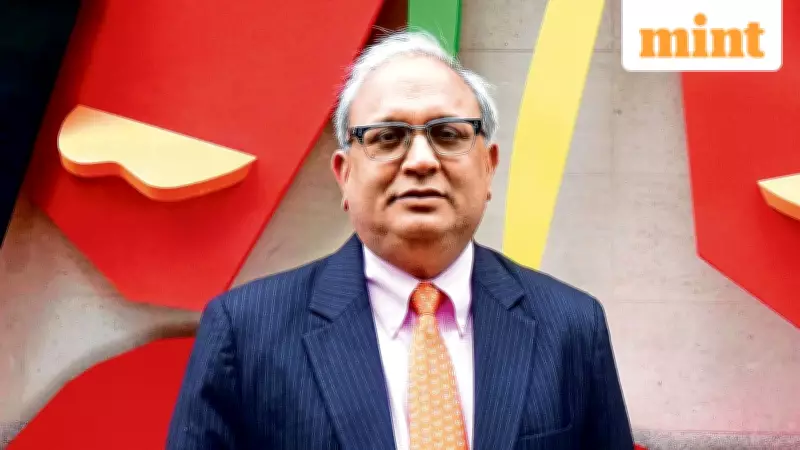
Samir Arora, Group CIO and Fund Manager of Helios Capital, delivered a blunt assessment in a recent social media post, arguing that Indian IT companies "cannot see beyond their nose" and focus obsessively on the next quarter's order book and guidance rather than the fundamental changes reshaping global technology spending.
His comments come as Infosys, Tata Consultancy Services (TCS), HCL Tech and other IT stocks fell up to 8% on Wednesday and continued trading with cuts on Thursday. The selloff was triggered by fears that Anthropic's new plug-in could automate tasks traditionally outsourced to Indian IT services, raising serious doubts about the sustainability of the human-intensive business model that has driven the sector's growth for decades.

"As I have said many times here, Indian IT companies cannot see beyond their nose - they only worry about next quarter's orders and guidance, and if there is visibility for that, they feel confident," said Arora, highlighting what he sees as a dangerous myopia in the face of rapid technological transformation.
Buyback Celebrations Versus AI Reality
The criticism comes at a particularly revealing moment — just as analysts were celebrating buybacks as a positive development for the sector. Days earlier, buyback announcements were being framed as shareholder-friendly moves that would marginally improve post-tax returns under new regulations.
Arora pointed to a telling mismatch in scale and relevance by juxtaposing the market reaction to taxation changes in buybacks against Google's massive capex announcement.
"Imagine that 3 days ago, analysts were celebrating the fact that buybacks are a big positive for the industry - at the same time, Google announces that their capex budget can double to USD 175 billion in one year, and our fellows are celebrating that there will be approx. 0.6 pct saving in taxes due to new buy back rules," Arora noted, emphasizing the stark contrast between global tech giants' forward-looking investments and Indian IT's focus on short-term financial engineering.
Wake-Up Call for Industry Leaders
Vikas Khemani, founder of Carnelian Asset Management and a respected market voice, strongly agreed with Arora's assessment. He issued a wake-up call, particularly for promoters who have "preached government about R&D" but failed to practice what they preached.
"People like Mr Narayan Murthy, who have preached government all along their life to invest in R&D has not done anything for R&D despite having billions at their disposal. If nothing else, they should have created/invested every year 2% of their profit in venture funds... this wouldn't compromise their profits, but money which earns 5% in treasure will get to innovation," Khemani argued, questioning why industry stalwarts haven't allocated more resources to innovation despite their public advocacy for research and development.
Broader Market Ecosystem Shares Blame
Arora also turned the lens inward, blaming not just company managements but the broader market ecosystem for fostering this short-term mindset. "It is also the fault of all of us," he wrote, pointing to the Indian market's limited patience for experimentation.
Promoters are often criticized for investing even their own private capital into new ideas — whether personal flying machines or health technology ventures. Loss-making businesses are routinely mocked regardless of what they might be building, and investors frequently admire fund managers who proudly declare they "don't buy loss-making companies."
"With everyone focused solely on cash flows in the immediate term, what can managements also do," Arora quipped, suggesting that the entire investment community shares responsibility for the current predicament.

Strategic Questions Remain Unanswered
The message from the IT selloff is clear: buybacks and short-term capital return stories may cushion sentiment temporarily, but they do little to address the fundamental strategic question confronting Indian IT — how to stay relevant when global tech spending priorities are being radically reshaped by artificial intelligence.
Arora stresses that earnings don't need to change dramatically in one year for stocks to correct sharply, noting that valuations can "change in a jiffy" when market perceptions shift about a company's long-term prospects in a rapidly evolving technological landscape.
The current crisis serves as a stark reminder that in the age of AI disruption, focusing on quarterly metrics while ignoring structural shifts could prove costly for an industry that has been a cornerstone of India's economic growth and global technological reputation.