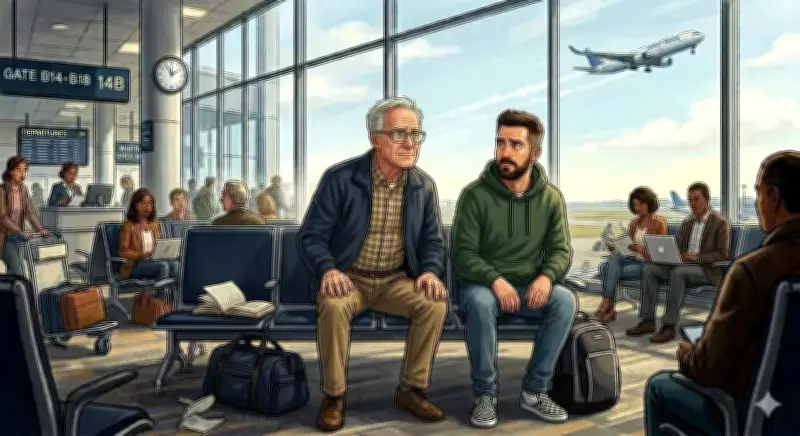
A routine trip to Chicago turned into an overnight nightmare for a Jayanagar resident and his son, culminating in a legal battle against Air India. The incident, which occurred in January 2024, involved a flight diversion from Delhi to Jaipur due to the crew lacking CAT IIIB certification, leading to missed connections and inadequate assistance.
Background of the Case
On January 4, 2024, 68-year-old Satish Nagarajan Iyengar and his 38-year-old son, Rupesh, booked Air India round-trip tickets between Bengaluru and Chicago for Rs 2.9 lakh. Their journey was scheduled to begin on January 18, with a return flight on January 22. On the day of departure, the duo checked in at Bengaluru airport, received two boarding passes each, and their baggage was tagged directly to Chicago. Their flight departed Bengaluru at 9:10 PM and was expected to arrive in Delhi at 11:55 PM, where they would board a connecting flight to Chicago at 2:35 AM.
Flight Diversion and Missed Connection
The flight proceeded normally until entering Delhi airspace, when the captain announced a diversion to Jaipur, citing low visibility. However, the passengers contended that Delhi's CAT IIIB-compliant runways were operational and the aircraft was equipped for landing. They alleged the diversion occurred because the pilots lacked CAT IIIB certification. The aircraft landed in Jaipur, where passengers waited for over an hour while a CAT IIIB-certified crew was flown in. The flight then reached Delhi at 1:52 AM, leaving less than 45 minutes for the connection. Despite assurances, they were met with placards and escorted through a priority channel but were made to wait over 30 minutes. Their baggage was returned, and the Chicago leg was cancelled due to late arrival of AI 808. Air India's Integrated Operations Control Centre (IOCC) later confirmed seats were available but said boarding had closed.

Distress and Lack of Assistance
For Satish, a senior citizen, the situation became distressing. No food, water, seating, or hotel accommodation was provided, nor any timeline for resolution. After a sleepless night at the airport, they booked a hotel at their own expense. The next morning, Air India issued tickets to Bengaluru and promised reimbursement.
Refund Process and Consumer Complaint
On January 21, they filed a refund request. On February 5, Air India confirmed a full refund within 7-14 days. However, by March 5, only Rs 2.4 lakh was credited, leaving Rs 55,328 pending. Despite follow-ups, payment was not made. The issue was escalated to the Ministry of Civil Aviation on July 26, but they received no response. The duo filed a consumer complaint on July 17, 2025.
Air India's Defense
In its defense, Air India cited operational and safety requirements for the diversion, stating low-visibility procedures were mandatory. It argued that boarding had closed by the time they arrived at the gate, making acceptance impossible. It also claimed an alternative routing via London was offered but declined. The airline contended that passengers who opted for a refund could not later claim additional damages. Regarding refunds, Air India stated that out of the total fare of Rs 1.5 lakh per ticket, additional Rs 11,145 had been refunded for one ticket, while Rs 27,664 and Rs 16,519 respectively remained under process or pending approval. The airline maintained that the delay in crediting the balance amounts was due to routine reconciliation and settlement procedures, not mala fide intent.
Consumer Commission's Observations and Order
After hearing both sides, the commission observed that the flight diversion was not due to weather alone but stemmed from the crew's lack of CAT IIIB certification, an internal lapse that could not be treated as force majeure to escape liability. It held that DGCA exemption clauses could not justify leaving a senior citizen stranded overnight without food, water, rest, or accommodation. The partial refund of Rs 2,43,774 was treated as acknowledgement of liability, making the withholding of Rs 55,328 indefensible. It also upheld Rs 33,186 as legitimate damages and concluded that Air India's actions constituted a clear deficiency in service.

The commission bench, comprising president Ramachandra MS and members Nandini H Kumbhar and Savitha Airani, on April 29 ordered Air India to refund Rs 55,328 and pay Rs 33,186 for damages incurred at an interest of 6%. It also directed the airline to pay Rs 20,000 as compensation for deficiency in service, Rs 25,000 for pain and suffering, and Rs 10,000 in litigation costs.