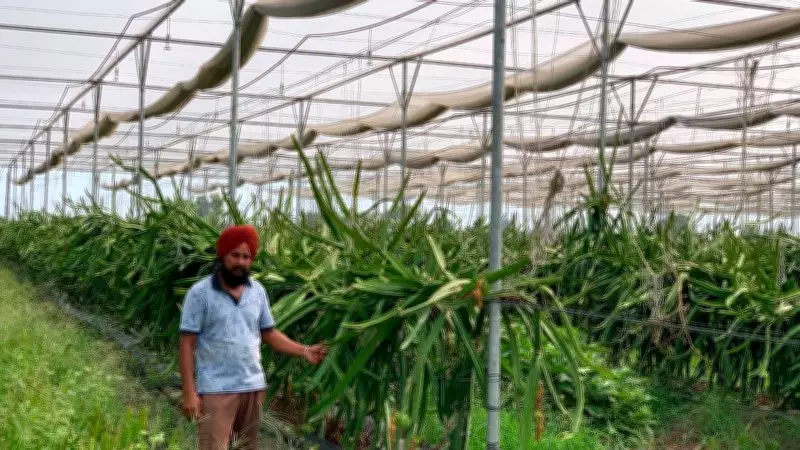
Satnam Singh Aulakh, a 39-year-old farmer from Thulewal village in Barnala district, has successfully replaced conventional wheat-paddy cultivation with dragon fruit farming, earning approximately Rs 12 lakh annually from his four-acre farm.
From two kanals to four acres
Inspired by successful growers in Gujarat, Aulakh's family started dragon fruit cultivation in 2016 on just two kanals of land. Encouraged by positive results, he gradually expanded to four acres. Currently, three acres are cultivated in the open using concrete poles, while one acre is under a shade net house established about two-and-a-half years ago to protect the crop from extreme summer heat and winter frost.
Higher yields with protected cultivation
Aulakh claims to be the first farmer in Barnala district to grow dragon fruit under a shade net house. “Each acre yields around 40 quintals of fruit during the harvesting season from July to November, while protected cultivation produces even higher yields,” he said. The American Beauty variety fetches between Rs 150 and Rs 250 per kg in the market.

Branding and sapling sales
He markets the produce under his own brand name in 10-kg packs across Mansa, Bathinda, Ludhiana and several other districts. Additionally, he sells dragon fruit saplings year-round at Rs 50-60 each to farmers in Himachal Pradesh, Rajasthan, Uttar Pradesh and other states.
Water conservation and organic practices
Adopting dragon fruit cultivation has significantly reduced water consumption compared to paddy farming. The crop is irrigated only four times a year through a drip irrigation system, for which Aulakh received an 80 per cent subsidy from the Soil Conservation Department. He also uses slurry from his household biogas plant as an organic nutrient source, reducing dependence on chemical inputs.
Government support and recognition
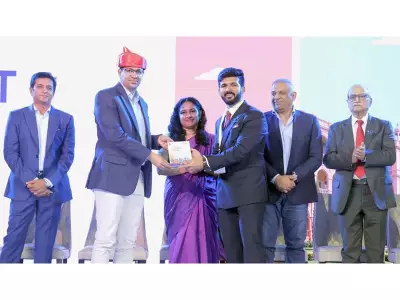
A 50 per cent subsidy from the Horticulture Department helped establish the shade net house. Aulakh received the first prize for dragon fruit production at the Punjab Agricultural University (PAU) Kisan Mela in Ludhiana. He has a large following on social media, where he regularly shares his expertise, and several senior government officers have visited his farm.
Malkiat Singh, Deputy Director, Horticulture, Barnala, said the state government provides a 50 per cent subsidy for establishing new fruit orchards as well as shade net houses. Harpreet Singh, Deputy Commissioner, Barnala, lauded Aulakh’s achievements, describing him as an inspiration for farmers adopting crop diversification and water conservation.