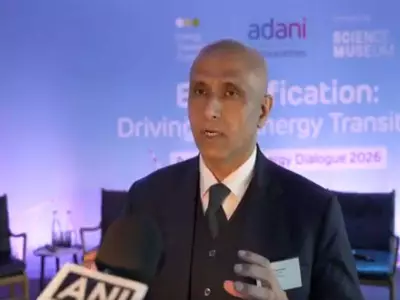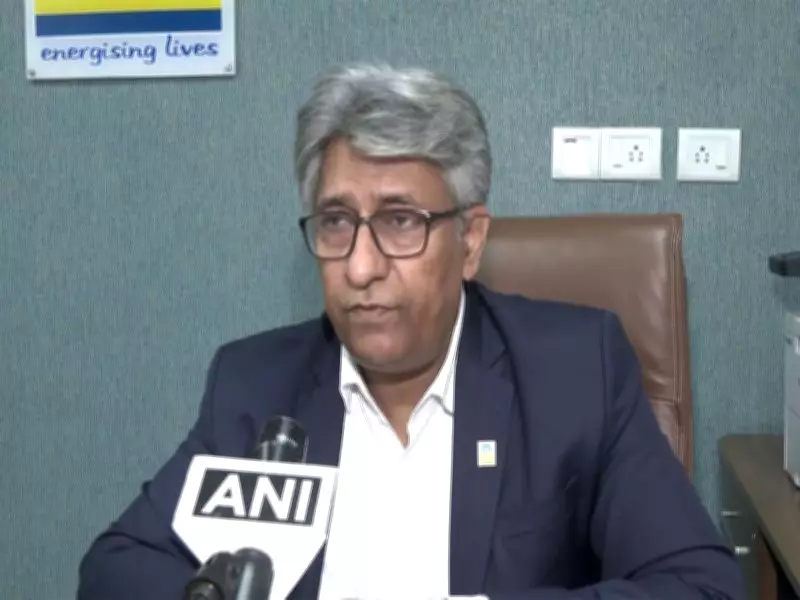
Fossil fuels will continue to be the primary energy source for India for at least the next 10-15 years, with biofuels and other alternatives playing a complementary role rather than replacing them, according to Anurag Saraogi, Executive Director (Biofuels) at Bharat Petroleum Corporation Limited (BPCL). Speaking to ANI, Saraogi emphasized that while biofuels are an integral part of the global energy security framework, their adoption will not displace conventional fuels in the foreseeable future.
Biofuels as a Complement, Not a Replacement
Saraogi stated that biofuels are one of several energy transition pathways being pursued globally. However, he clarified that their contribution will remain supplementary until at least 2035-2040. "India has already achieved 20 percent ethanol blending... right up to 2035-2040, this journey of biofuels or any other alternative energy would not be so much that it replaces the fossil fuels," he said. This indicates that fossil fuels will remain a key part of India's energy mix for the next decade and a half while biofuels gradually gain a larger share.
India's Ethanol Blending Milestone
India has made significant progress in ethanol blending since launching its program in 2003. The country has now achieved a 20 percent ethanol blending target, a milestone that Saraogi highlighted as a major achievement. "India is also not new to adopting it. There is a huge ethanol journey that India has taken since 2003," he noted. The ethanol blending program has been a cornerstone of India's efforts to reduce dependence on imported crude oil and lower carbon emissions.

Advancements in Compressed Biogas and Sustainable Aviation Fuel
Beyond ethanol, India is advancing in the compressed biogas (CBG) sector, supported by various government schemes. Saraogi mentioned that multiple initiatives are available to promote CBG production and adoption. Additionally, discussions are underway to promote sustainable aviation fuel (SAF) for the aviation sector. "In compressed biogas also, we are moving ahead, and there are a lot of available schemes which are available to prosper... there is a dialogue about sustainable aviation fuel for the aviation side also," he said. These efforts align with India's broader energy transition goals.
Energy Transition Pathways
Saraogi underscored that biofuels are a critical component of the global energy security platform. Countries are following multiple transition paths, and biofuels are one of them. However, he reiterated that the pace of adoption will not lead to a rapid displacement of fossil fuels. "Biofuels are an integral component of the global energy security platform. There are multiple energy transition paths which are being followed, and biofuels are one of them," he explained.
Outlook for Fossil Fuels and Biofuels
Looking ahead, Saraogi predicted that fossil fuels will continue to dominate India's energy landscape for the next 10-15 years. Biofuels and other alternatives will increasingly complement the conventional energy basket as the transition gathers pace. This balanced approach ensures energy security while gradually reducing carbon intensity. The government's focus on ethanol blending, CBG, and SAF reflects a pragmatic strategy to integrate renewables without disrupting existing energy infrastructure.