Global Energy Giants Vie for BPCL's Massive ₹35,000 Crore LNG Contract
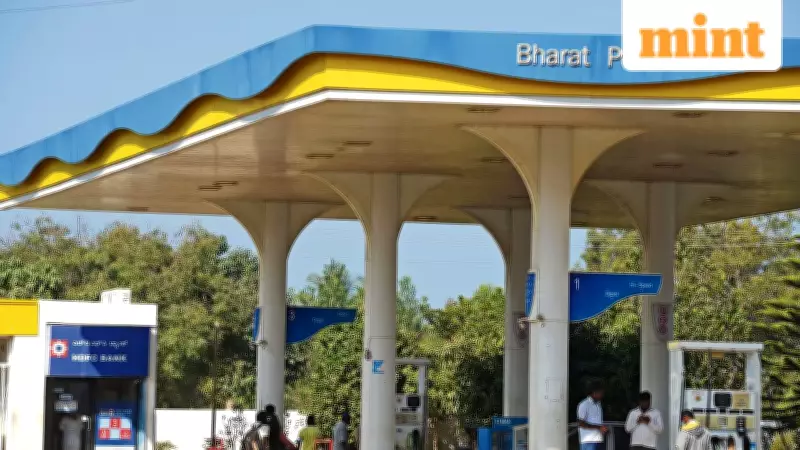
In a significant development for India's energy sector, state-run Bharat Petroleum Corporation Limited (BPCL) has received strong interest from at least ten global energy majors for its substantial liquefied natural gas (LNG) tender. The contract, valued at approximately ₹35,000 crore, aims to secure about 4 million tonnes of LNG over a decade, highlighting India's strategic push to bolster long-term gas supplies amidst geopolitical uncertainties.
Renewed Push for Energy Security
India's refiners and gas supply companies have been actively pursuing long-term gas contracts worldwide to enhance energy security. This initiative follows an uncertain trade environment and the 2022 incident where Russian energy giant Gazprom reneged on a contract with India's state-owned Gail. The current tender represents a crucial step in mitigating such risks and ensuring stable energy access.
According to sources familiar with the matter, prominent players showing interest include Abu Dhabi National Oil Company (Adnoc) Gas, France's TotalEnergies, and Geneva-based trading firm Gunvor. These companies are among those responding to BPCL's tender, which was launched earlier this month to procure 68 LNG cargoes over ten years.

Tender Details and Strategic Importance
"BPCL is currently running an enquiry where for the next ten years we are wanting to source cargoes—four cargoes annually in the first three years, and then eight cargoes annually in the remaining seven years," revealed one source, who requested anonymity. "A total of 68 cargoes would amount to around 4 million tonnes over the decade. The company has received over ten offers from national oil companies and global traders."
A second anonymous source confirmed that Adnoc Gas, TotalEnergies, and Gunvor are key contenders for this large tender, with the contract value estimated at ₹35,000 crore. This development is particularly significant for India, the world's fourth-largest LNG buyer, which spends approximately $15 billion annually on LNG imports. Currently, imports meet about half of the country's LNG demand, with Qatar, the United States, and the United Arab Emirates serving as top suppliers.
India's Growing Gas Consumption and Investments
India's gas consumption is projected to rise, driven by expanding city gas distribution networks and transportation needs. LNG terminal utilization is expected to increase by 20% by 2030 as the country shifts towards greater LNG imports. In response, BPCL plans to invest ₹25,000 crore in its city gas distribution network over the next five years, having already invested around ₹8,000 crore across 26 geographical areas.
Recent data shows that in FY25, India imported 35,720 million metric standard cubic meters (mmscm) of LNG worth $14.9 billion, up from 31,795 mmscm valued at $13.4 billion in FY24. This upward trend underscores the growing reliance on imported gas to fuel economic growth.
Recent Agreements and Market Dynamics
BPCL has been proactive in securing energy supplies. In February last year, the company signed a five-year deal with Adnoc Gas for 40 LNG cargoes totaling 2.5 million tonnes, starting from April 2025. More recently, during the India Energy Week, BPCL entered into a term contract with Brazil's Petrobras to purchase crude oil worth $780 million in FY27.
Additionally, during UAE President Sheikh Mohamed bin Zayed Al Nahyan's visit to India this month, Adnoc Gas signed a pact to supply crude oil worth $2.5–3 billion over ten years to Hindustan Petroleum Corporation Limited (HPCL), another state-run refining major.
India as a Benchmark-Driven Swing Buyer
Sector experts note that as global LNG supply expands, India is positioning itself as a benchmark-driven "swing buyer." This strategy involves tapping spot and short-term cargoes when international price markers align with domestic alternatives, while simultaneously accelerating biofuel adoption to meet transport decarbonization goals.

"India is increasingly a benchmark-driven swing buyer, stepping into the spot or short-term markets during dislocations between West India Marker versus Henry Hub versus Brent-linked pricing," explained Kenneth Foo, global director for LNG price reporting at S&P Global Energy. "India imported just under 26 million tonnes per annum (mtpa) of LNG in 2025. An additional 3.5–4.0 mtpa of long-term contracted volumes is set to start delivering from 2026. Higher term supply leaves limited scope for spot LNG in 2026, especially if prices remain uncompetitive versus propane, naphtha, and fuel oil."
Global Market Outlook and Implications
This tender comes amid concerns about a potential glut in the global LNG market in the coming years, as new liquefaction facilities emerge in the US and Qatar. A recent McKinsey report indicates that global LNG oversupply of over 100 billion cubic meters annually is likely to persist until 2030, making imports cheaper for countries like India. Post-2030, new demand is expected to outstrip supply, potentially tightening the market.
Queries sent to BPCL, Adnoc Gas, TotalEnergies, and Gunvor remained unanswered at the time of reporting, but the strong interest from these global players signals confidence in India's energy market and its long-term growth prospects.