

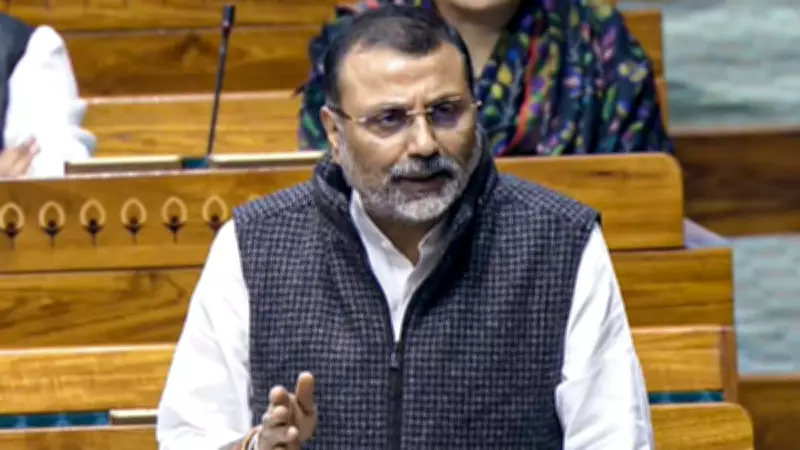
Parliamentary Session Descends Into Chaos Over Dubey's Historical Remarks
A fiery debate erupted in the Indian Parliament today, as remarks made by Bharatiya Janata Party (BJP) MP Nishikant Dubey about former Prime Ministers Jawaharlal Nehru and Indira Gandhi ignited a major political confrontation. The session witnessed intense exchanges between ruling party members and opposition MPs, leading to a temporary halt in proceedings as tempers flared.
Dubey's Controversial Statements Spark Immediate Backlash
During a parliamentary discussion, Nishikant Dubey made pointed comments regarding the legacies of India's first Prime Minister Jawaharlal Nehru and his daughter, former Prime Minister Indira Gandhi. While the exact wording of Dubey's remarks has not been officially detailed in transcripts yet, sources indicate they touched upon historical assessments of their governance periods. These comments were perceived by opposition members as disrespectful towards iconic figures in India's political history.
The reaction from the opposition benches was swift and vehement. MPs from Congress and other parties rose to protest, labeling the statements as "factually incorrect" and "deliberately provocative." They argued that such remarks undermine the dignity of Parliament and disrespect national leaders who played pivotal roles in shaping modern India.

Opposition Demands Formal Apology Amidst Heated Exchanges
The opposition bloc united in demanding an immediate and unconditional apology from Nishikant Dubey. Senior opposition leaders were seen engaging in sharp verbal duels with BJP members, with accusations flying from both sides. The atmosphere grew so charged that the Speaker had to repeatedly intervene, calling for order and decorum.
Key opposition MPs emphasized that parliamentary discourse should maintain respect for historical figures, regardless of political differences. They contended that personal attacks on deceased leaders serve no purpose in constructive debate and only poison the political environment.
BJP Defends Dubey's Right to Free Expression
In response, BJP MPs rallied to defend Nishikant Dubey's right to express his views in Parliament. They argued that historical analysis and critique of past policies fall within the realm of legitimate parliamentary discussion. Some BJP members suggested that the opposition was attempting to stifle free speech by demanding apologies for what they characterized as fact-based observations.
The ruling party members pointed out that parliamentary immunity allows for frank discussions, and that revisiting historical narratives from different perspectives is essential for a mature democracy. This defense further fueled the confrontation, with neither side showing willingness to back down.
Broader Implications for Parliamentary Functioning
This incident highlights the ongoing tensions in India's parliamentary democracy, where debates about historical interpretation often collide with contemporary political rivalries. The clash over Dubey's remarks reflects deeper ideological divides between the ruling BJP and opposition parties regarding the assessment of India's post-independence leadership.
Political analysts note that such confrontations are becoming increasingly common, potentially affecting the productivity of parliamentary sessions. The need for balancing robust debate with mutual respect remains a significant challenge for India's legislative body.
As the session concluded without resolution, the issue is expected to spill over into coming days, with both sides preparing for continued political maneuvering. The incident serves as a reminder of how historical narratives continue to shape present-day political discourse in India's vibrant democracy.






