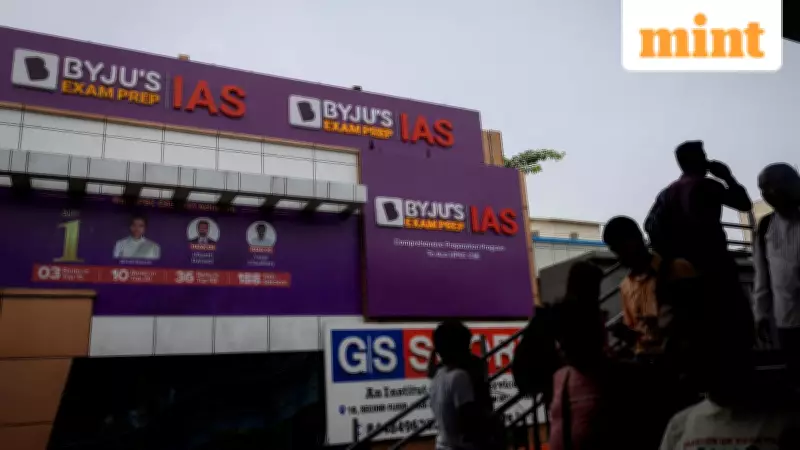
The ongoing insolvency resolution process of edtech giant Byju's has taken a dramatic turn with fresh allegations against promoter Byju Raveendran's Singapore-based investment vehicle. The resolution professional overseeing Think & Learn Pvt. Ltd (TLPL), Byju's parent company, has formally accused Beeaar Investco Pte Ltd of engaging in what he describes as "unlawful conduct" aimed at diluting TLPL's critical rights in test-prep subsidiary Aakash Educational Services Ltd (AESL).
Core Allegations in the Legal Notice
In a detailed legal notice dated 8 January, resolution professional Shailendra Ajmera, a partner at EY's transaction advisory services, has written to the directors of Beeaar. The notice claims that actions taken by the Singapore firm have caused "substantial harm and prejudice" to TLPL, which is currently navigating the corporate insolvency resolution process under India's Insolvency and Bankruptcy Code.
The central allegation revolves around Beeaar's purported involvement in amendments to AESL's articles of association during shareholder meetings. According to Ajmera's notice, these changes systematically removed TLPL's special rights in Aakash and transferred them to the Manipal Group, which currently holds a 58% stake in the test-prep company. The Manipal Group, led by Bengaluru-based billionaire Ranjan Pai, has been an early financial supporter of Raveendran's educational ventures.

The Aakash Educational Services Context
AESL represents a crucial operational component within the Byju's empire, having been acquired by TLPL in April 2021 for approximately $950 million through a combination of cash and stock. The test-prep company reported substantial revenues of ₹2,433 crore during fiscal year 2023, though financial data for the subsequent two fiscal years remains unpublished with the Ministry of Corporate Affairs.
The battle for control over AESL has intensified as lenders to TLPL find themselves in direct conflict with Raveendran and other shareholders. This dispute occurs against the backdrop of a broader financial crisis involving a $1.2 billion term loan that Byju's secured from US-based hedge funds and distressed asset investors in November 2021.
The Rights Issue Controversy
Further complicating matters is AESL's recent ₹250 crore rights issue, which has become a focal point of contention. The resolution professional's notice highlights what appears to be a curious transfer of shareholding rights. According to filings with the Registrar of Companies, Bisy Philip, a businesswoman based in the United Arab Emirates, subscribed to approximately 32.2 million shares worth around ₹16.09 crore in the rights issue.
This stake precisely matches what AESL had publicly announced as being held by Beeaar. The connection becomes particularly intriguing given that Philip is married to Rajendran Vellapalath, whose name has surfaced in US court filings related to some of Byju's American assets. Ajmera's notice suggests that Beeaar renounced its entitlement to the rights issue in favor of Philip, thereby consolidating Vellapalath's influence within AESL.
Directors Named and Their Response
The resolution professional's notice specifically identifies two Singapore-based senior executives of global professional services firm Alvarez & Marsal as Beeaar's directors: Joshua James Taylor, a managing director, and Srikanthan (Rajan) Natarajan, a senior director. Ajmera alleges that these individuals possessed "sole and exclusive power and authority" to act on Beeaar's behalf regarding AESL matters.
However, in a response dated 9 January, Taylor and Natarajan firmly rejected these allegations. They clarified that they were appointed as Beeaar's directors for limited purposes following an "event of default" under financing arrangements with alternative investment management firm Davidson Kempner. The directors stated they were approached to serve as nominee directors in July 2023 and maintained they had no knowledge of or participation in most AESL shareholder meetings and actions referenced in the notice.

Legal Implications and Expert Analysis
At the heart of this complex dispute lies a fundamental legal question: were Beeaar's rights and votes exercised through properly authorized channels, or through documents that the directors claim they never signed? According to legal experts, such conflicts typically hinge on documentary evidence—board resolutions, signatures, and internal control mechanisms that establish who possessed legitimate authority.
B. Shravanth Shanker, managing partner at B. Shanker Advocates Llp, emphasized the importance of authorization in rights issue matters. "Since a rights issue represents a statutory entitlement, any renunciation must constitute a 'voluntary and conscious act' by the shareholder," he explained. "If the resolution professional can demonstrate that the renunciation was forged or unauthorized, the allotment to the third party becomes void from the beginning."
Regarding potential legal remedies, Shanker suggested that seeking a temporary injunction to maintain the status quo and prevent further transfer of disputed shares could serve as an initial step. A more permanent solution might involve filing a petition under Section 59 of the Companies Act, 2013, which allows aggrieved parties to request correction of a company's register of members. Such legal action could effectively ask the tribunal to reverse allegedly improper entries in shareholding records and restore the register to its proper state.
Broader Insolvency Context
These allegations emerge as TLPL's insolvency proceedings continue under the supervision of the National Company Law Tribunal. The process was initiated in July 2024 when GLAS Trust Co. LLC, serving as administrative and collateral agent for TLPL's $1.2 billion lenders, approached the Bengaluru bench of the NCLT. The lenders cited months of unsuccessful restructuring negotiations and alleged defaults under the term loan agreement as justification for their insolvency petition.
Since then, GLAS Trust has dominated TLPL's committee of creditors, with a National Company Law Appellate Tribunal order noting that the firm holds an overwhelming 99.41% of the voting share. This creditor control adds significant weight to the resolution professional's allegations and actions.
The ongoing dispute underscores the complex corporate governance challenges that can emerge during insolvency proceedings, particularly when multiple jurisdictions and intricate corporate structures are involved. As the resolution process continues, the allegations against Beeaar and the subsequent rebuttals from its directors will likely play a crucial role in determining the ultimate fate of AESL within the Byju's corporate ecosystem.