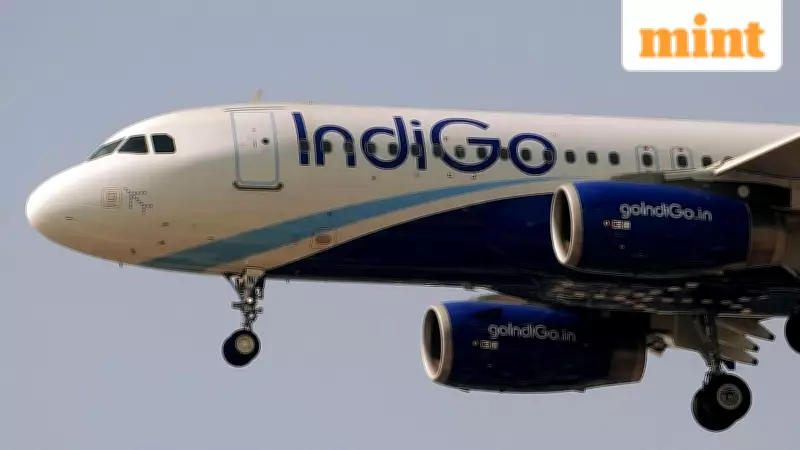
CCI Orders Antitrust Investigation Into IndiGo Over Alleged Market Dominance Abuse
In a significant regulatory move, the Competition Commission of India (CCI) has ordered a comprehensive antitrust investigation into IndiGo, India's largest airline, for alleged abuse of dominant position. This action follows widespread flight cancellations and sharp fare increases that occurred in December, leaving thousands of passengers stranded across the country.
Regulatory Action and Preliminary Findings
The competition watchdog, in a detailed 16-page order dated 4 February, has directed its investigative arm, the Director General (DG), to examine whether IndiGo violated provisions of the Competition Act. The CCI has observed that passengers were effectively locked in with limited alternatives when facing last-minute cancellations and were compelled to accept significantly higher prices for rebooking.
The Commission noted that IndiGo's conduct appears to have created an artificial scarcity in the market, particularly during peak travel periods. By cancelling thousands of flights that constituted a substantial portion of its scheduled capacity, the airline effectively withheld services from the market, limiting consumer access to air travel when demand was at its highest.

Market Dominance and Structural Power
The CCI's order extensively details IndiGo's commanding position in the domestic aviation market. According to data from the Directorate General of Civil Aviation (DGCA), IndiGo accounted for approximately 60-61% of domestic passenger volumes and capacity over the past two financial years. In FY25 alone, the airline carried over 104 million passengers.
The Commission highlighted several factors contributing to IndiGo's dominant position:
- Operation on 643 out of approximately 835 domestic city-pair routes
- Sole operator status on more than 330 routes in recent months
- Largest fleet in India with over 400 aircraft
- Sustained profitability while most competitors remain loss-making
- Control over approximately 60-61% of total domestic Available Seat Kilometres
"Such structural presence on a large number of monopoly routes constitutes a relevant indicator of market power," the CCI stated in its order.
December Operational Disruption and Passenger Impact
The investigation stems from IndiGo's operational challenges during the first week of December, when the airline cancelled over 4,500 flights. While the airline initially attributed the disruptions to technical glitches, winter schedule changes, adverse weather conditions, increased congestion, and implementation of new flight duty time limitations, subsequent investigations revealed deeper issues.
The DGCA's January probe identified over-optimised operations and inadequate regulatory preparedness as primary causes. The aviation regulator noted deficiencies in system software support and failure to implement adequate buffers and FDTL norms properly.
One particularly illustrative case involved passenger Kartikeya Rawal, whose return flight was cancelled just hours before departure without alternative arrangements. He was forced to rebook with the same airline two days later at a fare of ₹17,000, significantly higher than his original ticket price of ₹7,173. The CCI emphasized that this was not an isolated incident, with widespread reports of similar experiences across the country.
Legal Framework and Regulatory Implications
The Commission has invoked Sections 4(2)(a)(i) and 4(2)(b)(i) of the Competition Act 2002, which specifically address abuse of dominant position. The CCI noted that IndiGo's conduct appears to be causing an appreciable adverse effect on competition in India.
Significantly, the Commission has clarified that DGCA's regulatory oversight under the new Bhartiya Vayuyan Adhiniyam (BVA), 2024 does not preclude antitrust scrutiny. The aviation regulator itself informed the Commission that it lacks economic regulatory powers over airfares and is not vested with authority to conduct competition analysis.

Legal Perspectives and Industry Impact
Legal experts have highlighted the broader implications of this investigation. Rohit Jain, managing partner at Singhania & Co., noted that "the order sets a critical precedent that the aviation sector is not immune to antitrust scrutiny, even with the new BVA 2024 in place."
Bharat Kumar, associate partner at Saikrishna & Associates, described the order as "a timely reminder that market leadership comes with heightened responsibility" and "a big win for the passengers affected by the disrupted flight services."
Advocate Anish E. Raveendran of the Bombay High Court observed that the direction for detailed investigation "significantly elevates the airline's legal exposure from regulatory non-compliance to potential antitrust liability" and carries "precedential significance for the aviation sector."
Investigation Timeline and Next Steps
The Director General has been directed to complete the investigation and submit a report within 90 days from the date of receiving the order. The Commission has emphasized that its current findings are preliminary and do not constitute a final expression of opinion on the merits of the case.
This investigation marks a significant development in Indian aviation regulation, potentially establishing new boundaries for dominant market players' conduct during periods of operational stress and peak demand. The outcome could have far-reaching implications for how airlines manage capacity, pricing, and passenger service during disruptions while maintaining compliance with competition laws.