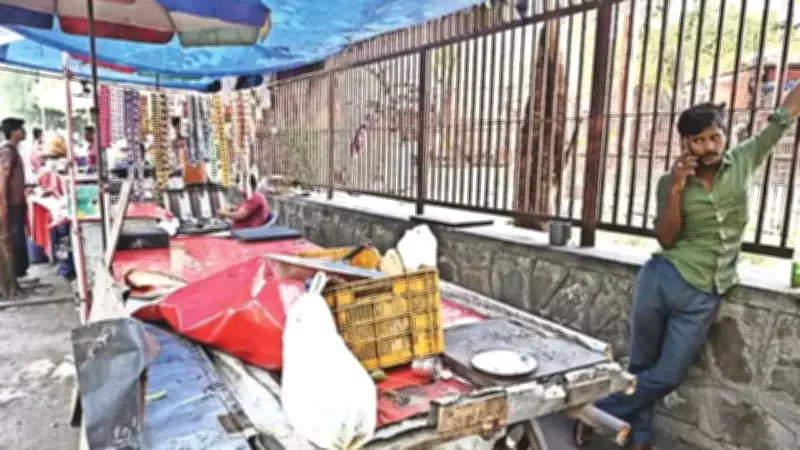
NEW DELHI: A street vendor on Friday captured the distress among Delhi's small eateries and roadside stalls after the steep hike in commercial LPG prices, saying, "I don't have the money to buy a big cylinder, and am unable to get a smaller one." Many fear that rising fuel prices, erratic supply, and a growing black market could make it harder to keep their businesses afloat.
Impact of Price Hike
The price of a 19-kg commercial LPG cylinder was raised by Rs 993 on Friday, taking the rate in Delhi to Rs 3,071.5. The 5-kg LPG cylinder saw a Rs 261 hike, pushing its price to Rs 810.5. Vendors said the increase comes at a time when commercial LPG supply has already remained strained for weeks, forcing many to either shut shop temporarily or shift to coal-fired stoves or rely on domestic cylinders bought at inflated rates through the black market.
Stories from the Streets
At ITO, Md Tazim, who runs a breakfast stall serving parathas, tea, eggs, and bread, said he had shut his stall for nearly two weeks after commercial cylinders were unavailable. He has now shifted to coal to keep the business running. One of his workers, coughing as thick smoke rose from the coal stove, said, "This is also harming health." Tazim noted that the crisis had already hit business over the past month, with many daily wagers leaving Delhi and returning to their villages.

On Mathura Road outside the zoological park, Shankar, who runs a chhole-bhature stall with his family, said it had remained shut for days because commercial cylinders were unavailable. "Our family depends on this stall. Our customers have left the city. If this goes on, we will starve," he said.
Black Market and Supply Issues
For many vendors, the problem is no longer just the high price of LPG, but access to the cylinders. Several said commercial cylinders are difficult to secure through regular supply channels, forcing them to depend on domestic LPG sold in the black market often diverted and resold by middlemen at inflated rates. Vendors said domestic cylinders, usually a fallback during such shortages, are already being sold for Rs 3,000 to Rs 4,000, and fear the latest hike in prices of commercial cylinders will push those rates even higher. "Domestic itself is so expensive. Middlemen are selling it in black," said a vendor.
Smaller vendors said even 5-kg cylinders, often the only affordable option for carts and kiosks, have become harder to access. Rakesh, a street food vendor near Sarai Kale Khan, echoed this concern, adding that many small operators are now considering leaving the city if conditions do not improve.
Electric Alternatives Not Viable
Switching to electric alternatives, often seen as a workaround, has brought little relief. Vendors said induction stoves sharply push up electricity bills, while frequent power cuts make them unreliable for cooking. Rajneesh Rathore, who runs a small food stall in Jangpura, said, "The electricity bill becomes double. And that too only when electricity is available." Another vendor noted that electricity itself was becoming a deterrent for small operators, with those relying on it having to pay a lot.
Larger Eateries Also Affected
For larger eateries, the pressure is no less severe. Sunny, who runs a restaurant in Lajpat Nagar, said a 19-kg commercial cylinder lasts barely two days in a full kitchen, while black-market rates have already touched Rs 6,000 in recent weeks. "The rates will further go up," he said, adding that his restaurant is now exploring pipeline gas as a longer-term alternative.
Anurag Katriar, trustee of the National Restaurant Association of India, said restaurants were already trying to reduce LPG dependence by shifting part of their operations to electric systems, but warned the pressure would eventually be felt by consumers. "We either have to absorb the hike or pass it on to consumers," he said.