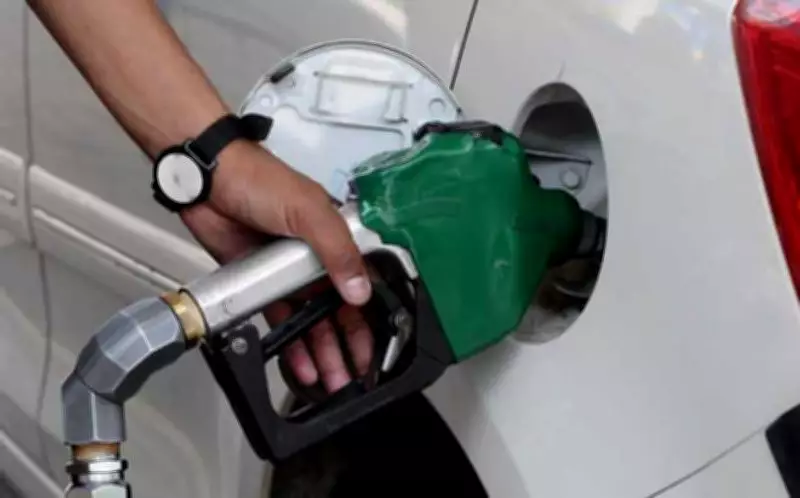
The central government and leading automobile manufacturers have jointly clarified that while E20 ethanol-blended petrol may cause a marginal reduction in mileage, it does not damage vehicle engines, including older models. The clarification comes amid widespread public concerns following the nationwide rollout of E20 fuel.
Government and automakers address public concerns
The Ministries of Petroleum and Natural Gas, Heavy Industries, and Road Transport and Highways convened a meeting with major automakers to address apprehensions about fuel efficiency and engine compatibility. The automakers affirmed that E20 fuel underwent rigorous scientific testing before its introduction across India.
Maruti Suzuki, India's largest carmaker, presented extensive field data showing no engine issues related to E20, even in vehicles not originally certified for the fuel. Rahul Bharti, Senior Executive Officer (Corporate Affairs) at Maruti Suzuki, stated that of the 2.84 crore vehicles serviced by the company during 2025-26, more than 1.5 crore were over three years old and not E20-certified. “No cases of corrosion, abnormal wear and tear or reduction in component life attributable to E20 have been reported,” he said.

Mileage impact and performance benefits
Bharti acknowledged that E20 petrol has a lower calorific value than E10, resulting in a 3-3.5 percent reduction in mileage—approximately 0.6 km per litre for a vehicle delivering 20 kmpl. However, he noted that the impact is often outweighed by factors such as tyre pressure, driving habits, and vehicle maintenance. He added that ethanol offers better acceleration, improved anti-knocking characteristics, and lower emissions.
Toyota Kirloskar Motor’s Country Head and Executive Vice-President Vikram Gulati said E20 was introduced only after extensive testing, including on older vehicles, and that certification followed internationally accepted UNECE protocols. Describing ethanol as a “clean, high-performance fuel,” he noted its global use for decades, including in motorsports, and clarified that E85 dispensing stations are meant only for flex-fuel vehicles.
Scientific backing and industry support
Former Engineers India Ltd CMD Vartika Shukla said the ethanol blending programme is backed by scientific evidence and global best practices, with E20 conforming to BIS standards and BS-VI emission norms. Hero MotoCorp Chief Business Officer Ashutosh Varma confirmed that the company’s service data found no increase in vehicle damage associated with E20 fuel.
The clarification comes amid an ongoing debate over E20 petrol, with motorists raising concerns about fuel efficiency and compatibility after its nationwide rollout. While the government acknowledges a marginal drop in mileage due to ethanol’s lower energy content, it maintains the fuel is safe and key to reducing crude oil imports and vehicular emissions.