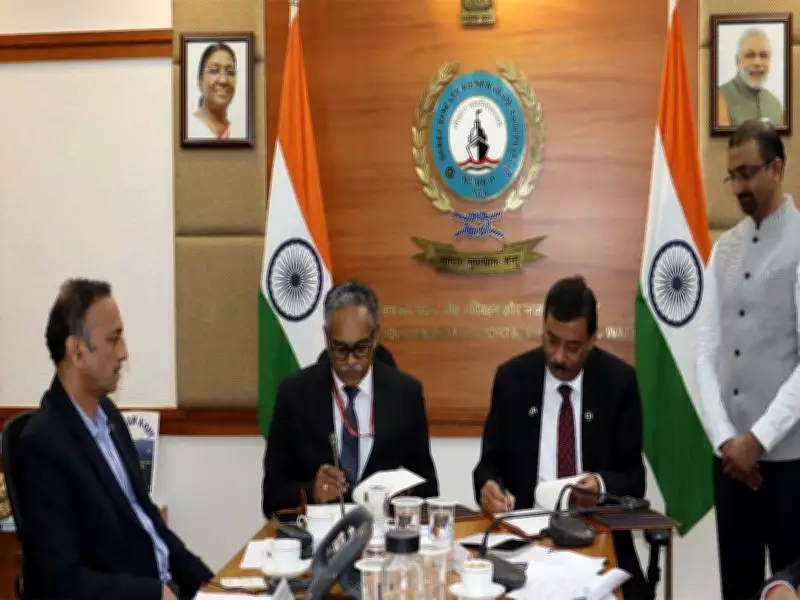
Engineers India Limited (EIL) has signed a memorandum of understanding (MoU) with the Directorate General of Maritime Administration (DGMA) to provide engineering, technical advisory and consultancy services for the planning, development and modernisation of projects in the maritime sector. The MoU, signed on July 24, establishes a framework under which EIL will support DGMA, formerly the Directorate General of Shipping under the Ministry of Ports, Shipping and Waterways, with project management and technical consultancy services for maritime infrastructure projects.
Partnership Framework and Scope
According to EIL's press release, “The MoU provides a framework for collaboration under which EIL will offer its engineering, technical advisory, project management, and consultancy services to DGMA for the planning, development, modernization, and implementation of projects in the maritime sector.” The company said the partnership will leverage EIL's experience in hydrocarbon, marine and offshore sectors to support projects aimed at strengthening India's maritime capabilities.
The scope of cooperation is broad, covering feasibility studies, infrastructure planning, technology integration, capacity enhancement, and other specialized technical services as may be mutually identified. EIL added that the collaboration will draw on its multidisciplinary expertise in engineering, project management, digital solutions, sustainability and infrastructure development to assist DGMA in implementing maritime projects.

Alignment with Government Vision
The company said the partnership is aligned with the Government of India's vision of developing world-class maritime infrastructure and strengthening the maritime sector as a driver of economic growth. The release noted, “It is also expected to contribute to the objectives of improving efficiency, promoting sustainability, and encouraging the adoption of modern technologies in maritime infrastructure development and administration.”
DGMA, as the nodal agency for maritime administration, oversees regulatory framework, safety standards, and development of ports and shipping. With India aiming to raise its port capacity and modernize coastal infrastructure, such collaborations are seen as pivotal. EIL, a public sector enterprise under the Ministry of Petroleum and Natural Gas, brings decades of experience in large-scale projects, including offshore platforms, pipelines, and refineries, which can be adapted to maritime needs.
Technical Expertise and Sustainability
EIL’s press release emphasized that the MoU also reflects the commitment of both organisations to promote technical excellence and institutional collaboration while supporting the development of a modern, resilient and sustainable maritime ecosystem in India. The company highlighted its capabilities in digital twin technology, green port initiatives, and energy-efficient designs as part of the consultancy offerings.
Industry experts view this partnership as a step towards integrating advanced engineering practices into the maritime sector, which has traditionally relied on conventional methods. The collaboration is expected to accelerate the rollout of projects under the Sagarmala programme and other national initiatives. By combining DGMA’s domain knowledge with EIL’s project management expertise, the MoU aims to reduce project delays and cost overruns while ensuring high standards of safety and environmental compliance.
The MoU is valid for an initial period of three years, with provisions for extension by mutual consent. Both organizations will form a joint working group to identify specific projects and monitor progress. EIL stated that it will deploy dedicated teams to support DGMA’s requirements, including site assessments, detailed engineering reports, and bid process management.
This agreement marks another milestone in EIL’s diversification strategy beyond its core hydrocarbon business. The company has been actively pursuing opportunities in infrastructure, water management, and now maritime, leveraging its engineering pedigree to support national development goals.