New EPF Scheme 2026 Notified, Replaces 1952 Framework
The Ministry of Labour and Employment has officially notified the Employees' Provident Fund (EPF) Scheme, 2026, effective immediately, replacing the decades-old Employees' Provident Fund Scheme, 1952. This major overhaul aims to modernise India's provident fund system through enhanced digital compliance, simplified processes, and alignment with the new labour codes.
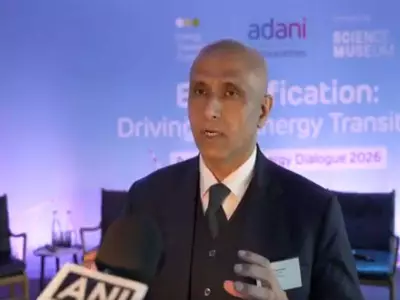
While the statutory contribution rate remains unchanged at 12 per cent each from employers and employees, the 2026 scheme introduces a technology-driven framework that mandates digital submissions and tighter governance. According to Puneet Gupta, Partner, People Advisory Services at EY India, the scheme is a pivotal step in implementing the labour codes. "The new Employees' Provident Fund Scheme, 2026 represents a major milestone in the next phase of implementation of the labour codes. Coming into effect immediately, it modernises the provident fund framework through greater digitalisation, simplified processes and enhanced compliance requirements for both employers and employees," Gupta told ANI.
Simplified Partial Withdrawal Rules for Members
One of the most significant changes under the new scheme is the simplification of partial withdrawal rules. EPF members can now withdraw funds for illness, education, marriage, housing-related needs, and specified special circumstances, subject to prescribed conditions and maintaining a minimum balance. Gupta highlighted the employee benefits, stating, "From an employee's perspective, some of the most notable changes relate to withdrawals and access to savings. Members will be able to make partial withdrawals under simplified rules for essential needs such as illness, education and marriage, as well as for housing requirements and specified special circumstances, subject to prescribed conditions and maintenance of a minimum balance."

The scheme mandates that members furnish Aadhaar, PAN, and Aadhaar-seeded bank account details to facilitate digital processing. This move is expected to streamline claims and reduce paperwork.
Changes in Contribution Rules for Higher Earners
Employees earning above the statutory wage ceiling can remain outside mandatory EPF coverage unless both employer and employee jointly opt for inclusion. For those covered, mandatory contributions are calculated only up to the notified wage ceiling. Employees may voluntarily contribute on wages exceeding the ceiling or at a rate higher than 12 per cent, with employers having the option to match such contributions. These voluntary contributions can later be reduced or discontinued by either party.
Enhanced Compliance and Governance for Employers
Employers face new compliance requirements, including contractor compliance, ownership disclosures, electronic filings, and additional obligations for exempted provident fund trusts. "For employers, the new framework introduces enhanced governance and compliance obligations, particularly around contractor compliance, ownership disclosures, electronic filings and exempted PF trusts," Gupta said. Employers must file prescribed returns within 15 days and comply with electronic reporting, including monthly employee-related filings. Organisations with exempted PF trusts must apply for continuation of exemption within the transition period.
New Initiatives: Enrolment Campaign, VISHWAS 2026, and AMNESTY 2026
The scheme introduces three initiatives to regularise past compliance gaps: the Employees' Enrolment Campaign 2026 for previously uncovered employees, VISHWAS 2026 for reducing damages in legacy litigation, and AMNESTY 2026 for employers operating private PF trusts. These provide opportunities to resolve long-pending issues and broaden social security coverage.
Overall, the EPF Scheme 2026 reflects a clear policy direction towards wider social security coverage, stronger digital compliance, and improved benefit delivery, as per Gupta. The scheme is effective immediately upon notification.