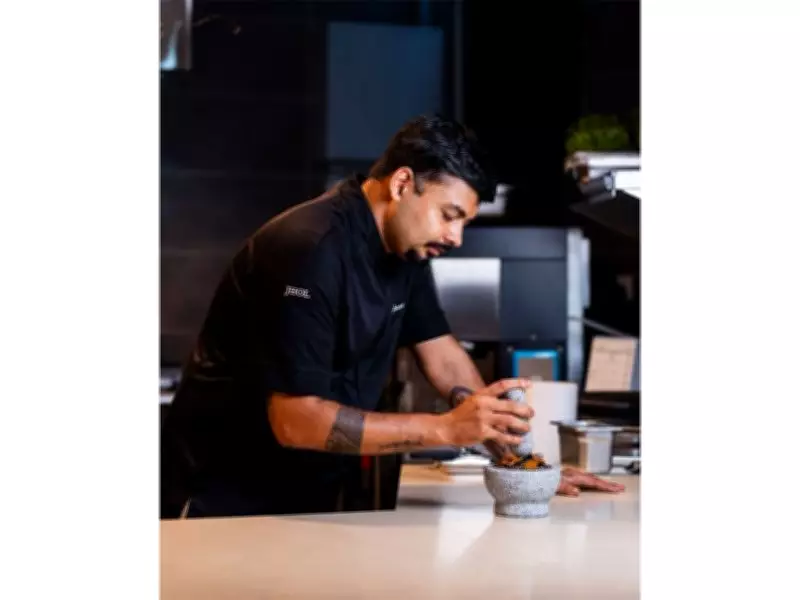
Chef Gaurav Gupta's career spans some of the most rigorous training grounds in Indian and Southeast Asian hospitality, including Taj Hotels, The Leela, Indian Accent, and Michelin-recognized kitchens in Bangkok. He now serves as Executive Chef of JHOL Kuala Lumpur, a three-concept coastal Indian property under Clifftop Group Asia. In this Q&A, he discusses the realities of building a global culinary career.
Working Across Different Kitchen Cultures
Having worked in India, Thailand, and Malaysia, Chef Gupta has been exposed to diverse cultures, techniques, and leadership styles. He notes that while discipline and fundamentals remain constant, communication must adapt to teams comprising Thai, French, Lebanese, or Japanese chefs. "What carries over is discipline; the fundamentals don't change from country to country. What changes is how you communicate them to a team that might be Thai, French, Lebanese or Japanese in the same kitchen on the same night," he says.
Misconceptions About Fine Dining Careers
According to Chef Gupta, the biggest misconception is that creativity alone defines great cooking. "In reality, creativity comes after you've mastered the fundamentals. The small things you do every day, your discipline, your consistency, your willingness to keep learning are what actually define you as a chef. Nobody hands you creative license before you've earned it," he explains.

Leading a Multi-Concept Kitchen
At JHOL Kuala Lumpur, Chef Gupta oversees a kitchen that serves a restaurant, a cocktail bar, and a shisha lounge. This requires mentorship to be integrated into daily operations rather than treated as a separate task. "From showing junior chefs how to balance spices to grooming the next generation of leaders, you're training people for more than one guest experience at once. Running a kitchen like that takes empathy and communication as much as technical skill," he states.
Advice for Aspiring International Chefs
Chef Gupta advises young chefs to build a strong foundation before chasing trends. "India's culinary heritage alone offers a lifetime of learning to understand your regional traditions before you try to reinterpret them. And be patient. Culinary careers aren't built overnight. Every service, every mistake, every mentor becomes part of your education," he emphasizes.
Future Plans
This summer, Chef Gupta plans to travel through Goa, Coorg, Madurai, Kerala, and Kolkata to study coastal cooking traditions, from Coorg's Pandi Curry to Madurai's dosa-making techniques. This research will shape JHOL's next seasonal menu. "For me, every new menu should begin with a journey, not a cookbook," he concludes.
This article is based on a press release from VMPL, as published by ANI. The Tribune assumes no responsibility for its accuracy.