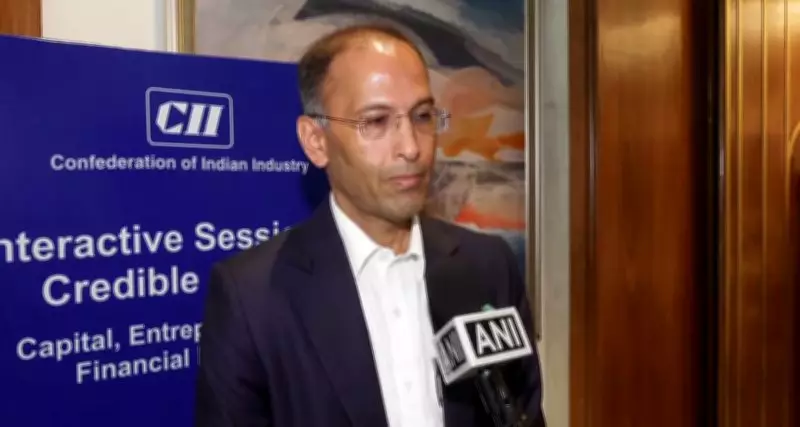
Abhishek Rara, Partner at Price Waterhouse LLP (PwC), stated on Friday that while temporary global shocks could affect India's first-quarter economic performance in financial year 2026-27 (April-March), the country's long-term growth trajectory remains strong despite prevailing uncertainties. Speaking to ANI on the sidelines of an industry discussion on Credible Growth: Capital, Entrepreneurship and Financial Reporting, Rara emphasized that India is expected to grow sustainably above 6.5% to 7% over time.
Short-Term Hiccups vs. Long-Term Growth
Rara acknowledged the presence of uncertainty but highlighted that projections from various agencies confirm India's sustained growth. "We do have certain uncertainty. But I think if you see this quarter's performance and look at the long-term growth, and with all the projections coming out from various agencies, it's clear that India will continue to grow north of 6.5 per cent to 7 per cent on a sustainable basis over a period of time," he said. He added that short-term fluctuations due to external factors are normal in any long-term growth cycle: "We may have short hiccups or periods where growth may not be at that level because of external factors. But that's how long-term growth works. You will have ups and downs during that time."
Credible Growth and Governance Framework
The industry discussion focused on what constitutes credible growth from an investor perspective and the importance of robust governance frameworks in attracting long-term capital. Rara explained: "Well, we talked about what is credible growth. Since it was more of the investor community, they expect that the enterprises they invest in should have a robust governance and financial reporting framework. That's what we discussed today." The event aimed to strengthen investor confidence through sound corporate governance and transparent financial reporting.

Financial Inclusion and Digital KYC
On financial inclusion, Rara noted that the government has simplified access to the financial system through electronic Know Your Customer (eKYC) measures. He said efforts are now being extended to benefit non-resident Indians (NRIs) and foreign nationals. "The government representative was talking about how they are trying to make it easier for people to get into the financial system. One of the steps is eKYC or digital KYC and the measures that the government has taken," Rara said. He added: "Today, that works seamlessly for Indians in India. What the government is also looking for is what steps can be taken to make that easier for NRIs as well as foreign nationals to do their digital KYC."
Industry Reforms: Reducing Compliance Burden
Responding to a question on reforms sought by industry, Rara said businesses are looking for a regulatory environment that encourages investment while reducing the compliance burden. "Compliance requirements are onerous. Whether you're a small business or a large business, what they're looking for is how the government can make sure compliance requirements are lower, and also that the government builds an enabling environment where industry can invest and thrive," he stated.
Resilient Fundamentals Amid Global Uncertainty
Rara concluded that while global developments may create short-term uncertainty, India's long-term economic fundamentals remain resilient. Various projections point to sustainable growth over time, and temporary fluctuations should be viewed as a normal part of the growth cycle. The discussion reinforced the need for strong governance and financial reporting to maintain investor confidence and attract long-term capital.