Goa Business Chamber Presents Comprehensive Pre-Budget Demands to Chief Minister
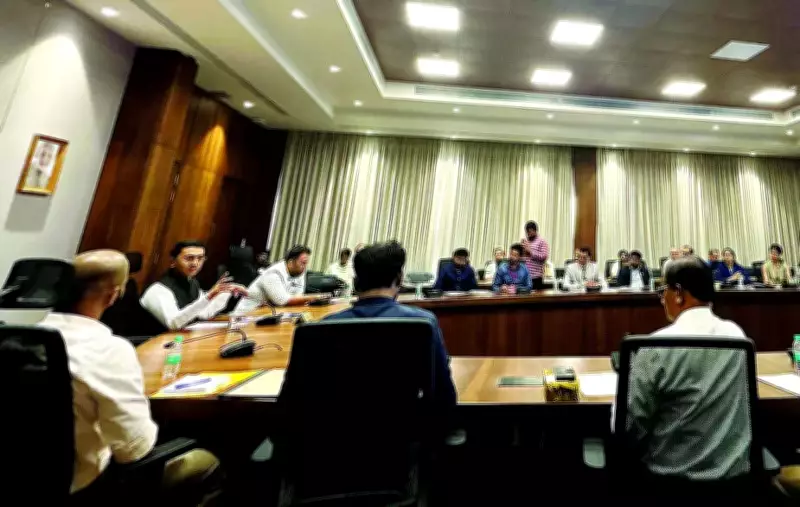
The Goa Chamber of Commerce and Industry (GCCI) formally presented its detailed pre-budget recommendations for the fiscal year 2026-27 to Chief Minister Pramod Sawant on Friday. The extensive submission covers multiple critical sectors of the state's economy, with a central plea for the government to refrain from introducing any new taxes or increasing existing tax rates.
Infrastructure and Transportation: A Call for Systemic Overhaul
GCCI President Pratima Dhond emphasized the urgent need for a mass transit system connecting Goa's major urban centers, airports, railway stations, and bus terminals. This recommendation addresses the severe strain on state highways, which currently function as local roads, and the recognized inadequacy of the existing taxi and bus networks.
The chamber's infrastructure demands extend to industrial areas, calling for:

- Increased budgetary allocations for road development, water supply, and electricity within industrial estates.
- Establishment of a dedicated raw water supply pipeline for industries to alleviate pressure on domestic water resources.
- A review of the sharp increase in house tax for industries located outside designated industrial zones, which has risen from Rs 12 per square meter to Rs 200 per square meter.
Financial Support and Renewable Energy Initiatives
On the financial front, the GCCI proposed enhancing the limit of the CMRY scheme from Rs 25 lakh to Rs 1 crore for larger projects facilitated through the Small Industries Development Bank of India (SIDBI).
A critical focus was placed on the state's renewable energy policy. The chamber highlighted that Goa's current solar policy is set to expire on March 31 and urged the government to notify a revised policy without delay, noting that approval processes typically require 45 to 60 days. Furthermore, the GCCI advocated for the expansion of virtual net metering capacity up to 90kW. This push comes against the backdrop of Goa's solar generation capacity standing at 80MW, significantly lower than the state's total power consumption of 850MW.
Agriculture, Tourism, and Sector-Specific Proposals
The recommendations included several measures to boost the agricultural sector:
- Establishing weekly farmers' markets exempt from local taxes.
- Promoting the formation of Farmer Producer Organizations (FPOs).
- Introducing a refund mechanism for the 1% market fee levied on raw cashew that is processed within the state.
Other significant proposals encompassed:
- Implementing a single-window clearance system for obtaining tourism and event permissions.
- Providing interim funding for hospitals under the DDSSY health scheme.
- Creating dedicated corridors for mining transportation to improve efficiency and safety.
- Formulating a formal retail policy specifically for Goa to regulate and support the sector.
Chief Minister Pramod Sawant received the delegation and assured them that all submitted recommendations would be thoroughly examined for potential inclusion in the forthcoming state budget, acknowledging the chamber's role in shaping economic policy.