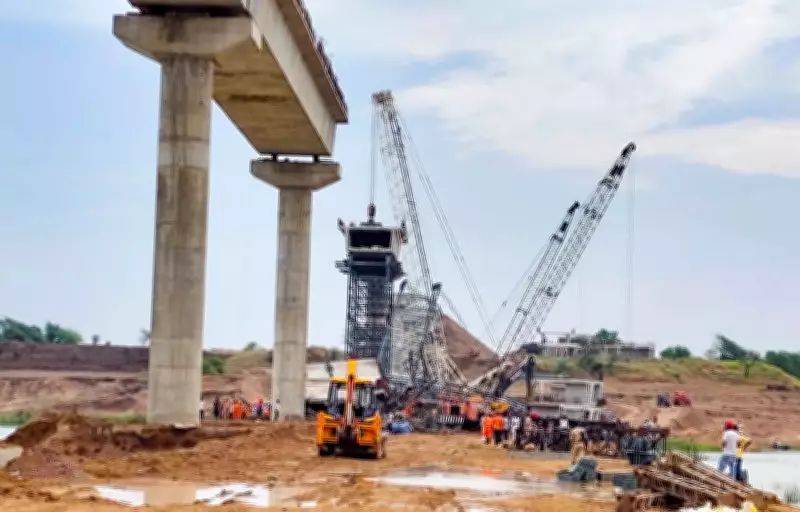
The government's aggressive push on infrastructure spending has not translated into broad-based economic growth, according to a recent analysis. Despite a 15% annual increase in combined central and state infrastructure expenditure since 2019-20, employment in construction and related industries has barely grown, and private investment outside infrastructure sectors remains weak.
Investment Trends
Data shows that Gross Fixed Capital Formation (GFCF) as a share of GDP fell from 34% in 2011-12 to 30% in 2025-26. Private sector investment as a share of total capital investment dropped from 41% in 2015-16 to 32% in 2024-25, while household investment rose from 33% to 43% over the same period. The government's share remained flat at around 25%.
Productive assets have shifted towards buildings and structures, which now account for 58% of all assets, up from 53% a decade ago. Machinery investment fell from 34% to 31%, indicating a focus on infrastructure rather than manufacturing.

Employment Stagnation
Despite robust growth in cement output (6.6% annually), employment in cement and construction materials has actually declined. The construction sector saw only 1% annual employment growth, far below the infrastructure spending surge. This suggests that productivity gains, not job creation, are driving output.
Critics argue that government contracts have primarily boosted corporate profits rather than generating widespread economic benefits. Private investment remains confined to industries feeding infrastructure projects, with little incentive to diversify.
The disconnect between headline growth and ground-level reality raises questions about the effectiveness of the government's infrastructure-led growth strategy.