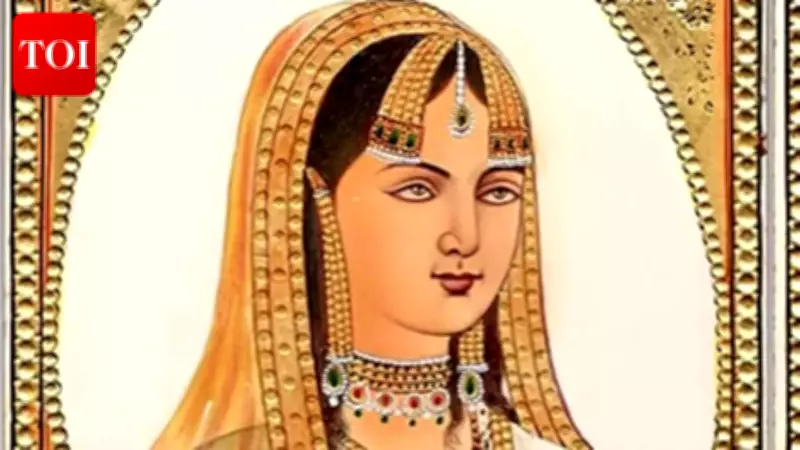
Indian queens have often been renowned for their mystical beauty, elaborate attire, and courageous personalities. From Rani Padmavati to Rani Lakshmi Bai, every royal woman has a story that showcases her regality, making her unique and exemplary. Among these historical figures, one name remains largely unknown to the world: Harkha Bai, India's first female maritime trader, often called the 'Queen of Ports'. Who was she, and what is her story? Let us explore.
Who Was Harkha Bai?
Jahangir, the fourth Mughal emperor and son of Akbar the Great, ruled Hindustan for 22 years, from November 1605 to October 1627. During his reign, the East India Company arrived in India. However, it was the Portuguese who initiated the exploitation of maritime trade, starting with Vasco da Gama. They dominated the seas around India and extorted heavy protection money, known as 'hafta', from trade ships crossing the Arabian Sea, amassing vast wealth. The Portuguese conquered Goa and based most of their trade at the great port of Surat in Gujarat.
However, at the height of their operations, the Portuguese made a critical mistake that cost them their bases and their presence in the country—they angered an empress, Harkha Bai. Harkha Bai, also known as Hira Kuwari, was the princess of Amer and daughter of Maharaja Biharimal Kachwaha. She married Mughal emperor Akbar in 1562. Historians face an enigma when defining Harkha Bai. In Akbar's era, women often remained shrouded in mystery; Akbar's biographer, Abul Fazl, did not even record their names, only their titles. The name 'Harkha Bai' is largely lost in history, as she was mostly called 'Maryam-uz-Zamani' (Mary of the World), a title Akbar gave her after she gave birth to their son, Salim.

Salim, who later crowned himself as Jahangir, doubled Harkha Bai's stipend and gave her a cavalry command of 12,000 men. She was one of only four senior members in his court and the sole woman among them. Moreover, she was the only woman who did not convert to Islam and continued to wear traditional Rajput attire. Along with her cavalry, she also had the right to issue firmans (royal decrees). As a woman, she did not depend on her husband or son for financial support; she owned properties, conducted trade, and received a salary for running the harem.
The Queen of Ports
One of Harkha Bai's most prized possessions was the 'Rahimi', the largest Indian ship on the seas at the time. The vessel carried 600–700 pilgrims to Mecca every year for the Hajj pilgrimage. The newly aggressive Portuguese demanded that every ship sailing through their maritime territory carry a license featuring an image of the Christian Virgin Mary. The Rahimi, with a mast 44 yards high and carrying around 1,500 tonnes of goods, also carried this license, much to the Mughals' dismay.
On September 13, 1613, the Portuguese seized the Rahimi near Surat and forced it to sail to Goa with 700 people on board. To enhance their terror over the Mughals, they set the ship on fire. However, they misjudged the Mughals' response. Enraged, Jahangir blocked all Portuguese trade from Surat and seized their goods within his kingdom. He sealed their churches and issued an order prohibiting them from practicing their religion in his territories. The Portuguese tried to make amends by offering three lakh rupees, but Jahangir refused to relent. They retreated to Goa, which they stubbornly held until India finally reclaimed it in 1961. Thus, a female trader's ship caused their ultimate downfall, driving them away from India.