

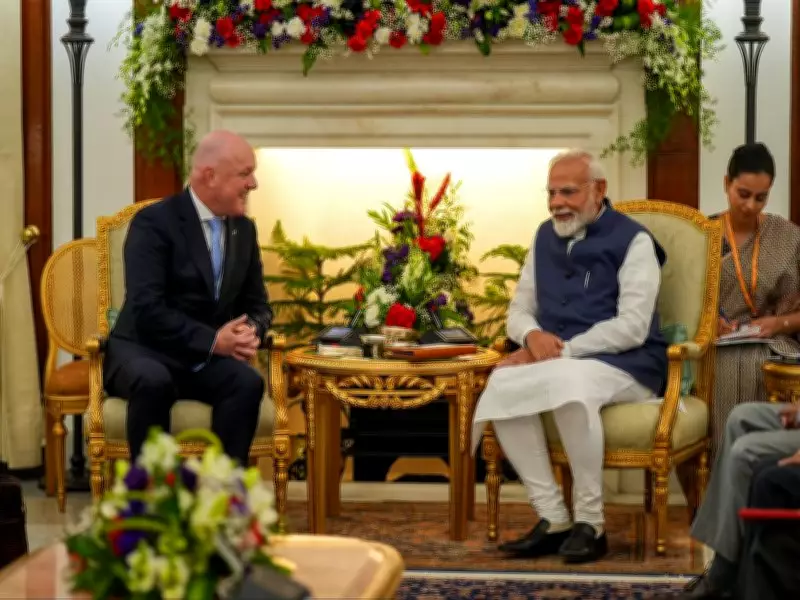
New Zealand Prime Minister Christopher Luxon announced on Thursday that a landmark free trade agreement (FTA) with India will be signed on Monday, describing it as a "once-in-a-generation" opportunity. The deal is expected to significantly enhance bilateral trade and economic cooperation between the two nations.
Key Details of the Agreement
The FTA, which has been under negotiation for several years, aims to reduce tariffs and non-tariff barriers, facilitating smoother market access for goods and services. Luxon emphasized that the agreement would open new avenues for New Zealand exporters, particularly in sectors like dairy, agriculture, and technology. For India, the deal is expected to provide greater access to New Zealand's market for pharmaceuticals, IT services, and textiles.
Strategic Importance
This agreement marks a significant milestone in India-New Zealand relations, coming at a time when both countries are seeking to diversify their trade partnerships. Luxon noted that the FTA would strengthen supply chain resilience and foster innovation. The deal is also seen as a counterbalance to China's growing influence in the region, as both India and New Zealand are part of the Indo-Pacific framework.

Reactions and Next Steps
Indian officials have welcomed the announcement, stating that the FTA will create jobs and boost economic growth. The agreement is expected to be signed during a virtual ceremony, with both leaders expressing optimism about the future of bilateral ties. Once signed, the deal will need to be ratified by the respective parliaments before coming into force.
The FTA is part of New Zealand's broader strategy to deepen economic engagement with Asia, while India continues to pursue trade deals with multiple partners to enhance its global trade footprint. Luxon concluded by calling the agreement a "win-win" for both countries, promising mutual benefits for businesses and consumers.






