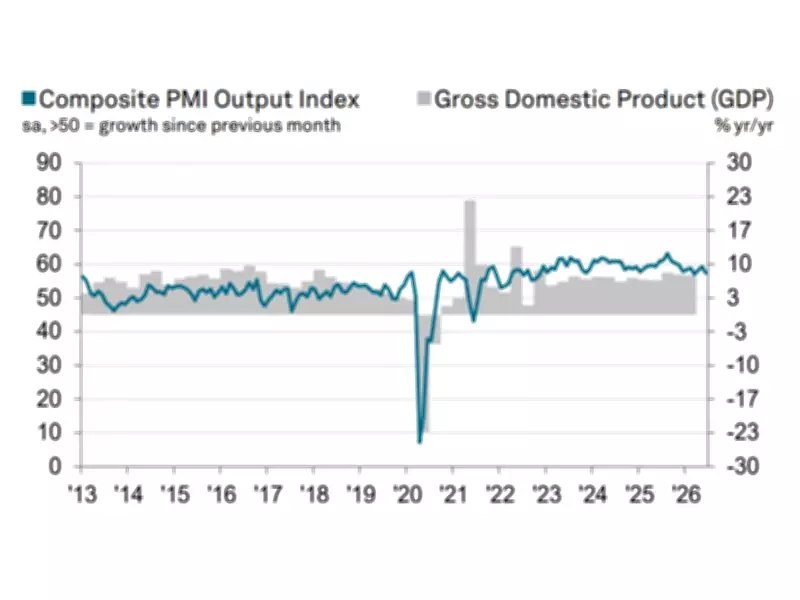
The HSBC Flash India PMI Composite Output Index fell to a preliminary reading of 57.4 in June, down from 59.3 in May, marking the weakest expansion since March, according to the HSBC India PMI report released Tuesday. The index measures combined month-on-month output changes in manufacturing and services, and despite the decline, it still signals a sharp expansion.
Manufacturing and Services Both Weaken
The HSBC Flash India Manufacturing PMI edged down to a three-month low of 54.5 in June, compared to 55.0 in May. Manufacturing output growth cooled to a two-month low, while the services sector saw its slowest growth in 17 months. The report attributed the moderation to persistent cost pressures and softening demand conditions.
Pranjul Bhandari, Chief India Economist at HSBC, said, "Private sector activity eased a bit in June. Growth of manufacturing output softened a tad as inventory-building lost steam after a few hectic months."

Demand and New Orders Slow
While overall new order volumes continued to rise strongly, the pace of growth slowed to a three-month low. Companies across both sectors reported difficulties in securing new clients, citing intense market competition, escalating fuel prices, and gas shortages as primary operational hindrances.
"New export orders remained resilient and the order-to-inventory ratio ticked up, pointing at resilient manufacturing activity down the line. Input costs across the private sector rose, but at the slowest pace in five months," Bhandari added.
Employment Growth Weakens
The slowdown in new orders directly affected job creation. Employment levels increased only marginally, marking the weakest growth in the current six-month sequence of hiring expansion. Recruitment activity for both goods producers and service providers hit its lowest level since December 2025, as firms found current staffing levels sufficient to manage outstanding business volumes, which remained unchanged.
Price Pressures and Outlook
Private sector expenses rose due to higher material costs for chemicals, food, fuel, gas, metals, and utilities. However, overall input cost inflation slowed for the third consecutive month to its lowest since January. Selling charges rose modestly at the composite level, marking the softest increase in six months, as challenging demand conditions and competitive pressures made businesses reluctant to pass higher costs on to consumers.
Looking ahead, businesses maintained a positive outlook for production over the next 12 months, but the overall degree of optimism dropped to its lowest since January. Positive sentiment among manufacturers specifically hit a near four-year low, prompting goods producers to limit their purchasing activity, which grew at the slowest pace in two-and-a-half years, causing a decline in finished goods inventories.