

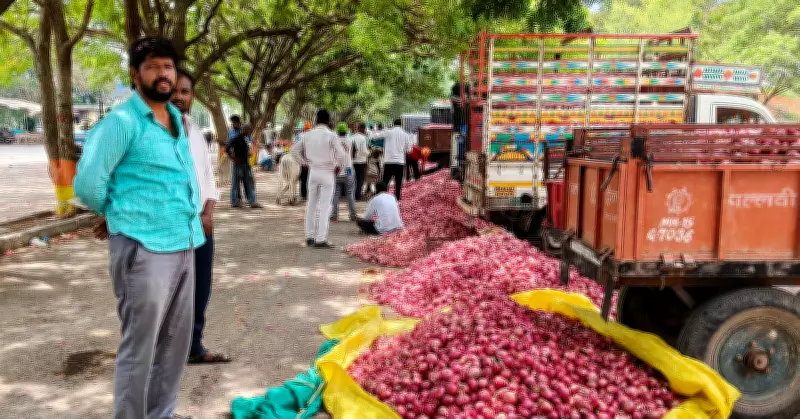
The El Nino weather phenomenon has cast a shadow over Lasalgaon, Maharashtra's onion capital, as a delayed monsoon has severely impacted farmers in the region. The monsoon, which typically arrives in June, has been delayed by two to three weeks, disrupting the planting schedule for kharif onions. Farmers in Lasalgaon, Asia's largest onion market, are struggling with dry soil conditions, forcing them to postpone sowing operations.
Impact on Onion Planting and Yields
According to local agricultural officials, the delayed monsoon has reduced the window for onion cultivation. Onion planting usually begins in June, but this year, most fields remain barren. Farmers report that they have lost nearly one month of the growing season. If rains do not arrive soon, yields could drop by 30-40%, as per estimates from the Lasalgaon Agricultural Produce Market Committee (APMC).
"We are completely dependent on the monsoon. Without timely rains, we cannot transplant onion seedlings. This delay will affect the entire crop cycle," said Rajendra Pawar, a farmer from Lasalgaon. The APMC chairman, Sanjay Kale, added, "The situation is grim. If the monsoon normalizes by next week, we may still salvage the crop, but any further delay will be disastrous."

Economic Consequences for Farmers
The monsoon delay has not only affected planting but also increased input costs. Farmers have already invested in seeds, fertilizers, and labor, but the uncertainty is forcing them to wait. Some farmers have resorted to using groundwater for irrigation, but depleting water tables add to the challenge. The cost of diesel for pumps has risen, squeezing already thin profit margins.
"We have spent Rs 10,000 per acre on preparation, but without rain, we cannot transplant. If the crop fails, we will be in debt," said another farmer, Shankar Jadhav. The Lasalgaon APMC reported that onion arrivals have already dropped by 20% compared to last year, pushing wholesale prices up to Rs 3,000 per quintal from Rs 1,500 a month ago.
Broader Implications for Onion Prices
Lasalgaon supplies onions to markets across India and even exports to countries like Bangladesh, Malaysia, and Sri Lanka. A poor harvest could lead to a sharp increase in retail prices, as seen in 2020 when onion prices soared to Rs 100 per kg. The central government is monitoring the situation, but officials say it is too early to intervene.
"We are in constant touch with the state agriculture department. If the monsoon remains weak, we may consider importing onions to stabilize prices," said a senior official from the Ministry of Consumer Affairs, Food and Public Distribution. However, traders in Lasalgaon warn that imports could take weeks to materialize.
Climate Change and Farming Challenges
Scientists attribute the erratic monsoon to El Nino, which is characterized by warming of sea surface temperatures in the Pacific Ocean. The Indian Meteorological Department (IMD) has predicted below-normal rainfall in August, which could further exacerbate the crisis. Farmers in Lasalgaon, already reeling from last year's unseasonal rains that damaged stored onions, are now facing a double blow.
"Climate change is making weather patterns unpredictable. We need better forecasting and crop insurance to protect farmers," said Dr. Anupam Singh, an agronomist at the Mahatma Phule Krishi Vidyapeeth in Rahuri. The Maharashtra government has announced a compensation scheme for farmers who suffer crop losses, but many remain skeptical about timely disbursement.






