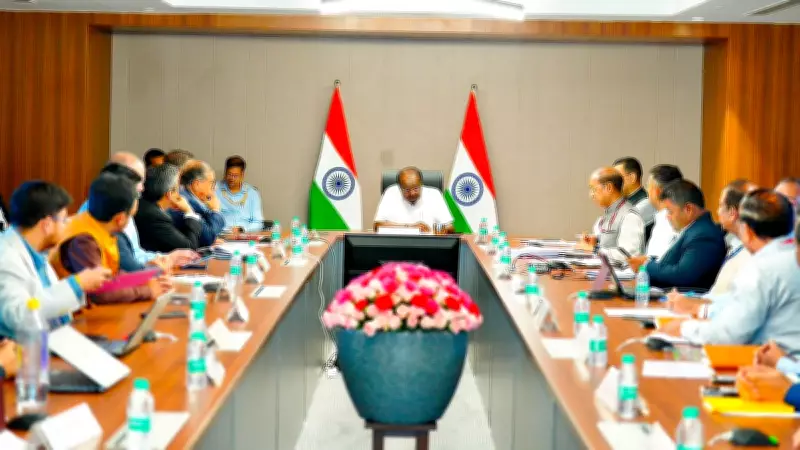
Union Minister H D Kumaraswamy announced on July 8, 2026, that India's demand for advanced chemistry cell (ACC) batteries is projected to reach 236 gigawatt-hours (GWh) by 2032. The minister emphasized the immense industrial and economic opportunity in building a robust, integrated, and globally competitive battery ecosystem in the country.
Projected Growth and Government Initiatives
Speaking at a conference on battery manufacturing, Kumaraswamy noted that the demand surge is driven by the rapid adoption of electric vehicles (EVs) and renewable energy storage. He highlighted the government's Production Linked Incentive (PLI) scheme for ACC batteries, which aims to establish a domestic manufacturing capacity of 50 GWh. The scheme has already attracted investments from major players like Reliance New Energy, Ola Electric, and Rajesh Exports.
The minister stated that India's battery demand is expected to grow at a compound annual growth rate (CAGR) of over 30% in the coming years. He stressed that achieving the 236 GWh target requires significant investments in research, development, and supply chain infrastructure.

Economic and Strategic Importance
Kumaraswamy underlined that a robust battery ecosystem is critical for India's energy security and its goal of achieving net-zero emissions by 2070. He said, 'The battery sector presents a $15 billion opportunity for India by 2030.' The minister also urged state governments to facilitate land acquisition and provide incentives for setting up gigafactories.
The announcement comes amid global efforts to reduce dependence on Chinese battery supply chains. India is positioning itself as a key manufacturing hub, leveraging its large market and skilled workforce.
Challenges and Way Forward
Despite the optimism, Kumaraswamy acknowledged challenges such as high capital costs, technology gaps, and the need for raw material security. He called for collaboration between industry and academia to develop indigenous cell chemistry and recycling technologies. The government is also exploring partnerships with countries like Australia and Chile for lithium sourcing.
According to the minister, the ACC battery PLI scheme is expected to generate over 50,000 direct jobs and reduce India's import dependence by 30% by 2030. He concluded by urging stakeholders to invest in the sector to make India a global battery manufacturing hub.