Bajoria identifies job creation as India's defining economic challenge
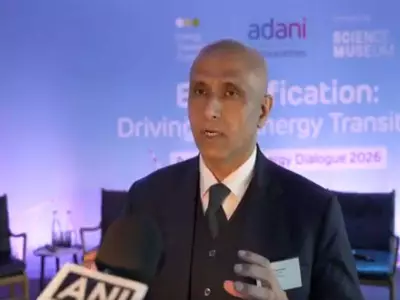
Rahul Bajoria, Managing Director and Head of India and ASEAN Economic Research at Bank of America, has stated that India's most significant long-term structural challenge is creating productive jobs and fully capitalizing on the country's demographic dividend. Speaking to ANI, Bajoria emphasized that job creation remains the central economic issue despite India's robust long-term growth prospects.
"I think the biggest conversation point, right, which sort of always ends up in not clear answers, right, even like from my perspective is the job creation part. And this is something that, you know, you would say is the problem of our times," Bajoria said.
Underemployment remains a key concern despite incremental progress
Bajoria noted that while India has made incremental progress over the decades, underemployment is a critical issue. "By and large, to me, the challenge is really of underemployment," he said, adding that it was "very difficult" for him to offer "a specific prescription" to solve the problem.

He warned that India has a limited window to leverage its demographic advantage and called for a coordinated effort from all stakeholders. "It is one where the risk we run is that we will not be able to kind of realize our demographic dividend. But is it going to be a negative direction travel? Probably not," he said.
Call for all-hands approach to realize demographic dividend
Bajoria urged greater collaboration across sectors. "We need to have an all hands approach with the government, with the private sector, with the households to basically say, we need to kind of make this work over the next 10 to 15 years," he said.
Referring to economist Sanjeev Sanyal's work on demographics, Bajoria stressed that India's demographic dividend is not permanent. "Our demographic dividend does not stay with us in perpetuity. You know, we have a window of 15-17 years to kind of get this right. And the sooner we do it, particularly employing young women, bringing them to the labor force... that is really the challenge of our times, like that's the opportunity, but also the biggest challenge as to how do we get people to be more productive and, you know, be employed more productively," he said.
AI presents both challenges and opportunities for labour market
Bajoria also addressed the rapid adoption of artificial intelligence, which he said presents both challenges and opportunities for India's labour market. "So it is a challenge. And I think what it kind of does is that it sort of forces us to think about, you know, what is the next level of job creation we will do in this particular space," he said.
While acknowledging concerns over AI-led disruption, he argued that the technology should not be viewed as an existential threat if India responds proactively. "I don't think it's an existential problem, but it could become one if we don't respond to it. But my sense is that we are responding to it," Bajoria said. He also underlined the need to strengthen skilling and education, saying there was "a very strong reason to look at the curriculums of what are we teaching."