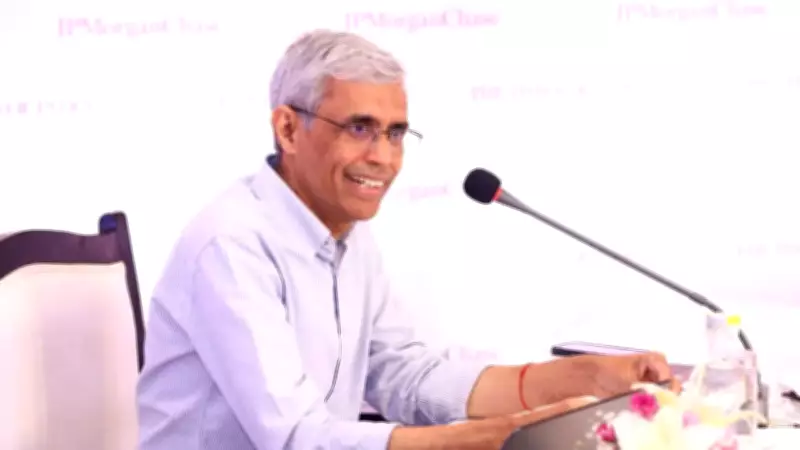
India's skills conversation is shifting. For years, the focus has been on what young people lack. Today, the conversation is turning toward what the system must do better. With over 370 million young people, India has one of the largest workforces in the world. But without the right pathways, that advantage may not convert into real economic gains. Yet, what emerged from a recent roundtable discussion bringing together leaders across sectors was not pessimism, but possibility.
Moving from isolated efforts to shared solutions
The discussion, anchored around new research by JustJobs Network and supported by JPMorganChase, focused on a simple but urgent question: how can India build smoother, more reliable pathways from education to employment? For Maneesha Chadha, Head of Grant Programming Asia Pacific at JPMorganChase, the answer lies in collaboration at scale. “As JPMorganChase globally, our goal is how do we help economic growth and… make that growth more inclusive,” she said, outlining the firm’s long-term commitment to skilling in India. Over the past eight years, JPMorganChase has invested more than $14 million in vocational training across the country. But Chadha emphasised that funding alone is not enough.
“There’s lots and lots of fabulous work happening on the ground,” she said. “The idea was how do we bring all of this together… and accelerate the adoption of these models at scale.” This is where the firm is increasingly stepping in as a convener, bringing together government, industry and nonprofit leaders to move from fragmented success stories to systemic change.

A system that is evolving, not failing
The challenges are real, but they are also well understood. Outdated curricula, limited work exposure and a persistent stigma around vocational careers continue to shape outcomes. At the same time, rapid technological change is redefining what skills are valuable, making adaptability just as important as technical knowledge. But the roundtable discussions made one thing clear: solutions are already emerging. From hyper-local training models that align courses with real job demand, to structured career guidance embedded within schools, there is growing evidence of what works. The focus now is on scaling these solutions.
Industry steps into a new role
For Guhaprasath Rajagopal, India Head of Payments, at J.P. Morgan, this moment calls for a fundamental shift in how industry engages with talent. “Employers can no longer remain passive; they must help build the skills ecosystem they will depend on.” That shift, he explained, requires companies to move beyond hiring and start actively shaping the talent pipeline. This is already beginning to take shape through deeper industry engagement in curriculum design, internships and apprenticeship programmes. The findings are drawn from the report Path to Progress: Enabling a Smooth Education-to-Employment Transition for India’s Youth, developed by JustJobs Network building on nearly a decade of learnings from successful nonprofit programs supported by JPMorganChase. The report itself highlights that stronger partnerships between employers, governments and training institutions can significantly improve job readiness and long-term outcomes.
Reimagining the starting point: schools
If industry is one part of the solution, schools are another. For Priya Agrawal, CEO, Antarang Foundation the transformation must begin early, long before students enter the job market. “Students are looking at employment, which leads to incomes, which leads to socio-economic progress,” she said. “Dignity is equal to progress.” Her work with the Antarang Foundation, which has been working with JPMorganChase for over 8 years, reaches hundreds of thousands of students, showing that early exposure to careers can change outcomes significantly. “Students need to first become aware of all of the opportunities that are available,” she explained. “And the most credible way to normalise this is through the school system.” This means bringing industry voices into classrooms, enabling exposure visits, and engaging parents, especially for first-generation learners. The results are tangible. Students who receive structured career education are more likely to transition into employment and earn higher wages, demonstrating the long-term value of early intervention.

The rise of a more local, more flexible approach
One of the strongest themes to emerge from both the research and the discussion was the importance of localisation. Generic, one-size-fits-all training models are giving way to hyper-local approaches that map real job opportunities within specific geographies and tailor training accordingly. This shift not only improves placement rates but also ensures that young people are trained for jobs that actually exist around them. At the same time, there is growing emphasis on employability skills such as communication, teamwork and problem-solving, skills that allow individuals to adapt as industries evolve.
A moment of alignment
Perhaps the most encouraging takeaway is that different parts of the ecosystem are beginning to align. Government frameworks are increasingly recognising the importance of skills alongside academic learning. Industry is stepping up with a more active role. Nonprofits are demonstrating scalable models on the ground. Institutions like JPMorganChase are helping bring all these pieces together, and at scale. The challenge now is not about identifying solutions, but about accelerating them.
Unlocking what already exists
India’s youth do not lack ambition. They do not lack capability. What they have lacked, until now, is a system that consistently connects education to opportunity. That system is slowly being rebuilt, through collaboration, evidence and a growing willingness to rethink old assumptions. If sustained, this shift could redefine India’s workforce story, not as one of gaps and deficits, but as one of alignment and possibility. And in doing so, turn potential into progress at a scale the world has rarely seen.
Disclaimer: This article has been produced on behalf of JPMorganChase by Times Internet’s Spotlight team.