

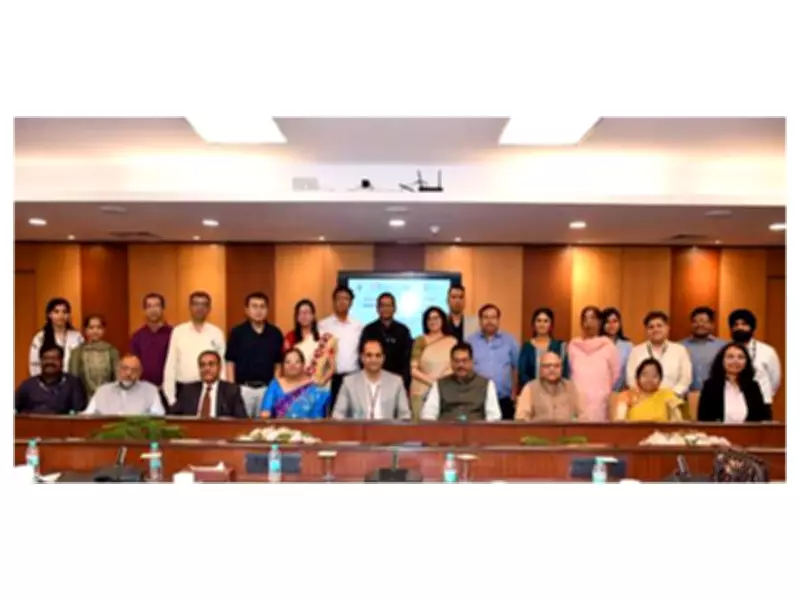
The National Institute of Science Communication and Policy Research (NIScPR) has signed a Memorandum of Understanding (MoU) with the Research and Information System for Developing Countries (RIS) to enhance collaboration in science, technology, and innovation (STI) policy research and diplomacy. The agreement was formalized in New Delhi, marking a strategic step towards strengthening India's STI ecosystem.
Objectives of the Collaboration
The primary goal of this partnership is to foster joint research and knowledge exchange in STI policy, with a focus on evidence-based policymaking. Both institutions will work together to address emerging challenges in science and technology, leveraging their respective expertise. NIScPR, under the Council of Scientific and Industrial Research (CSIR), specializes in science communication and policy research, while RIS is a prominent think tank focusing on development issues and international cooperation.
Key Areas of Focus
The MoU outlines several key areas of cooperation:

- Joint Research Projects: Collaborative studies on STI policy, including innovation systems, technology transfer, and science diplomacy.
- Capacity Building: Training programs and workshops for researchers and policymakers to enhance skills in science policy analysis.
- Data and Knowledge Sharing: Exchange of publications, databases, and analytical tools to support evidence-based decision-making.
- Policy Advocacy: Joint efforts to promote India's STI interests in international forums and strengthen global partnerships.
Significance for India's STI Diplomacy
This collaboration is expected to play a crucial role in advancing India's science and technology diplomacy. By combining NIScPR's expertise in science communication with RIS's insights into international development, the partnership aims to create a robust framework for policy research that can inform India's engagements with other nations. Dr. Ranjana Aggarwal, Director of NIScPR, emphasized that the MoU would facilitate the translation of scientific knowledge into actionable policies, thereby boosting the country's innovation ecosystem. Professor Sachin Chaturvedi, Director General of RIS, highlighted the importance of such partnerships in addressing global challenges like climate change, health security, and sustainable development.
Expected Outcomes
The agreement is expected to yield several tangible outcomes:
- Enhanced Policy Research: Production of high-quality research papers and policy briefs on STI issues.
- Improved Science Communication: Better dissemination of scientific findings to policymakers and the public.
- Strengthened International Networks: Increased collaboration with global think tanks and research institutions.
- Capacity Development: Training of a new generation of science policy researchers.
The MoU is valid for an initial period of five years, with provisions for renewal based on mutual agreement. Both institutions expressed optimism about the partnership's potential to contribute to India's vision of becoming a global leader in science, technology, and innovation.






