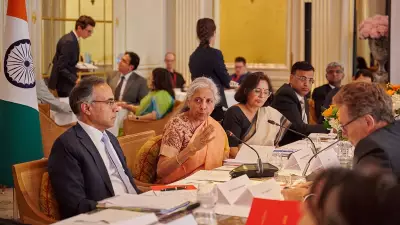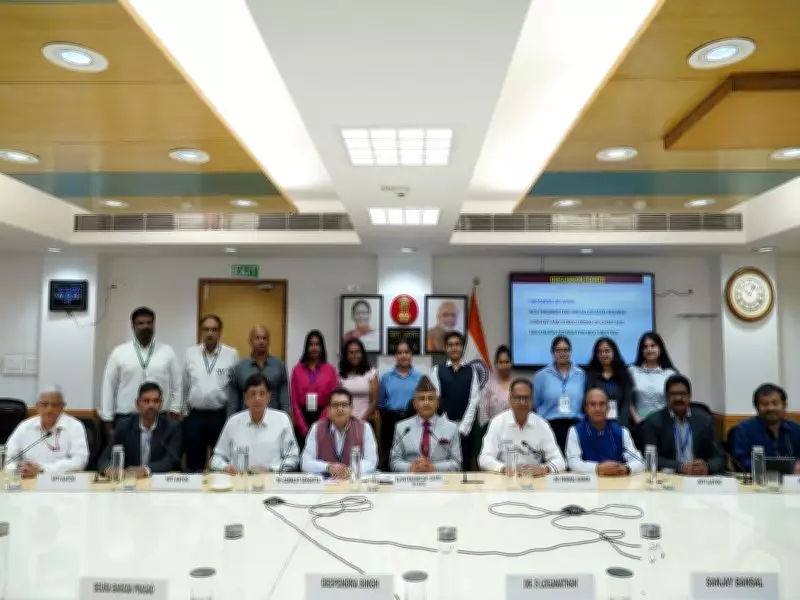
Government think tank NITI Aayog on Wednesday convened a stakeholder consultation on the requirement of critical minerals for strategic sectors, bringing together experts from government, research institutions, academia, and industry to assess India's future mineral needs and strengthen supply chain resilience.
Meeting Focus Areas
The meeting focused on estimating current and future demand for critical minerals across strategic and emerging sectors, identifying supply chain vulnerabilities, strengthening domestic capabilities in exploration, processing, and recycling, and promoting collaboration among key stakeholders. In a post on X, NITI Aayog stated that the consultation reflected its continued commitment to evidence-based policymaking and securing critical mineral value chains essential for India's economic growth, technological advancement, and national security.
Rising Demand Due to Clean Energy Transition
The discussions come at a time when India is expected to witness a sharp rise in demand for critical minerals as the country expands clean energy technologies, electric mobility, and advanced manufacturing. According to a report by NITI Aayog, India's transition to a developed economy and its net-zero target by 2070 will depend on secure, affordable, and responsible access to critical energy transition minerals.

Projected Mineral Requirements
The report estimates that under the Net Zero Scenario, India's cumulative requirement for critical energy transition minerals could reach around 169 million tonnes, about 51 percent higher than under the Current Policy Scenario. Battery-related minerals are expected to account for a significant share of future demand. The report also notes that more than two-thirds of the country's cumulative critical mineral demand is expected to materialize after 2050.
Import Dependence and Strategic Priorities
It highlights that India remains highly dependent on imports for several key minerals, making diversification of supply sources and development of domestic value chains a strategic priority. To address these challenges, the report recommends strengthening domestic exploration and mining, expanding refining and recycling capacity, promoting mission-oriented research and development, diversifying international sourcing, and improving institutional coordination to secure long-term critical mineral supplies.
Policy Implications
The stakeholder consultation is expected to feed into future policy measures aimed at securing critical mineral supply chains and supporting India's long-term economic, industrial, and national security objectives.