

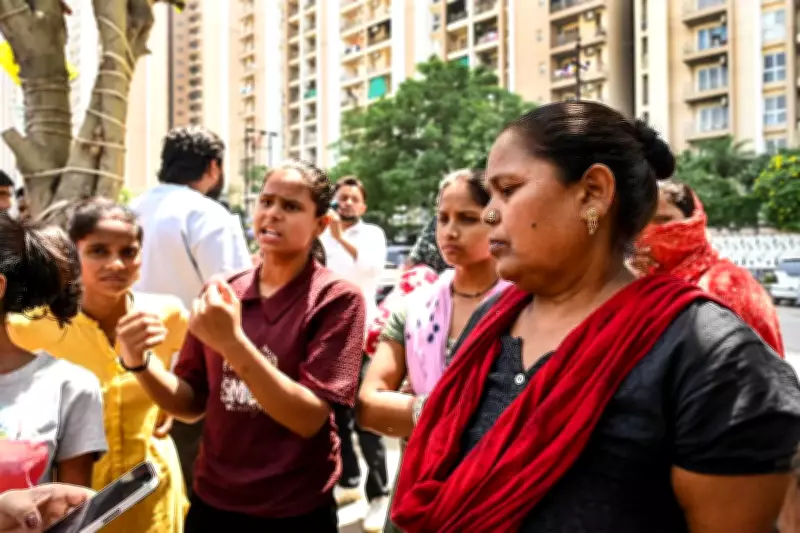
Noida Domestic Workers Stage Protest Demanding Wage Hike and Weekly Offs
In the wake of violent industrial worker protests in Noida, a new wave of unrest has emerged as domestic helpers gathered near a housing society in Sector 121 on Tuesday. The protesters, primarily from nearby Garhi Chaukhandi village, demanded higher minimum wages and compulsory weekly offs, pointing to escalating costs of gas, ration, and room rent that have strained their livelihoods.
Protest Turns Tense with Reports of Vandalism
Early Tuesday morning, domestic workers assembled at the gate of a highrise building, refusing to enter until their wage demands were addressed. The situation escalated with reports of stone pelting on police vehicles and acts of vandalism in the area. Local police intervened promptly to bring the situation under control, attributing the violence to "miscreants" while managing the crowd.
Interestingly, some participants admitted confusion about the protest's specifics or appropriate wage levels, yet joined the demonstration in solidarity. "I'm not sure how much I should charge. But I'll go by what others demand," confessed Rohini, a newcomer who earns Rs 4,500 monthly for sweeping and mopping duties.

Unorganized Workforce Seeks Standardized Rates
Noida's domestic help sector remains largely disorganized, with wages typically negotiated individually between employers and workers. In some residential complexes, Resident Welfare Associations (RWAs) establish rates based on flat size or family composition. Current rates vary significantly: part-time daily chores command Rs 2,500 to Rs 5,000, while full-time work spanning eight to ten hours earns Rs 8,000 to Rs 13,000 monthly.
The protesters specifically demand that part-time sweeping and mopping rates, currently ranging from Rs 2,500 to Rs 3,500, be increased to Rs 4,000-5,000, accompanied by four weekly offs monthly. They also seek revisions for cooking and full-time helper charges, which presently span Rs 3,000 to Rs 12,000 depending on hours worked.
Personal Stories Highlight Economic Hardships
Ramnali, who services four households for sweeping and mopping at Rs 2,500-3,000 each, revealed her monthly rent of Rs 4,000 while supporting a six-member family. "The 1 kg gas cylinder, which I got earlier for Rs 100, is now available at Rs 500 per kg. Flour is Rs 380 per 5 kg, oil is Rs 185 per litre. I can't afford to run my house on this income," she lamented, demanding Rs 4,000 per household and weekly offs "just like in factories and companies."
Saroj, with five years of experience across five households earning similar rates, has resorted to cooking with firewood due to unaffordable gas prices exacerbated by her Rs 6,000 monthly rent. Meanwhile, Lali, employed seven hours daily for drying, ironing clothes, and pet care at Rs 7,500 monthly, seeks an increase to Rs 10,000-11,000. "People earn lakhs in big highrises, and yet they cannot spare a few thousand for a seven-hour job," she asserted.
App-Based Platforms and Call for Dialogue
Protesters highlighted the disparity with app-based domestic help platforms like Snabbit and Urban Company, where workers can earn Rs 20,000-25,000 monthly, though income fluctuates based on bookings, hours, and days worked.
Following the protest, FONRWA president Yogendra Sharma, representing over 120 RWAs across Noida, advocated for dialogue between administration and labor leaders while condemning the violence. "The welfare of workers is paramount, and their grievances must be resolved through dialogue. However, acts of vandalism, road blockades, and arson serve the interests of no society," he emphasized, urging peaceful resolution mechanisms.






