Jerome Powell's Calculated Silence on Fed Board Future
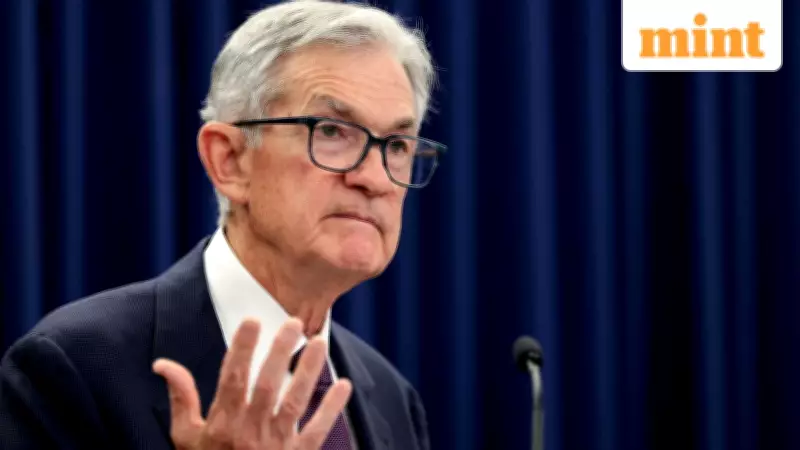
For the fourth time since last summer, Federal Reserve Chair Jerome Powell has declined to reveal whether he intends to remain on the central bank's board after his chairmanship concludes on May 15. During a Wednesday news conference following the latest Federal Open Market Committee meeting, Powell responded to the recurring question with familiar deflection: "Again, I don't want to get into this." This consistent refusal to disclose his plans represents a deliberate strategic choice rather than mere evasion.
The Governance Quirk That Creates Powell's Options
Powell's ability to maintain this ambiguity stems from an unusual aspect of Federal Reserve governance structure. Chairs are confirmed to two distinct positions: a four-year term as chair and a separate 14-year term as governor. While most chairs depart when their leadership term ends, they are not legally required to do so. Powell's governor seat extends until 2028, providing him with a potential three-year extension on the board if he chooses to exercise that option.
This decision represents Powell's final and most significant leverage against an administration that has engaged in months of pressure tactics targeting the central bank. The recent grand jury subpoenas served to the Fed earlier this month have only strengthened his resolve to withhold any premature declarations about his future.

The Investigation That Changed the Calculus
The Justice Department investigation, which nominally concerns Powell's congressional testimony about the Fed's $2.5 billion headquarters renovation, has fundamentally altered the political landscape. Powell has indicated he believes the probe is actually about interest rates—part of what he views as the administration's campaign to accelerate rate cuts as repeatedly demanded by former President Donald Trump.
People familiar with Powell's thinking suggest that after nearly 14 years at the Fed, including eight as chair, he is personally ready to return to private life. However, the timing of the investigation has created an impossible dilemma. Agreeing to depart in exchange for the investigation being dropped—even implicitly—would validate the very pressure campaign he has spent the past year resisting.
The Administration's Frustration and Strategic Complications
Treasury Secretary Scott Bessent had reportedly expressed optimism to colleagues that Powell would depart when his chairmanship concluded—until the subpoenas arrived. According to sources familiar with the matter, Bessent subsequently warned Trump that the Justice Department investigation could backfire strategically.
Bessent's frustration reportedly stemmed from concerns that his delicate negotiations to secure Powell's eventual departure had been undermined by colleagues who didn't understand the nuanced approach required. Trump administration officials have privately acknowledged they still hope Powell will leave the Fed but recognize their task has become significantly more difficult.
The Board Mathematics That Amplifies the Stakes
The standoff carries extraordinary significance due to the unusual arithmetic governing the Fed's seven-member board. Currently, Trump has one scheduled vacancy: the seat occupied by Stephen Miran, whose term expires this Saturday. Miran can remain as a holdover until a successor is confirmed, but that seat is designated for installing the new chair.
If Powell follows tradition and departs the board on May 15, Trump gains a second seat. With two vacancies, the administration could nominate the new chair to a fresh 14-year term or to Powell's soon-to-be-vacant governor seat while either renominating Miran or filling a new vacancy. However, if Powell stays as a governor, Trump has only Miran's seat available. The new chair must occupy that position, leaving Miran without a seat.
The Supreme Court recently expressed skepticism about granting the administration's emergency request that would allow Trump to remove Fed governor Lisa Cook, who sued to block her attempted firing last year. This means no additional vacancies are anticipated in the near term.

Historical Precedents and Unprecedented Circumstances
No former chair has remained on the board as a governor since Marriner Eccles, who served from 1934 until 1948 and stayed on at President Harry Truman's request after a new chair was selected. Eccles ultimately departed three years later following a pivotal clash with Truman over White House authority in setting interest rates—a confrontation that ultimately strengthened the Fed's independence.
According to Bob Woodward's 2000 biography, Alan Greenspan would "almost certainly" have remained on the Fed's board if President Bill Clinton hadn't reappointed him to another term as chair in 1996. Woodward wrote that Greenspan believed "if he had to move down the table out of the chairman's seat, he felt that there was enough respect for his views that he could still have some influence."
Powell's situation differs fundamentally from both historical examples because he lacks either an invitation or a strong personal desire to retain the position. If he stays, it will be solely because departing appears even less desirable—a choice no previous chair has faced.
The Unappetizing Trade-Offs of Remaining
Staying would present Powell with difficult compromises. He could find himself dissenting against policies he considers reckless—an extraordinary step that could overshadow any rate decision. Alternatively, he could vote in favor of decisions he personally disagrees with, thereby lending his credibility to a chair who might then cite Powell's support as validation.
"It looks political if he stays, and to what benefit?" questioned Jon Faust, who served as Powell's senior adviser from 2018 until 2024. However, Faust suggested Powell would remain "very unhappily, with great disappointment" if he believed his presence on the board prevented the administration from taking extreme measures to compromise Fed independence, such as purging officers or engineering backdoor rate cuts without committee consent.
The Principle of Central Bank Independence
While Powell declined to address his personal future on Wednesday, he spoke forcefully about the principle of Federal Reserve independence when questioned. He emphasized that every advanced democracy separates monetary policy from direct political control and warned about the credibility loss that would occur if the public came to believe the Fed was making decisions for political reasons, including to benefit a particular party or president.
"We haven't lost it," Powell asserted regarding Fed credibility. "I don't believe we will. I certainly hope we won't." His words underscore the high stakes of his current strategic silence—a calculated position that maintains maximum flexibility while the political pressure campaign continues to unfold around him.