Prayagraj's Diverse Reactions to Union Budget 2026: Infrastructure Optimism Meets Household Concerns
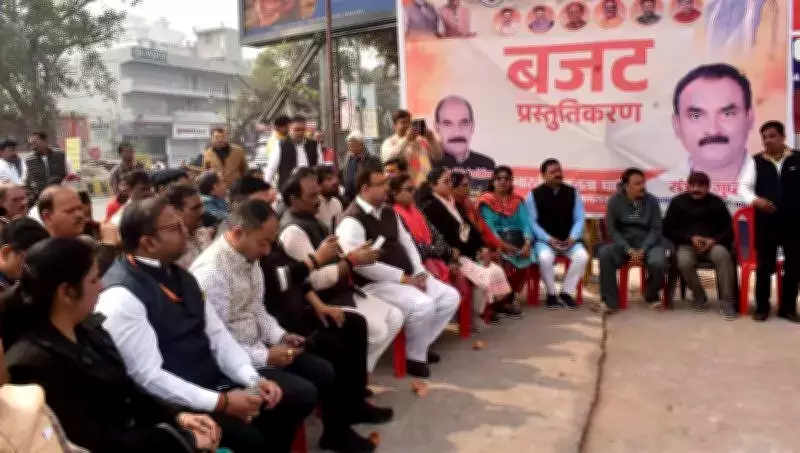
The Union Budget 2026-27, presented by the Finance Minister in the Lok Sabha, has elicited a spectrum of responses from various stakeholders in Prayagraj. While business leaders and educators have expressed optimism regarding infrastructure development, MSME support, and tourism initiatives, citizens and small traders have raised concerns about the lack of direct household relief and sector-specific measures.
Business Community Welcomes Strategic Allocations
Vinay Kumar Tandon, President of the Eastern UP Chamber of Commerce and Industry in Prayagraj, highlighted several positive aspects of the Budget. He welcomed the allocation of Rs 10,000 crore to promote MSME industries and Rs 50,000 crore for electronic manufacturing, noting that these provisions could significantly benefit local enterprises in Prayagraj and other Tier-2 and Tier-3 cities.
Tandon emphasized the increase in infrastructure spending to Rs 17 lakh crore, predicting that this would lead to improved employment opportunities and better market liquidity. He also appreciated initiatives in tourism, including plans to develop 15 archaeological sites as cultural destinations, which could boost Prayagraj's heritage appeal.

Additionally, Tandon supported healthcare reforms such as proposals for trauma centres in every district and greater attention to medical tourism. He welcomed measures for animal husbandry and fish farming, aimed at strengthening rural livelihoods and reducing migration. Simplification of income tax and export-focused reforms were also praised, with Tandon noting that renewed emphasis on textiles could help revive closed mills in Prayagraj if government promises are effectively implemented.
Citizens and Small Traders Voice Disappointment
In contrast, Nalini Srivastava, a housewife from Prayagraj, expressed dissatisfaction with the Budget. She stated that it offered limited direct relief to middle-class families struggling with rising prices, calling it "more industry-friendly than family-friendly." Srivastava highlighted unmet expectations for stronger tax relief and inflation control measures.
Businessman Sunil Kharbanda offered a balanced perspective, welcoming the focus on infrastructure, exports, and manufacturing but voicing disappointment over the lack of targeted support for small traders and the automobile sector. He remarked, "Large industries will benefit, but small retailers and auto-linked businesses needed clearer incentives." However, Kharbanda acknowledged that the Budget attempted to lay a roadmap for a developed India in the next five years.
Anuj Agarwal, an automobile dealer in Prayagraj, expressed concern over the absence of measures to revive automobile sales. He cited high taxes, limited consumer incentives, and weak demand as continuing burdens on the sector.
Educational Sector Sees Potential with Reservations
Educationist Sujoy Chatterjee appreciated the Budget's emphasis on digital infrastructure, skill development, and innovation. He stated that stronger industry-academia collaboration could improve employability among youth in Prayagraj. However, Chatterjee called for greater clarity on funding for public universities and research institutions to fully realize these benefits.
Overall, the reactions from Prayagraj reflect a nuanced view of the Union Budget 2026-27, balancing optimism for long-term economic growth with immediate concerns for household welfare and specific industry sectors.