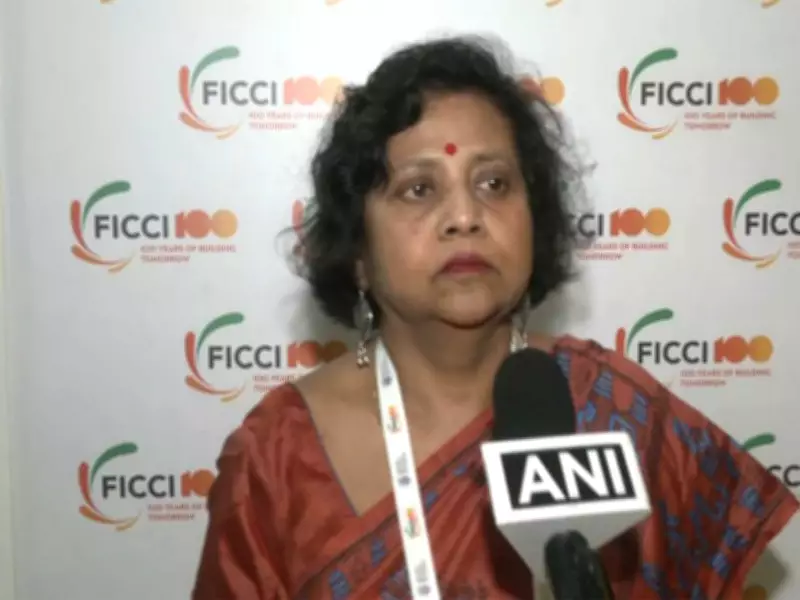
State-level deregulation and stronger last-mile implementation of reforms are crucial to attracting higher foreign direct investment (FDI), according to Rupa Dutta, Distinguished Fellow at the Centre for Trade and Economics, Chintan Research Foundation (CRF). Speaking to ANI on the sidelines of a FICCI event on Investment Economics in India Manufacturing, FDI and Industrial Transformation, Dutta emphasised that some states have attracted more investment than others due to better implementation of reforms.
Need for State-Level Deregulation
Dutta stated, "The idea is, as I said, you improve the ease of doing business, reduce the compliance burdens, have more Jan Vishwas Bills and .... we were really discussing, we need deregulation at the state level. That is very important because that is the last mile of implementation." She noted that while the central government has enacted numerous reforms, states must align their policies to ensure effective implementation. "Some states have done better and they have got more investment. In our presentation also we have shown which are the states getting more FDI," she added.
Government as Catalyst and Facilitator
According to Dutta, the government should continue to act as a catalyst and facilitator by increasing investment in infrastructure, strengthening research and development (R&D) support, and encouraging innovation. At the same time, industry must step up its investments. She highlighted that industry's share in gross fixed capital formation has remained around 30 per cent and stressed the need to encourage higher private sector investment.

Role of MSMEs
Dutta underscored the importance of micro, small and medium enterprises (MSMEs), noting that the sector contributes approximately 45 per cent of India's exports and 30 per cent of GDP. She emphasised that MSMEs need greater access to Industry 4.0 and Industry 5.0 technologies to become more technologically advanced, improve quality, and expand into a larger export basket.
Industrial Infrastructure and Reforms
On industrial infrastructure, Dutta said that proposed industrial cities will provide land, electricity, and connectivity under a hub-and-spoke model, making it easier for investors to establish manufacturing units. She added that steps are being taken to expedite land clearances, labour reforms are in place, and efforts are being made to improve access to capital and encourage enterprises through better policy support.
Focus on Critical Minerals and Semiconductors
Responding to a question on the government's focus on critical minerals and semiconductor manufacturing, Dutta acknowledged that India has dedicated missions for both sectors but cautioned that their impact would take time to materialise. "Definitely steps are being taken, but these steps would take a bit of time. The investment decisions will not happen immediately," she said.
Labour-Intensive Sectors and PLI Scheme
Dutta stressed that while high-end manufacturing remains important, labour-intensive sectors such as textiles, leather, footwear, and gems and jewellery should receive greater attention as they generate significant employment, support MSMEs, and contribute to exports. She also noted that the Production Linked Incentive (PLI) scheme is performing well in terms of employment generation and exports in some sectors, and there is growing demand for extending the scheme to more industries.
Seminar Objectives and Manufacturing Growth
The seminar focused on catalysing both domestic and foreign investment to strengthen India's manufacturing sector and convert investment into higher manufacturing output. Dutta said India needs to increase manufacturing's share in Gross Domestic Product (GDP), promote technology transfer, and build globally competitive firms to maximise the benefits of free trade agreements (FTAs) signed by the country. While both services and manufacturing play an important role in economic growth, she noted that the seminar's focus was on manufacturing.
Industry Concerns and Ease of Doing Business
Dutta mentioned that industry representatives raised concerns over the business environment, with discussions centred on improving ease of doing business, reducing compliance burdens, and decriminalising offences through measures such as the Jan Vishwas Bills.