Venezuela's Reopening Fuels India's Strategic Energy Agenda
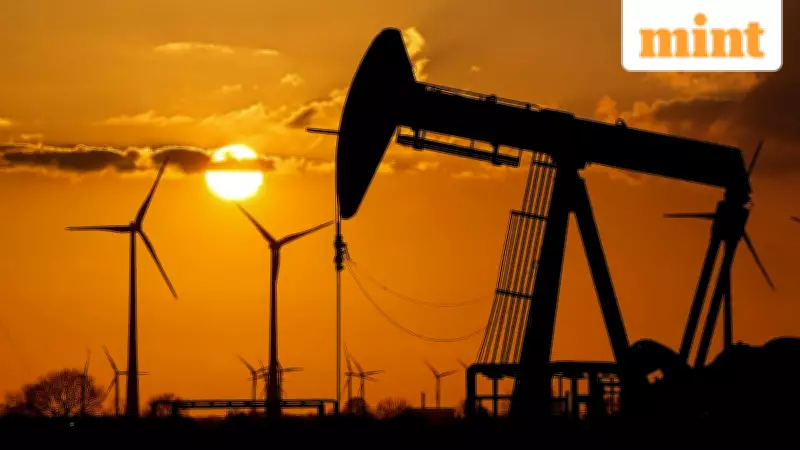
India is strategically positioning itself to capitalize on a significant oil windfall from Venezuela as the South American nation prepares to redirect hundreds of thousands of crude oil barrels currently shipped to China. With American sanctions on Venezuela coming to an end, Caracas may dispatch approximately 400,000 barrels per day to India and the United States, according to three informed sources who spoke on condition of anonymity.
Historical Context and Current Developments
New Delhi, recognized as the world's third-largest oil consumer, previously purchased 400,000 barrels per day from Venezuela until US sanctions were imposed in 2020. "China was importing about 400,000 bpd of crude from Venezuela earlier. Part of this may be diverted to India now, and the US would obviously be among the key buyers," one source revealed. This shift aligns perfectly with India's reiterated commitment to maintaining diverse sources of crude oil to ensure energy security.
The timing is particularly significant as India imports nearly 90% of its oil requirements, having sourced oil worth $161 billion in the last fiscal year. Petroleum product consumption is projected to increase by 4.65% and reach a record 252.9 million metric tonnes in FY26. Furthermore, India stands as the world's fourth-largest refiner with 258.1 million tonnes per annum capacity, expected to expand to 309.5 mtpa by 2030.

Refinery Capabilities and Geopolitical Factors
Indian refineries are well-equipped to handle Venezuelan crude. While public sector refiners primarily process light crude, complex units at Reliance Industries' Jamnagar refinery and Indian Oil Corporation's Panipat refinery can efficiently refine the coarse crude produced by Venezuela. Reliance has already secured cargoes from Venezuela, with deliveries anticipated by April.
This development gains additional weight against the backdrop of the US withdrawing a 25% punitive tariff on India, conditional upon India ceasing purchases of Russian oil. Although the Indian government and refiners have not formally announced plans to halt Russian oil imports, supplies are expected to decline significantly as refiners refrain from placing new orders.
In response to inquiries, a US embassy spokesperson in India stated: "I can’t confirm India’s plans for potential oil imports from Venezuela. I would note that President Trump agreed to remove the additional 25% tariff on imports from India in recognition of India’s commitment to stop purchasing Russian Federation oil."
Expert Insights and Economic Considerations
Gaurav Moda, partner and leader for energy at EY-Parthenon India, emphasized: "Combining the complexity of Indian refineries with India's rapid growth and energy requirements and global geopolitics, constant refresh and diversification of our energy feedstock portfolio has become essential and allows us to be nimble in securing our immediate and long-term needs."
Kirit Parikh, former member (energy) of the Planning Commission of India, added: "Importing more oil from Venezuela should not be a problem as long as it is within the capacity of the refinery calibration. Also, as China is not buying now, India should be able to secure better pricing for Venezuelan crude."
However, this diversification comes with economic trade-offs. Russian suppliers have been offering discounts of $8-12 per barrel, whereas Venezuelan crude typically incurs higher refining costs due to its dense and viscous nature. An SBICAPS report raised concerns about the potential impact of the India-US trade deal on India's overall energy costs.
Market Dynamics and Future Projections
According to Kpler analyst Sumit Ritolia, a significant shift in trade routes is underway. He anticipates Russian crude pivoting toward China as Indian demand moderates, while Venezuelan barrels move to fill the resulting gap in India. "If supply certainty and sanctions clarity hold, India could potentially source around 8-10% of its crude import requirement from Venezuela," Ritolia projected, though he cautioned that volumes would depend on logistical reliability, payment channels, and geopolitical developments.

The diversification initiative has accelerated following US sanctions on Russian oil suppliers Rosneft and Lukoil, and the recent US decision to revoke the additional tariff contingent on India halting Russian oil imports. Sector experts suggest that if India reduces Russian crude purchases, the benefits would likely be distributed across multiple suppliers rather than concentrated in one region.
Ritolia further explained: "The market is currently in a phase of balance rather than barrels—the focus is on managing trade flows and geopolitical exposure. Middle Eastern producers such as Saudi Arabia, Iraq, the UAE and Kuwait would be first in line given proximity and established trade flows, while US exports could account for up to 10% of India’s intake. Beyond this, Canada, Venezuela and other Atlantic Basin producers could see incremental flows if price and freight economics align."
Government Stance and Strategic Vision
India has consistently maintained that its oil import policy is guided by national interest. Foreign Secretary Vikram Misri recently affirmed: "Our approach is to maintain multiple sources of supply and diversify them as appropriate to ensure stability. Therefore, I would say that the more diversified we are in this area, the more secure we are."
Union Petroleum Minister Hardeep Singh Puri addressed the ongoing developments, noting: "This is just the start of the process. Rejoice in the fact that from imposition of a punitive tariff...we are now back to doing business. Give it a little time."
As contracts are already being signed by Indian refiners, the country's strategic push to diversify its oil supply sources is transitioning from planning to practical implementation, marking a significant step toward enhanced energy security in an evolving global landscape.