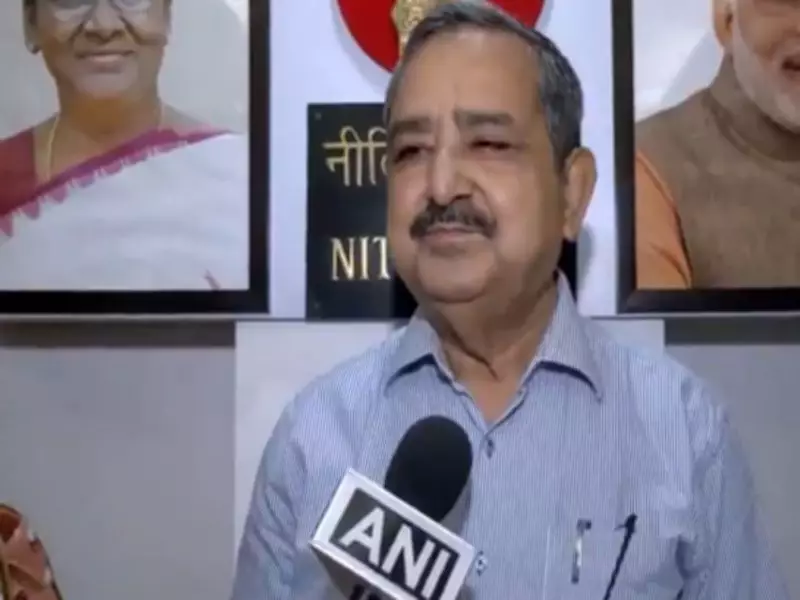
NITI Aayog Vice Chairman Ashok Kumar Lahiri has characterized the recent West Asia crisis as a short-term 'influenza' rather than a prolonged 'typhoid', describing it as a temporary supply shock that underscores the urgency for India to diversify both its import sources and export markets.
Medical Analogy for Economic Impact
Speaking exclusively to ANI after the release of the eighth edition of the NITI Aayog Trade Watch Quarterly report, Lahiri used a medical analogy to assess the crisis's impact. 'The fear about an oil shock is like you have fever but if it is influenza, you will not be very worried; that it will get alright in 3 days. But if you hear that it is typhoid or jaundice, you will be very worried. So, Hormuz crisis has turned out to be influenza, it was a short term problem,' he said.
Energy Prices and Transportation Costs Affected
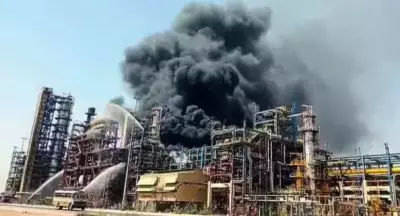
Lahiri noted that the main impact of the crisis came through elevated energy prices and higher transportation costs, with freight rates rising and some disruption in availability. 'I hope the war is going to end, peace will prevail. The impact was in terms of energy prices and transportation cost...Prices went up, but quantities were not available, so there was a problem. I think it was a temporary supply shock,' he explained.

Lesson for Trade Strategy: Diversify Sources and Markets
The episode, however, delivered a critical policy lesson for India's trade strategy. 'But it has taught a few lessons - you don't put all your eggs in one basket. So, we need to diversify our sources of imports as well as our export markets,' the NITI Aayog Vice Chairman emphasized.
Trade Figures for Q4 FY 2025-26
Sharing NITI Aayog's compilation of trade figures for the fourth quarter of fiscal year 2025-26, Lahiri pointed out that total trade grew 5.4% in the last quarter, with exports reaching $1.84 trillion. However, merchandise exports moderated, declining 2.8% even as imports rose 12%. Services exports remained buoyant, but Lahiri stressed the need to focus on weak spots rather than overall comfort. 'Services exports are doing well, but in NITI Aayog, since we are like doctors and we always look at when you go to the doctor, the doctor doesn't tell you that your eyes are doing fine, but your heart is about to collapse,' he said.
Focus on Pharmaceuticals and Value Chain Upgradation
Lahiri flagged pharmaceuticals as an area where India must move up the value chain, pushing for backward integration in active pharmaceutical ingredients (APIs) and more branded products. On free trade agreements (FTAs), including the ongoing India-US negotiations, Lahiri said the approach should be optimistic but rooted in mutual benefit. 'When any country has a free trade agreement with us, no one is doing anyone a favour. It's for mutual benefit,' he stated.