

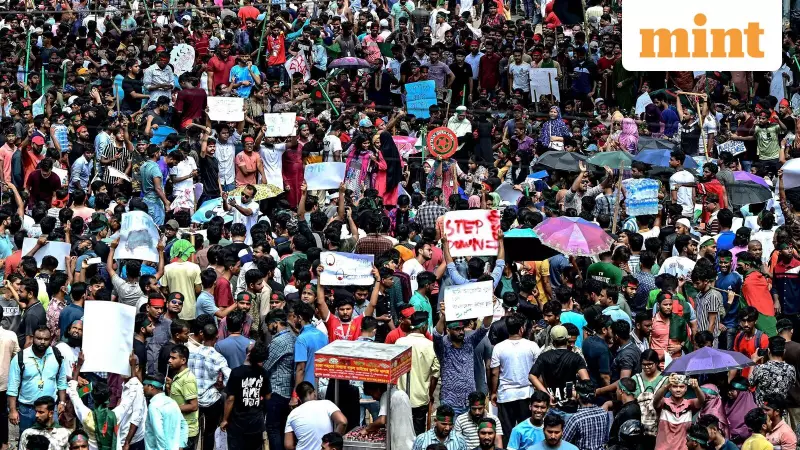
Recent violence in Nepal and Bangladesh serves as a stark reminder of the simmering anger among youth against status-quoist governmental approaches. This unrest underscores a broader global concern: rising inequality is no longer an isolated issue confined to specific regions but a pervasive challenge affecting both developed and developing nations alike.
The Global Inequality Landscape
The G-20 presidency of South Africa concluded last November with the release of a significant report on global inequality. Authored by a committee of independent experts chaired by Nobel Prize winner Joseph Stiglitz, the document calls for coordinated international efforts to address inequality in all its dimensions. It even proposes establishing an international panel on inequality, modeled after the Intergovernmental Panel on Climate Change, highlighting the urgency of this issue.
India's Inequality Paradox
Many assume inequality isn't a pressing concern in India due to the absence of widespread protests specifically targeting it. However, this perspective overlooks how inequality manifests indirectly through various social movements. Demands for caste-based reservations, farmer agitations for better crop prices, and protests advocating for women's rights or equal treatment across caste, region, and religion all reflect underlying inequalities. These movements highlight how certain groups are denied basic rights while privileged segments continue to enjoy their advantages.

Some inequalities are structural and even historical, deeply embedded in societal frameworks. Every economic growth process inevitably creates winners and losers, with market dynamics often amplifying these disparities. This is where the state's role becomes crucial—not only to provide a level playing field but also to implement regulatory structures that prevent economic processes from exacerbating inequality.
The Freebies Dilemma
Governments at both central and state levels have increasingly turned to redistribution tools, particularly freebies and cash transfers, to address inequality. The recent push for direct cash transfers to women, youth, and marginalized groups acknowledges growing inequality and the need for income redistribution. While these measures offer tangible, visible benefits and can yield political dividends in the short term, they come with significant fiscal costs.
Most state governments, like the Centre, are now feeling the strain of these fiscal transfers. In some cases, this pressure has led to reduced spending on essential services such as healthcare, education, and nutrition. The net result could be rising inequality in access to critical services, ultimately counteracting the intended benefits of redistribution.
Fiscal Policy and Its Limitations
Fiscal policies involving subsidies and progressive taxation play an important role in reducing inequality. However, recent Union budgets have featured substantial tax giveaways to India's middle class and corporations—an approach that has ironically failed to boost economic growth while making income inequality reduction more challenging.
While redistributive transfers can provide temporary relief, they are no substitute for core structural measures. To genuinely address inequality, governments must intervene more decisively in labor and capital markets, where distortions primarily drive wealth and income gaps.
Pathways to Long-Term Solutions
For sustainable progress against inequality, India needs particularly strong intervention in its labor market. This includes:
- Reforming labor laws to ensure fair wages and working conditions
- Regulating capital markets to prevent excessive concentration of wealth
- Strengthening social safety nets without compromising essential services
- Implementing progressive taxation that genuinely redistributes resources
Substantive efforts to curb unfair market practices are essential, as these distortions fundamentally widen inequality. Cash transfers and freebies, while sometimes necessary, should complement rather than replace these deeper structural reforms.

The author, Himanshu, is associate professor at Jawaharlal Nehru University and visiting fellow at the Centre de Sciences Humaines, New Delhi. His analysis emphasizes that India's inequality problem requires more than quick fixes—it demands sustained, strategic intervention in the very markets that perpetuate economic disparities.





