

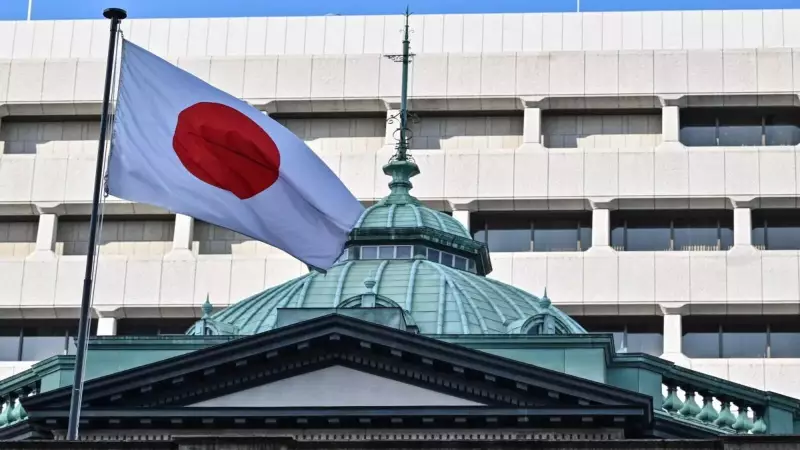
The Bank of Japan (BOJ) has announced its decision to maintain the key interest rate at 0.75 percent, as confirmed in a policy statement released on Friday. This move represents a continuation of the central bank's measured approach following its historic shift away from negative interest rates initiated in 2024, a period marking the potential end to Japan's prolonged era of economic stagnation often referred to as the "lost decades."
Analyst Expectations and Inflation Outlook
The monetary status quo was widely anticipated by financial analysts and market observers, particularly after the BOJ implemented a rate hike in mid-December. The central bank has provided a detailed forecast indicating that consumer price inflation, excluding volatile fresh food items, is projected to fall below the two percent threshold on a year-on-year basis during the first half of 2026. This prediction takes into account the government's ongoing measures and interventions aimed at curbing inflationary pressures and stabilizing the economy.
Political Context and Economic Challenges
The bank's policy decision unfolds against a backdrop of significant political developments in Japan. Prime Minister Sanae Takaichi is preparing to dissolve parliament ahead of a snap election scheduled for February 8. This political maneuver occurs in an environment where public discontent over rising prices played a substantial role in the downfall of former Prime Minister Shigeru Ishiba, whom Takaichi succeeded in October. Upon taking office, Takaichi vowed to address economic concerns and strengthen the foundations of the world's fourth-largest economy, emphasizing the need for robust fiscal and monetary coordination.

BOJ's Economic Assessment and Future Projections
In its statement, the BOJ expressed a cautiously optimistic view of Japan's economic trajectory. The central bank noted, "Japan's economy is likely to continue growing moderately, with overseas economies returning to a growth path and as a virtuous cycle from income to spending gradually intensifies." This assessment highlights the bank's confidence in the gradual recovery and stabilization of both domestic and global economic conditions, which are expected to support sustained growth and financial stability in the coming years.
The BOJ's decision to hold rates steady reflects a balanced strategy aimed at nurturing economic expansion while managing inflationary risks. As Japan navigates this critical phase of transition from decades of stagnation, the central bank's policies will remain pivotal in shaping the nation's economic future and reinforcing its position in the global financial landscape.






