

Union Budget 2024 Expected to Emphasize Fiscal Discipline and Economic Stability
As India prepares for the upcoming Union Budget, economic experts anticipate a strong focus on maintaining fiscal prudence and ensuring long-term economic stability. The budget formulation comes against the backdrop of a surprisingly robust economic performance in the previous fiscal year, characterized by higher-than-expected growth rates and lower inflation figures.
Favorable Economic Conditions Create Optimistic Budget Framework
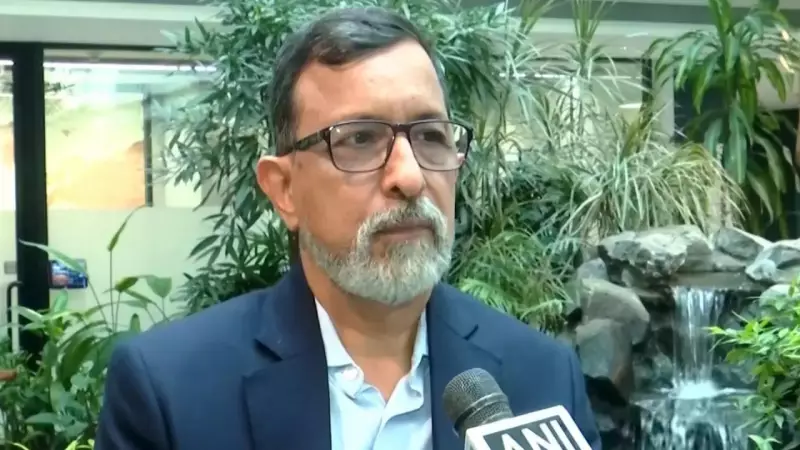
Dharmakirti Joshi, the chief economist at Crisil, has emphasized that the budget is being crafted within a significantly improved economic environment compared to previous years. "The budget is being prepared under a much better-than-expected growth and inflation scenario," Joshi stated during an interview with ANI. "Growth proved to be higher than expected, and inflation was much lower than expected."
This positive economic momentum provides the government with a stronger foundation for budget planning, though Joshi cautioned that global uncertainties and market volatility remain critical considerations that must be addressed through careful fiscal management.

Higher Nominal GDP Projections Boost Fiscal Outlook
A significant development for the 2026-27 fiscal year is the expectation of higher nominal GDP compared to previous projections. According to Joshi's analysis, this increased nominal GDP should translate into improved tax collections and enhanced corporate performance across various sectors.
The government has already revised its GDP forecast for FY 2025-26 upward to approximately 7.3-7.4 percent, a substantial increase from the earlier estimate of 6.3 percent. This revision aligns with similar adjustments made by international institutions like the International Monetary Fund (IMF).
Looking ahead, Joshi projected that the economy is likely to grow around 6.7 percent in the coming year. He also noted that a scheduled re-basing of GDP data on February 27 could potentially alter perceptions of the economy's actual size and growth trajectory.
International Trade Agreements Remain Crucial Priority
Addressing India's position in global trade, Joshi stressed the importance of securing comprehensive trade agreements with major economic partners. "It's important that we get a deal with the US, and a deal with Europe will also be very encouraging because Europe is a very large continent," he remarked.
These trade deals would provide much-needed certainty for Indian exporters who currently face some of the highest tariff barriers in global markets. Joshi warned that without a trade agreement with the United States, Indian exporters might experience the full negative impact of these elevated tariffs.
Fiscal Management and State Deficits Present Challenges
On the domestic fiscal front, while the central government appears likely to meet its deficit targets, state-level finances present ongoing concerns. Joshi pointed out that many states are borrowing beyond their budgeted limits, contributing to elevated government bond yields that affect the broader financial ecosystem.
Regarding private sector investment, Joshi observed that capital expenditure is showing improvement in specific industries including steel, cement, and oil and gas. However, he characterized this recovery as selective rather than broad-based, noting that it hasn't yet transformed into widespread "animal spirits" driving investment across the economy.
Budget Allocations Expected to Support Long-Term Development Goals
Looking toward specific budget allocations, Joshi anticipates continued emphasis on reforms aligned with the 'Viksit Bharat by 2047' vision. He suggested the government might introduce incentives for emerging sectors such as electronics manufacturing and advanced chemical cell (ACC) battery production.
On taxation policy, Joshi advocated for stability, noting that frequent changes create uncertainty for businesses and individuals. "The income taxes have got, I think there's a new code coming, the tax rates have been rationalized and also GST rates have come down," he observed, suggesting that the current tax structure provides a reasonable foundation for continued economic activity.

As budget preparations continue, the balancing act between maintaining fiscal discipline, supporting growth initiatives, and navigating global economic uncertainties will define the government's approach to economic policymaking in the coming fiscal year.





