

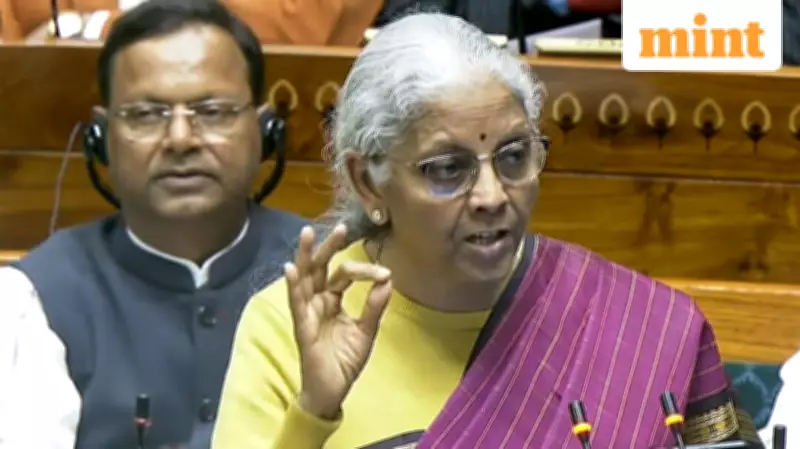
Union Budget 2026-27: A Strategic Blueprint for India's Economic Resilience
In a world marked by rising global uncertainty and mounting challenges, the Union Budget for 2026-27 has emerged as a document of discipline rather than drama. Authored by Sachchidanand Shukla, this analysis highlights how the budget eschews short-term fiscal expansionism to focus squarely on medium-term capacity enhancement. The government's approach bets heavily on infrastructure development, manufacturing growth, and strategic resilience to brighten India's economic future.
Contextual Relevance in a Changing Global Order
The liberal international order that fueled decades of growth is now under significant stress. Nations are increasingly erecting new barriers, and the global shift toward bipolarity may not align with India's economic interests. Amid these complexities, the budget provides a clear pathway for India to achieve its goal of becoming a developed economy. Through measures that boost atmanirbharta or self-reliance, the budget aims to maintain strategic resilience in an uncertain world while fostering sustainable growth.
Credibility and Continuity in Fiscal Management
The budget demonstrates strong credibility with a focus on continuity. For 2026-27, nominal GDP growth has been projected at 10%, a significant increase from the 8% estimated for 2025-26. The government has also fulfilled its commitment to reduce the fiscal deficit below 4.5% of GDP by 2025-26, achieving a revised estimate of 4.4%. For the upcoming fiscal year, the deficit is expected to decline further to 4.3% of GDP.

Central government debt is projected to decrease from 56.1% of GDP in 2025-26 to 55.6% in 2026-27. This aligns with a broader debt consolidation path targeting a debt-to-GDP ratio of approximately 50% by 2030-31. With assumptions of 10% nominal GDP growth and 11.2% gross tax revenue growth, the budget's numbers appear both realistic and achievable.
The expenditure mix continues to improve, with capital expenditure growth outpacing nominal GDP growth. Revenue expenditure, in contrast, is budgeted to grow in single digits. This fiscal consolidation of 10 basis points is unlikely to drag GDP growth, unlike the sharper compression witnessed in 2025-26. The budgetary spending is expected to be non-inflationary, with only minor price pressures anticipated from revisions to the Consumer Price Index basket.
Implications for Monetary Policy and the Rupee
Continued fiscal consolidation and debt reduction are positive signals for the Reserve Bank of India. However, higher-than-expected gross borrowings could exert upward pressure on the 10-year bond yield. While the budget does not offer immediate support for the rupee, medium-term measures—such as investments in data centers—could positively impact the currency over time.
Capacity Enhancement Through Infrastructure and Manufacturing
The budget prioritizes infrastructure and a manufacturing strategy focused on scale, competitiveness, and deeper integration with global value chains. Effective capital expenditure is set at ₹17.1 trillion, marking an 11.5% year-on-year increase. Key announcements include:
- New high-speed rail and dedicated freight corridors
- A scheme for enhancing construction and infrastructure-building equipment, such as tunnel boring machines, with plans for local manufacturing to reduce import dependence
- India Semiconductor Mission 2.0, aimed at achieving full-stack semiconductor capability, including equipment production, intellectual property development, and supply chain strengthening
Additionally, the budget emphasizes long-term economic security through initiatives like dedicated rare-earth corridors, 20 new waterways, and import duty exemptions for nuclear projects until 2035. Procedural simplifications, including easier tax administration for individual taxpayers and higher safe harbour limits for global capability centers, further enhance the business environment.

Areas for Improvement and Future Considerations
While the budget makes significant strides, there are areas where it could have done better. Customs rationalization remains incomplete, especially as India signs major free trade agreements. Similarly, a comprehensive review of the subsidy regime—including food and fertilizers—could have been undertaken, though subsidies currently remain low and manageable.
The endurance of India's Goldilocks scenario—characterized by high GDP growth and low inflation—depends on the government's execution of these measures. By avoiding short-term fiscal expansion and focusing on macro stability, sustained budget discipline, and medium-term capacity enhancement, the budget reaffirms the attractiveness of the India growth story.
These insights represent the author's personal views. Sachchidanand Shukla serves as the group chief economist at Larsen & Toubro, offering a seasoned perspective on India's economic trajectory.





