

Budget 2026 Report Card: A Deep Dive into Exports, Textiles, and Startups
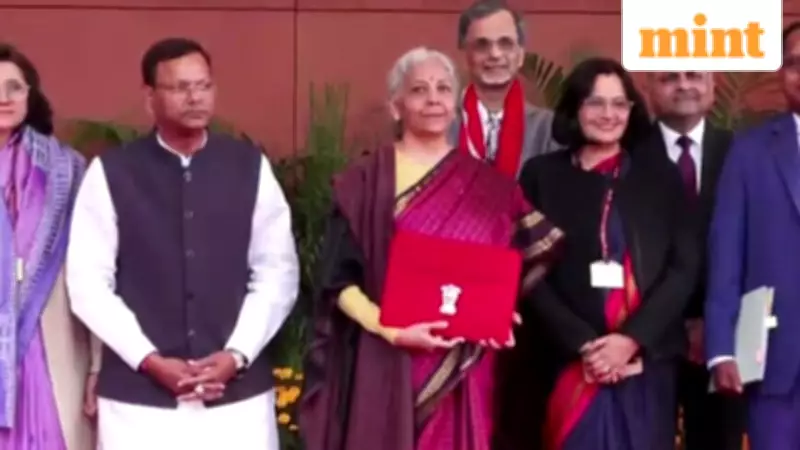
Finance Minister Nirmala Sitharaman presented the Union Budget for the fiscal year 2026–27 on Sunday, setting the stage for India's economic strategy in a period marked by renewed geo-economic disruptions. With these global pressures expected to persist into the coming financial year, the Budget serves as a crucial blueprint for how the government intends to navigate a complex set of pressing challenges. This article is part of a comprehensive five-part data series that evaluates the Budget's performance across 15 key concerns facing the nation, focusing specifically on the critical sectors of exports, textiles, and startups. Each topic is analyzed through a pair of charts—one illustrating the contextual challenges and the other detailing the budgetary responses.
Export Revival: Navigating Tariff Turbulence
A defining theme of the 2025-26 fiscal year has been the disruptive impact of tariff-led trade policies initiated by US President Donald Trump. India remains particularly vulnerable in this arena, as the United States stands as its largest export market, accounting for approximately 20% of total exports. The imposition of steep 50% tariffs by the US has placed Indian exporters in a challenging position, with the impact becoming increasingly visible as the US's share in India's export portfolio has declined in recent months. While exporters have demonstrated resilience by diversifying into other markets on a broader level, the volatile global environment underscores the continued need for robust government support to sustain and enhance export growth.
Textiles: A Stitch in Time for the Apparel Industry
The textile and apparel industry is in urgent need of a booster shot to regain its momentum. After experiencing a contraction in late 2023, export growth recovered throughout 2024, peaking at an impressive over 19% year-on-year in October. This positive trend extended into early 2025 but soon became patchy, with growth flattening mid-year before slipping into contraction between August and October, including a steep 12.1% decline, according to data from the Centre for Monitoring Indian Economy (CMIE). Although November recorded a double-digit rebound, uncertainty continues to loom over the sector. The pressure is compounded by the US's 50% tariffs, which render Indian goods less competitive compared to key rivals, even as the industry grapples with rising input costs and heavy compliance burdens.

Startup Skew: Geographic Concentration and Growth Dynamics
India's startup ecosystem has witnessed vigorous growth over the past decade, with the country now home to over 200,000 recognised startups, a dramatic increase from around 500 a decade ago. This exponential growth has been largely driven by the 'Startup India' programme, a key pillar of the government's Make in India initiative aimed at bolstering Indian manufacturing. However, startup activity remains geographically concentrated, with ten states accounting for over 80% of recognised firms. Maharashtra leads the pack with nearly 36,000 startups, followed closely by Karnataka, Uttar Pradesh, and Delhi, each hosting around 20,000. Gujarat, Tamil Nadu, and Telangana also feature prominently among the top ten states, highlighting the need for broader regional inclusivity in the startup landscape.
As the Budget 2026-27 unfolds, its implications for these sectors will be closely monitored by stakeholders across the economy. The government's strategic responses to export challenges, textile industry woes, and startup disparities will play a pivotal role in shaping India's economic trajectory in the face of global headwinds.






