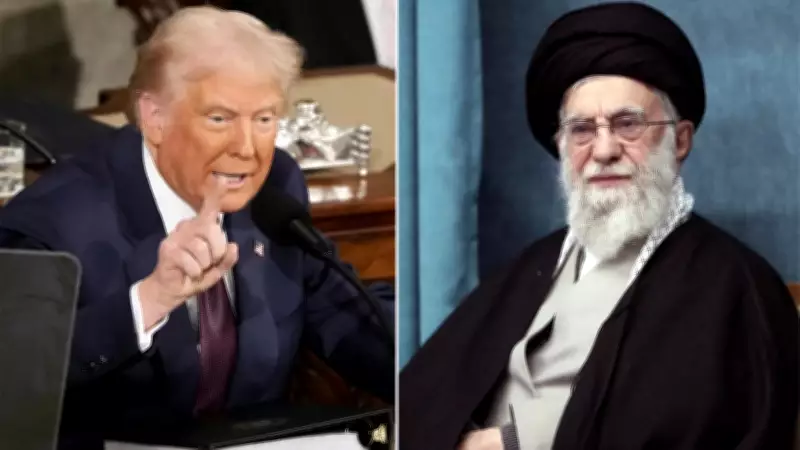
Iran's Supreme Leader Issues Stark Warning to US President Trump
Iran's Supreme Leader Ayatollah Ali Khamenei has delivered a chilling warning to US President Donald Trump, stating that any military action by the United States against Iran would escalate into a broader regional war. This declaration comes as tensions between Tehran and Washington continue to intensify, with both sides engaging in increasingly sharp rhetoric and military posturing.
Khamenei Vows Iran Will Not Be Intimidated by US Threats
Speaking against the backdrop of an enhanced US military presence in the Middle East, Khamenei emphasized that Iran would not be cowed by American threats. According to state media reports, the Supreme Leader directly addressed Trump's recent statements about deploying naval forces to the region.
"(Trump) regularly says that he brought ships... The Iranian nation shall not be scared by these things, the Iranian people will not be stirred by these threats," Khamenei was quoted as saying.

Iran's Position: Defensive but Determined
Khamenei clarified that Iran does not seek confrontation but would respond with significant force if attacked. "We are not the initiators and do not want to attack any country, but the Iranian nation will strike a strong blow against anyone who attacks and harasses them," he asserted.
This statement underscores Iran's defensive posture while simultaneously warning of severe consequences for any aggression against its territory or interests.
US Military Buildup in the Region
The warning comes as the United States has substantially increased its naval deployment in Middle Eastern waters. Current US Navy assets in the region include:
- Six destroyers
- One aircraft carrier
- Three littoral combat ships
This show of force follows repeated warnings from President Trump, who has threatened intervention if Iran refuses to agree to a nuclear deal or fails to halt what he describes as unacceptable actions.
Diplomatic Channels Remain Open
Despite the escalating rhetoric and military buildup, Iranian officials have indicated that diplomacy remains a viable option. Tehran has expressed willingness to engage in "fair" negotiations, provided such talks do not seek to limit Iran's defensive capabilities or compromise its sovereignty.
Domestic Unrest Adds Complexity to Regional Tensions
The international tensions coincide with significant domestic challenges within Iran. Widespread protests erupted in late December over economic hardships, evolving into what many observers consider the most serious political challenge to the Islamic Republic since its establishment in 1979.
While the demonstrations have largely subsided following a security crackdown, the human cost remains contested:
- Official Iranian figures place the death toll at 3,117
- The US-based rights group HRANA has verified at least 6,713 deaths
Khamenei has characterized these protests as "sedition" aimed at attacking the country's governing centers, likening them to an attempted coup against the Islamic Republic.
Regional Implications of Escalating Tensions
The current standoff between Iran and the United States carries significant implications for regional stability in the Middle East. Key considerations include:
- The potential for conflict to draw in regional allies of both nations
- Impact on global oil markets and energy security
- Consequences for ongoing diplomatic efforts in the region
- Humanitarian concerns in conflict-prone areas
As both nations maintain their positions, the international community watches closely, hoping for de-escalation while preparing for various potential outcomes in this volatile geopolitical landscape.