

Budget 2026: Industry Stakeholders Outline Key Expectations for Growth
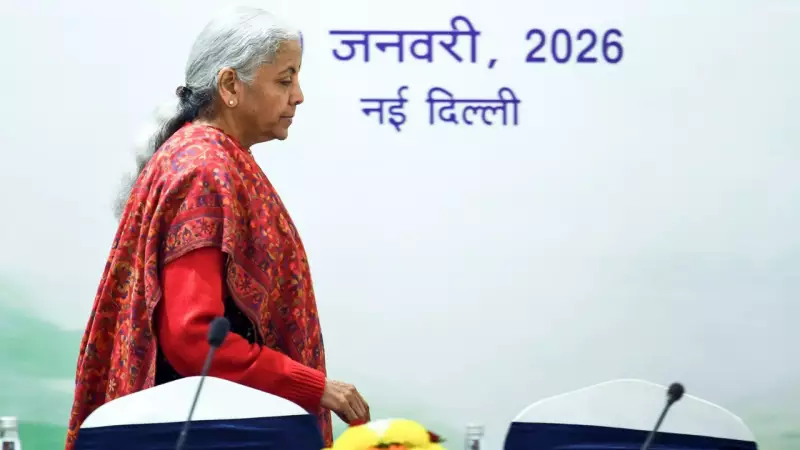
Finance Minister Nirmala Sitharaman is scheduled to present her ninth consecutive Union Budget on February 1, 2026. This annual fiscal event continues to draw intense scrutiny from various industrial sectors, each harboring specific policy and financial expectations. As the government persistently advances flagship initiatives like Digital India, Make in India, and the Animation, Visual Effects, Gaming, and Comics (AVGC) framework, stakeholders from the gaming, esports, and consumer electronics domains are vocalizing their aspirations for Budget 2026. Their collective focus rests on fostering sustainable growth, enhancing global competitiveness, and ensuring long-term ecosystem development.
Electronics Manufacturing: A Call for Component-Linked Incentives
Rajesh Sethi, Group Chief Financial Officer at Lava International Limited, emphasized the critical need for policy intervention. "With global memory and semiconductor cost inflation adversely affecting device affordability, the next phase of component-linked incentives and Electronics Component Manufacturing Scheme (ECMS) is paramount," he stated. Sethi argued that such measures are essential for correcting cost structures, increasing domestic value addition, and building resilient supply chains. He stressed that sustained, forward-looking policy support for electronic components and semiconductors is vital to reduce India's import dependence, deepen localization, and fortify the domestic electronics manufacturing ecosystem.
Gaming & Esports: Seeking Mainstream Recognition and Support
The gaming and esports sector is advocating for formal acknowledgment and practical policy enablers. Akshat Rathee, Co-founder and Managing Director of NODWIN Gaming, expressed hope that the upcoming budget would recognize gaming and esports as emerging pillars of India's digital and creative economy. "The sector has transitioned from the fringes to the mainstream," Rathee noted, "and now requires execution-focused policy support." His expectations include:

- Fair and differentiated taxation for esports, aligning it with traditional sports.
- Easier access to banking and financial services for gaming businesses.
- Targeted funding under the AVGC framework to bolster Indian game development and original Intellectual Property (IP) creation.
Rathee believes that with appropriate incentives for exports, infrastructure, and state-level esports events, India can significantly enhance its global soft power through gaming. He emphasized that the focus should not be on grand announcements but on practical enablers that facilitate sustainable ecosystem scaling.
Animesh Agarwal, Co-founder and CEO of S8UL Esports, highlighted the shift in conversation following the Promotion and Regulation of Online Gaming Act (PROGA). "The dialogue has moved from legitimacy to capacity building," he remarked. Agarwal views this budget as a timely opportunity for policymakers to commit fiscal support towards:
- Training and infrastructure development.
- Grassroots competition development.
- Strengthening India's global position in esports.
He also pointed out that sectors like sports, education, skill development, digital infrastructure, startups, and the creator economy will play crucial roles in shaping the ecosystem. Investments in training infrastructure, incubation programs, and Research & Development hubs can enhance game development and creative production. Furthermore, support for creator-focused upskilling, production facilities, and IP development can help build sustainable careers. Agarwal called for greater clarity and budget allocation at the central level, along with dedicated funding for gaming within the AVGC framework, to enable the creation of globally scalable Indian IPs.
Regulatory Clarity and Creation-Focused Initiatives
Mr. Sagar Nair, Head of Incubation at LVL Zero Incubator, advocated for a strategic shift in focus. "As India's gaming and esports ecosystem matures, this Budget presents an opportunity to shift the conversation from consumption to creation," he asserted. Nair identified several key needs:

- Regulatory and taxation clarity across mobile, PC, and console gaming to unlock long-term capital and enable predictable business planning.
- Clear budgetary commitment toward the AVGC-XR mission, focusing on original IP creation, advanced skilling, and studio incubation.
- Incentives supporting local game development, improved access to gaming hardware, and encouragement of export-led growth.
He emphasized that such measures would help Indian studios ascend the value chain and develop globally competitive products. Nair also noted that esports would benefit from formal policy recognition and ecosystem-level investment, strengthening domestic talent pathways and international participation. Collectively, these steps could help India build a sustainable, creator-led gaming economy with global relevance.
Television Manufacturing: A Plea for Dedicated PLI Framework
Arjun Bajaj, Director at Videotex, highlighted the television manufacturing industry's expectations. He pointed out that TVs are no longer luxury items but integral components of Indian households, with the industry valued at nearly USD 15 billion. Despite its significant role in domestic manufacturing, employment generation, and value addition under Make in India, the sector has not received policy priority comparable to mobile phones.
"One long-standing expectation that has remained unaddressed across multiple Union Budgets is the introduction of a dedicated Production Linked Incentive (PLI) framework for television manufacturing," Bajaj stated. He believes such a move could significantly accelerate localization, strengthen domestic value chains, and improve global competitiveness.
While earlier Goods and Services Tax (GST) rationalization provided some relief, persistent challenges like limited display fab availability, volatility in memory prices, rupee depreciation, and ongoing semiconductor supply constraints have diluted its impact. Although the government has taken steps to build a domestic ecosystem for critical components, semiconductors, and display fabs, Bajaj argued that a stronger, more coordinated push is needed. He hopes the budget will consider temporary duty relief and targeted support for critical components to improve supply stability and cost competitiveness. Additionally, export-focused measures such as duty drawbacks, logistics support, and rationalized trade barriers are critical to enhance competitiveness, enable scale beyond the domestic market, and strengthen India's position in global electronics and television exports.
Esports: Aligning with Traditional Sports and Grassroots Development
Vishal Parekh, Chief Operating Officer at CyberPowerPC India, described the current moment as defining for Indian gaming and esports. "PROGA 2025 marked the start of a more structured and legitimized chapter for the industry," he noted, recognizing its growing cultural and economic relevance. Parekh emphasized that as the ecosystem scales, targeted budget support and clear policies are key to sustaining momentum.
His specific recommendations include:
- Treating esports prize money taxation in line with traditional sports.
- Strengthening esports' role within the Khelo India initiative.
- Encouraging participation across schools, colleges, and states to significantly boost grassroots development.
Parekh expressed hope that the upcoming budget would support these priorities, thereby helping India build a globally competitive gaming and esports ecosystem.
As Budget 2026 approaches, the collective voice from these industries underscores a unified demand for pragmatic, growth-oriented policies. The emphasis is on moving beyond mere scale to build resilient, innovative, and globally competitive sectors that contribute substantially to India's economic narrative.





